
- Release Year: 2018
- Platforms: Windows
- Genre: Action
- Perspective: First-person / Third-person
- Game Mode: Single-player
- Gameplay: Mini-games, Puzzle elements
- Average Score: 64/100
Description
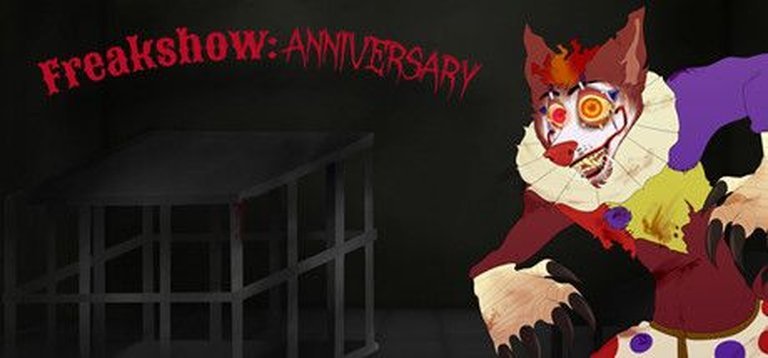
Freakshow: Anniversary is a first-person action game set in a surreal circus environment, blending puzzle elements and mini-games. Players explore the mysterious Freakshow circus, uncovering secrets and confronting bizarre attractions. Originally intended to include multiple chapters, the final release focuses on a condensed storyline repurposed from scrapped content, marking the conclusion of the series as the developer moves on to new projects.
Where to Buy Freakshow: Anniversary
PC
Freakshow: Anniversary Patches & Updates
Freakshow: Anniversary Guides & Walkthroughs
Freakshow: Anniversary Reviews & Reception
steambase.io : Freakshow:Anniversary has earned a Player Score of 64 / 100. This score is calculated from 50 total reviews which give it a rating of Mixed.
store.steampowered.com (64/100): All Reviews: Mixed (51) – 64% of the 51 user reviews for this game are positive.
Freakshow: Anniversary: Review
Introduction
In the crowded landscape of indie horror, Freakshow: Anniversary (2018) emerges as a hallucinogenic carnival of ambition and austerity—a free-to-play passion project by solo developer KevinTheWolfy that resurrects his 2017 cult curiosity with grotesque flair. This retrospective review interrogates the game’s paradoxical identity: a love letter to low-budget horror ingenuity that simultaneously buckles under its own DIY constraints. Is it a flawed relic or a hidden gem? Our thesis posits that Freakshow epitomizes the raw, unfiltered spirit of indie game-making—where thematic boldness and experimental design collide with technical turbulence, leaving players both enthralled and exasperated.
Development History & Context
A One-Person Circus Act
Developed entirely by KevinTheWolfy (a pseudonym for the reclusive creator), Freakshow: Anniversary began as a nostalgic overhaul of Freakshow (2017), released to commemorate its first anniversary. Built using rudimentary engines akin to early RPG Maker titles, the project faced stark limitations: no budget, minimal voice-acting resources, and pixel-art assets crafted in isolation. The developer’s 2020 announcement—declaring the Freakshow saga “finished” due to creative exhaustion—further contextualizes the game as a bittersweet finale to an underdog saga.
The 2018 Indie Horror Boom
Arriving amid a surge of experimental horror indies (Anatomy, Pony Island), Freakshow’s timing was fortuitous yet fraught. Unlike polished contemporaries, it embraced a deliberately retro aesthetic, leveraging 2D perspectives and jarring soundscapes to evoke PS1-era unease. However, its lack of polish—a byproduct of solitary development—left it eclipsed by slicker competitors, rendering it a footnote in the genre’s evolution.
Narrative & Thematic Deep Dive
Plot: A Carnival of Trauma
Players assume the role of Michael, a hapless visitor lured into a sentient circus ruled by the malevolent Ringmaster. Across six days, they navigate a gauntlet of psychological torture, oscillating between feeding grotesque “freaks” and solving macabre puzzles to survive. The narrative bifurcates into two endings:
– The Bad Ending (Submission): Michael resigns to captivity, consumed by the circus.
– The Good Ending (Escape): By uncovering hidden clues (e.g., restarting power grids, deciphering phone codes), players expose the Ringmaster’s weakness and flee.
Themes: Exploitation and Desolation
Freakshow weaponizes circus tropes as allegories for exploitation and dehumanization. The freaks—voiced with uncanny, amateurish flair—symbolize societal outcasts weaponized for spectacle. Environments drip with decay: blood-slicked restrooms, rusted cages, and a labyrinthine tent that morphs into a prison. Yet, the writing alternates between poignant (“Call 3-4-5” scrawled in isolation cells) and clunky, with dialogue often undermined by stiff delivery.
Gameplay Mechanics & Systems
A Janky Juggernaut
Freakshow’s core loop melds point-and-click exploration, survival horror, and mini-games:
– Puzzle-Solving: Players manipulate bone piles (via a Ctrl mechanic), rewire color-coded fuse boxes, and scour rooms with an asthma-restricted search system (holding Tab).
– Survival Sequences: Tense 60-second chases require players to evade patrolling freaks by teleporting between rooms—a system criticized for its RNG-heavy frustration.
– Mini-Games: Post-game “Dingbox” arcade challenges (e.g., Lava Man, Coin ♥♥♥♥♥♥♥) offer meta-commentary on glitch art, demanding players trigger deliberate crashes for achievements.
Innovation vs. Frustration
While the inventory system and multiple endings showcase ambition, flaws abound:
– Janky Controls: Movement feels leaden, and interaction prompts often misfire.
– Buggy Progression: Steam forums cite broken achievements (“Only two achievement working…the rest are broken”) and .exe errors.
– Repetition: Day cycles recycle objectives with minimal variation, testing patience.
World-Building, Art & Sound
Aesthetic: Low-Fi Horror Splendor
Freakshow’s visual identity hinges on dissonant beauty:
– Art Direction: Crude, 16-bit sprites contrast with lurid backdrops—crimson tents, necrotic green corridors—heightening unease. The freaks, rendered as pixelated aberrations, evoke CarnEvil’s grotesquery.
– Sound Design: The original soundtrack oscillates between carnival calliopes and dissonant ambience, amplifying dread. However, voice acting—a noted “improvement” from the 2017 original—still veers into “so-bad-it’s-good” territory, undermining tension.
Atmosphere as Narrative
The circus isn’t merely a setting; it’s a character. Rooms like the “Isolation Chamber” and “Power Room” metastasize metaphorically, representing Michael’s fracturing psyche. Yet, technical limitations blunt the impact: sparse animation and recycled assets dilute immersion.
Reception & Legacy
Launch: A Whisper, Not a Roar
Upon release, Freakshow: Anniversary garnered muted attention. Steam reviews settled at “Mixed” (64% positive from 51 ratings), praising its ambition but lamenting its flaws:
“A charming mess… like a haunted diorama made by a mad genius teenager.”
“Broken achievements + clunky controls = frustration.”
Critics like Softonic noted its “cheesy voice acting” and “typographical errors” but lauded its “original soundtrack” and “updated mechanics.”
Legacy: Cult Curiosity
While devoid of industry-shifting influence, Freakshow persists as a case study in indie tenacity. Its abandonment of a planned Freakshow 3 (revealed in KevinTheWolfy’s 2020 postmortem) and the upload of canceled prototypes to GameJolt cement its status as a “what-could-have-been” artifact. Modern indie horrors (Iron Lung, Faith) echo its low-fi aesthetic but sidestep its pitfalls, leaving Freakshow as a haunting curio—a testament to passion over polish.
Conclusion
The Final Bow
Freakshow: Anniversary is neither masterpiece nor disaster—it’s a chiaroscuro of brilliance and bafflement. Its narrative audacity, unsettling atmosphere, and inventive mini-games shine brightly, yet its technical frailties and uneven execution linger like spectral shadows. For historians, it captures the DIY ethos of 2010s indie horror; for players, it’s a flawed but fascinating sideshow.
Verdict: A poignant relic of solo development—best appreciated as a free, bizarre time capsule for genre devotees, yet too rough-edged for mainstream accolades. In the annals of horror gaming, it earns a peculiar epitaph: “The circus left town, but its scars remain.”
Score (for archival context): 5.5/10
Platforms: Windows (Steam)
Price: Free
Developer: KevinTheWolfy
Playtime: 2–4 hours (dual endings + achievements)