
- Release Year: 2020
- Platforms: Android, iPad, iPhone, Windows
- Publisher: Erabit Studios
- Genre: Action
- Perspective: Top-down
- Game Mode: Single-player
- Gameplay: Push Mechanics, Roguelite
- Average Score: 78/100
Description
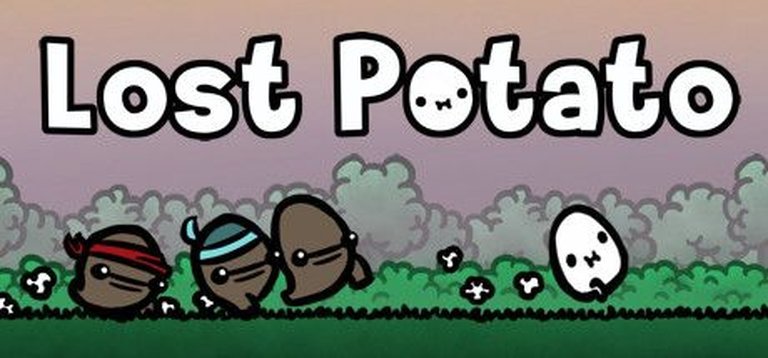
Lost Potato is a top-down roguelite action game where players control a resilient potato protagonist navigating treacherous jungles. Unlike typical combat-focused games, players must tactically push enemies into environmental hazards like spikes or deflect incoming attacks to survive. Developed by Blobfish and published by Erabit Studios, the game offers bite-sized levels perfect for short play sessions, blending minimalist visuals with challenging mechanics. Originally released on Windows in 2020, it later expanded to mobile platforms, providing a unique twist on the roguelite genre as the precursor to the popular Brotato.
Gameplay Videos
Where to Buy Lost Potato
PC
Lost Potato Mods
Lost Potato Guides & Walkthroughs
Lost Potato Reviews & Reception
metacritic.com (70/100): Lost Potato is simple by design, but that also proves to be one of its greatest strengths. This bite-sized roguelike might not make waves in the space, but it has the fundamentals down and is perfect for small play sessions.
opencritic.com (70/100): Lost Potato is simple by design, but that also proves to be one of its greatest strengths. This bite-sized roguelike might not make waves in the space, but it has the fundamentals down and is perfect for small play sessions.
steambase.io (95/100): Lost Potato has earned a Player Score of 95 / 100.
Lost Potato: Review
Introduction
In an era oversaturated with roguelikes and bullet-hell shooters, Lost Potato (2020) emerges as a peculiar, minimalist outlier—a game where a sentient spud battles jungle tribes not with weapons, but with environmental cunning. Developed by the enigmatic Thomas Gervraud under the Blobfish Games banner and published by Erabit Studios, this top-down action roguelite redefines player agency by stripping away direct combat in favor of tactical improvisation. While overshadowed by its spiritual successor Brotato, Lost Potato carves its niche through absurdist charm and razor-focused design, offering bite-sized chaos perfect for the modern “quick session” gaming appetite. This review argues that beneath its whimsical exterior lies a mechanically taut, if occasionally repetitive, experiment in emergent gameplay that deserves recognition for its inventive constraints.
Development History & Context
Lost Potato was birthed in 2020 by solo developer Thomas Gervraud using GameMaker Studio—a fitting engine for its retro-flavored minimalism. Released initially on Windows (with mobile ports following in 2024), the game emerged during a post-Vampire Survivors boom, yet deliberately sidestepped the auto-attack trend popularized by its peers. Gervraud’s vision centered on environmental problem-solving, inspired perhaps by Hotline Miami’s lethal stage choreography but distilled into a vegetable-centric absurdism.
Constraints became innovations: With no budget for complex animations or 3D assets, Gervraud embraced a stripped-down aesthetic—blocky sprites, flat colors, and claustrophobic arenas that amplified gameplay clarity. The decision to disable direct attacks ($2.99 price point likely precluding elaborate combat systems) forced creative systemic depth: Players manipulate enemies into traps, deflect projectiles, and exploit procedural layouts. This “limitation-as-design-philosophy” echoes indie darlings like Baba Is You, proving that mechanical purity can trump graphical grandeur.
Narrative & Thematic Deep Dive
Narratively, Lost Potato revels in playful absurdity. A lone potato—rendered as a wide-eyed, root-limbed protagonist—awakens in a jungle infested with “man-eating tribes” (cartoonish ghouls and spear-chuckers). There’s no grand lore or dialogue; the premise is a satirical nod to survival tropes, where the vegetable’s plight mirrors its existential fragility.
Thematically, the game explores improvisation and resilience. The potato, devoid of innate strength, survives through cunning—shoving foes into spikes, ricocheting bullets, and fleeing when overwhelmed. This mirrors roguelike staples like Nuclear Throne, yet with a darkly comedic twist: The protagonist isn’t a warrior, but a food item fighting to avoid becoming dinner. Environmental storytelling emerges through unlockable hats (e.g., a chef’s toque), cheekily reminding players of the potato’s culinary fate should it fail.
Gameplay Mechanics & Systems
Lost Potato thrives on a deceptively simple core loop: Survive waves of enemies across 50 procedurally generated levels (averaging 3–5 minutes each) by exploiting stage hazards. Key mechanics include:
- Push-Based Combat: Enemies take damage only when knocked into spikes, lava pits, or redirected projectiles. This demands spatial awareness and timing, evoking Super Smash Bros.‘ ledge-guarding tension.
- Roguelite Progression: Death resets progress, but unlocked “hats” (14 total) grant permanent passive bonuses (e.g., speed boosts, temporary shields), incentivizing replayability.
- Risk/Reward Upgrades: Per-level choice between randomized buffs (e.g., knockback strength vs. movement speed) forces strategic adaptation.
However, the game stumbles in balance and responsiveness. While keyboard/mouse controls are precise (Steam reviews praise fluid movement), hitbox inaccuracies—particularly with projectile deflection—can frustrate. Later levels escalate difficulty haphazardly, relying on enemy spam rather than smarter AI, leading to repetitiveness. Still, the “hitless run” achievement (a brutal test of skill) rewards mastery, cementing its appeal to masochistic completists.
World-Building, Art & Sound
Visually, Lost Potato adopts a retro-modern hybrid aesthetic: Pixel-art characters clash against neon-drenched backdrops, with jungles rendered as pulsating grids of emerald and crimson. This minimalist approach ensures readability during chaos, though enemy designs lack variety (recycled ghoul sprites grow stale).
The soundtrack—a synth-heavy, rhythmic pulse—complements the feverish pacing, echoing Hotline Miami but with chiptune whimsy. Sound design shines in feedback cues: The crunch of an enemy hitting spikes delivers visceral satisfaction, while the potato’s panicked squeaks when cornered inject dark humor. Yet the art/sound package feels intentionally sparse, framing the potato’s struggle as a Sisyphean arcade spectacle rather than a narrative-rich journey.
Reception & Legacy
Upon release, Lost Potato garnered a “Very Positive” Steam rating (94% of 202 reviews), praised for its “$1.49-for-hours-of-fun” value proposition (SteamBase). Critics like Gamers Heroes (70/100) lauded its “bite-sized roguelike fundamentals,” while players celebrated its “challenging but fair” design (Steam user Uzzbuzz).
Its legacy, however, is twofold:
1. As a proof-of-concept precursor to Brotato (2022)—Blobfish’s breakout hit—it demonstrated Gervraud’s knack for reimagining genres through absurd premises.
2. It influenced indie designers by proving constraints breed innovation; the inability to attack directly inspired games like Loop Hero’s passive combat.
Yet its impact remains niche. Mobile ports underperformed (Gameplay Benelux noted it’s “not as addictive as Brotato”), and minimal post-launch support (no major DLC) relegated it to cult status.
Conclusion
Lost Potato is a triumph of minimalist design—a game that turns helplessness into strategic empowerment. Its flaws (repetitive late-game, occasional jank) are outweighed by tightly crafted mechanics, dark humor, and a “$3 coffee” price point. While not genre-defining like Hades or Dead Cells, it exemplifies the indie spirit: Small in scope, bold in vision. For roguelike fans seeking a fresh twist or casual players craving quick, satisfying runs, this tuber’s odyssey remains a hidden gem. In video game history, it may be a footnote—but one etched with a potato peeler’s sharp wit.