
- Release Year: 1972
- Platforms: Antstream, Arcade, Dedicated console, KaiOS, Windows
- Publisher: Atari, Inc., Atari Japan, Hunter Electronics Pty., Ltd., Sears, Roebuck and Co., TOPICS Entertainment, Inc.
- Developer: Atari, Inc.
- Genre: Action, Sports
- Perspective: Top-down
- Game Mode: Co-op, Hotseat
- Gameplay: Arcade, Paddle, Pong
- Setting: Ping pong, table tennis
Description
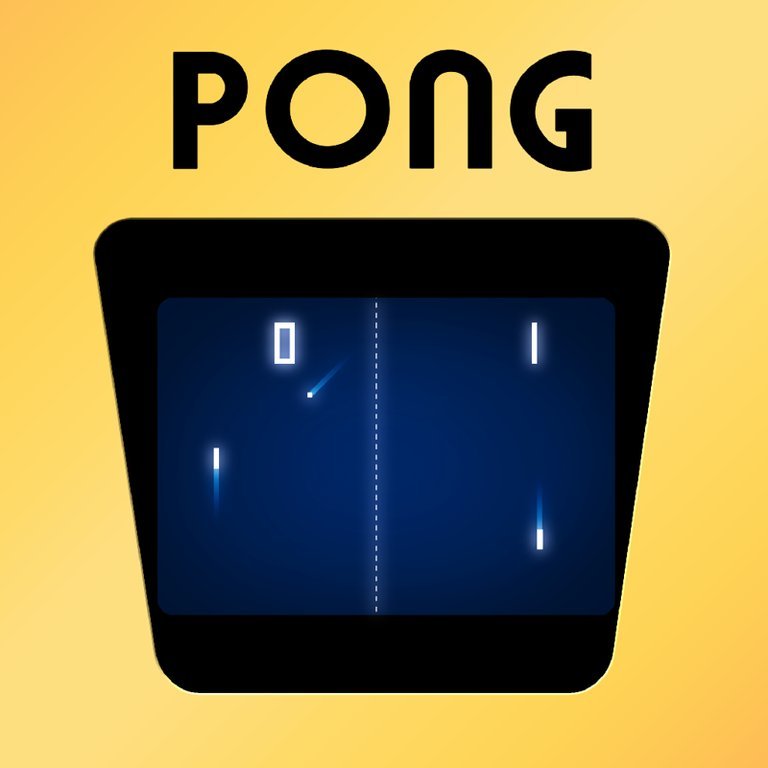
Pong, developed by Atari, is a pioneering video game that revolutionized the amusement industry. Released in 1972, it is a simple tennis simulation where two players control paddles on opposite sides of the screen, attempting to score points by making the ball pass their opponent. The game features black-and-white graphics and analog circuitry, with a minimalist design that includes a dotted white line representing the net and scores displayed above each paddle.
Gameplay Videos
Pong Free Download
Pong Mods
Pong Guides & Walkthroughs
Pong Reviews & Reception
honestgamers.com : Pong singlehandedly began the multi-decade craze known as video gaming.
davegladow.com : Pong is widely credited with being the very first commercially successful video game.
Pong Cheats & Codes
PlayStation (PSX)
Enter codes at the options screen or zone selection screen.
| Code | Effect |
|---|---|
| L1, R1, L1, R1, L1, R1 | Level select. Select the star field beyond what looks like the final level to play the original 1972 Pong. |
| L1, R1, L1, R1 | Unlock first level in all zones. |
| L2, R2, L2, R2 | Unlock second level in all zones. |
| L1 + R1 + L2 + R2 | Unlock third level in all zones and more. This also unlocks the secret power-ups and the three classic black and white Pong versions. |
Pong: Review
Introduction
The hypnotic blip of a bouncing square. The visceral clash of digital paddles. The furious scramble for quarters as crowds gathered around a glowing wooden cabinet. Pong wasn’t just a game—it was a cultural detonation. Released by Atari in 1972, this deceptively simple table-tennis simulator became the Big Bang of the video game industry, transforming bars into battlegrounds and living rooms into arenas. Its thesis is disarmingly pure: Video games could be for everyone. Through ruthless minimalism and intuitive design, Pong etched itself into history as the first commercially successful arcade game, proving that interactive entertainment could thrive beyond academia and tech labs. This review examines how a training exercise birthed an empire, how two lines and a dot rewrote pop culture, and why, five decades later, its legacy remains unmatched.
Development History & Context
The Silicon Valley Sandbox
In 1972, the gaming landscape resembled a desolate moon. Nolan Bushnell and Ted Dabney’s Syzygy Engineering had flopped with Computer Space, a convoluted space shooter drowning in its own complexity. Arcades were dominated by pinball machines, often stigmatized as mafia-run novelties. Enter Allan Alcorn, a newly hired engineer tasked with a “training exercise”: Create a ping-pong game using primitive analog circuitry. Inspired by the Magnavox Odyssey’s rudimentary tennis variant (which Bushnell allegedly witnessed at a demo), Alcorn iterated relentlessly within severe technical constraints. No microprocessor—just 74 series TTL chips. No lavish art—only stark vectors on a CRT monitor.
Innovation Through Limitation
Alcorn’s genius lay in embellishing simplicity. He segmented paddles into eight zones, each altering the ball’s return angle—a subtle layer of strategy. The ball accelerated with prolonged rallies, heightening tension. A deliberately uncorrected defect—paddles couldn’t reach the screen’s top—prevented endless stalemates, ensuring games concluded. Sound was crafted from sync generator tones: a crisp blip for deflections, a resonant thud for scoring. The prototype, built from a $75 Hitachi TV in a 4-foot wooden cabinet, debuted at Andy Capp’s Tavern in Sunnyvale. Days later, the machine jammed—not from malfunction, but from a flood of quarters. Bushnell, recognizing a seismic shift, abandoned plans to license Pong to Bally and bet Atari’s future on self-production.
The Jackals and the Gold Rush
By 1973, Pong clones infested arcades. Ramtek’Rally, Nutting Associates’ Computer Space Ball—the market drowned in imitators. Atari, lacking patent safeguards early on, retaliated by innovating: Pong Doubles (1973) introduced four-player chaos; Quadrapong (1974) turned arenas into battle royales. Yet the true masterstroke was Home Pong (1975). Developed under the codename Darlene, it utilized a custom LSI chip to shrink the arcade experience into a $98.95 Sears-exclusive console. Over 150,000 units sold that Christmas, igniting the home-gaming revolution and birthing Nintendo’s Color TV-Game series.
Narrative & Thematic Deep Dive
The Absence That Defined an Industry
Pong lacks characters, dialogue, or plot. Its narrative exists in the friction between two human opponents—a primal duel of reflexes and ego. The screen is a void: black backdrop, white vectors, a dotted midline as the “net.” Scores loom above like digital gladiatorial tallies. Themes emerge not through storytelling, but through interaction:
– Accessibility as Revolution: Instructions were distilled to six words: “Avoid missing ball for high score.” Drunks could play; grandparents could play. It democratized gaming.
– Social Alchemy: Bushnell noted how Pong became a “social lubricant”—a shared quarter fostering camaraderie, rivalry, even romance (“I met my wife playing Pong”).
– The Human vs. Machine Paradox: No AI existed. Pong demanded human connection, a stark contrast to today’s solitary online play.
The game’s abstraction became its strength. It wasn’t tennis; it was the essence of competition.
Gameplay Mechanics & Systems
Elegance in Binary
Pong’s rules are Neolithic:
1. Use a knob to move a vertical paddle.
2. Deflect the square “ball” past your opponent.
3. First to 11 points wins.
Yet beneath this austerity lay nuance:
– Analog Control: The rotary knobs offered granular precision—slow turns for cautious blocks, swift spins for aggressive returns.
– Angle Physics: Hitting the paddle’s edges launched sharp diagonals; center hits sent the ball straight. Mastery demanded spatial calculus.
– Dynamic Difficulty: Ball speed escalated during rallies, creating organic tension crescendos.
Flaws as Features
The top-screen gap, initially a circuit flaw, stayed—a “controlled imperfection” preventing infinite matches. Single-player mode required operating both knobs, a comedic yet isolating experience. UI was minimalist: blocky numerals, no menus, no “lives.” Pong was a closed loop: win, lose, insert quarter.
World-Building, Art & Sound
The Beauty of Nothingness
Pong’s aesthetic is anti-art. Visuals were monochromatic vectors—a negation of spectacle. The cabinet’s vibrant yellow shell (dubbed “the sarcophagus”) and space-age marquee lent it UFO-like allure in dim arcades. Sound design, forged from sync generator pulses, became iconic:
– Deflection: A sharp 300Hz blip.
– Score: A deep 60Hz bwoom.
– Wall Hit: A muted 120Hz thunk.
These bleeps were not mere feedback; they were the game’s emotional language—a celebration of interactivity itself.
Reception & Legacy
From Bars to Boardrooms
Upon release, Pong machines earned $35–40 daily—quadruple standard arcade returns. Magnavox’s patent lawsuits (settled in 1976) cemented its notoriety. Critics lauded its purity; Next Generation later ranked it #34 among the Top 50 Games of All Time, praising its “test of reaction times stripped to bare essentials.” Yet dissent existed: The Game Hoard (2022) called it “mildly engaging” but devoid of depth.
Commercially, Pong birthed an ecosystem. Atari’s revenue funded the VCS/2600, while clones like Tele-Games and Coleco Telstar flooded homes. Culturally, it permeated SNL sketches, Andy Roddick commercials, and art installations. The Smithsonian enshrined it; Chuck E. Cheese’s lore wove it into brand mythology.
The Fractal Legacy
Pong’s DNA spirals through gaming:
– Sequels: Breakout (1976) reimagined it as solo brick-breaking.
– Industry Seeds: Profits saved a floundering Nintendo, inspiring Color TV-Game 6.
– Modern Echoes: Pong: The Next Level (1999) added 3D gimmicks; Pong Quest (2020) fused RPG elements.
Its greatest triumph? Proving that games need not be complex to be revolutionary.
Conclusion
Pong is the ur-game—a digital campfire around which humanity gathered to rediscover play. It launched empires, sparked lawsuits, and turned engineers into rockstars. Today, its two-line duel feels archaic, yet its philosophy endures: the best games are conversations, not monologues. In a world of teraflops and ray tracing, Pong’s genius persists—a monument to minimalism, a reminder that innovation blooms under constraint. Was it fun? For 1972, it was a revelation. For history, it was the spark that lit a $300-billion inferno. Final Verdict: Pong is not merely a game; it is the foundation upon which all interactive art stands—a perfect 10 in impact, if not in polygons. To ignore Pong is to ignore the Big Bang itself.