
- Release Year: 2010
- Platforms: Windows
- Publisher: United Independent Entertainment GmbH
- Developer: ActaLogic
- Genre: Simulation
- Perspective: 3rd-person
- Game Mode: Single-player
- Gameplay: Precision-based controls, Resource Management, Vehicle operation
- Setting: Forest, Industrial
- Average Score: 65/100
Description
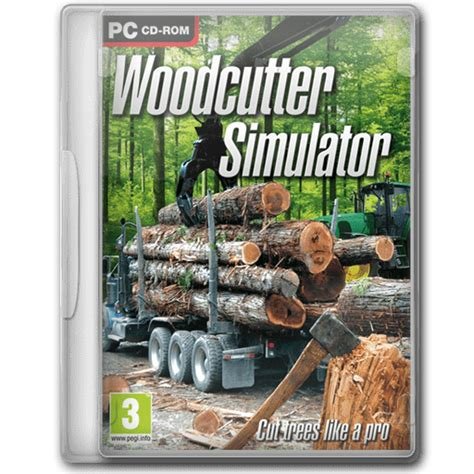
In Woodcutter Simulator, players take on the role of a lumberjack managing the entire timber production process: felling marked trees, transporting trunks to a sawmill, processing them into logs, and loading logs onto trucks. The game features five precisely controlled machines operated via keyboard in a sparse forest environment, with campaign missions varying only in log quotas and time limits before unlocking a similarly repetitive free-play mode. Success hinges on meticulous positioning of equipment, though players may discover unintended shortcuts like using tractors to push logs or creatively loading trucks.
Gameplay Videos
Where to Buy Woodcutter Simulator
PC
Woodcutter Simulator Cracks & Fixes
Woodcutter Simulator Patches & Updates
Woodcutter Simulator Reviews & Reception
gamesreviews2010.com : Woodcutter Simulator is an immersive and engaging game that offers a unique blend of simulation, strategy, and business management.
Woodcutter Simulator: Review
In the realm of niche simulation games, few titles have garnered as much curiosity and controversy as Woodcutter Simulator. Released in February 2010, this game tasked players with the mundane yet meticulous job of a woodcutter, from felling trees to transporting logs. Despite its humble origins and modest reception, Woodcutter Simulator offers a unique glimpse into the world of simulation gaming and the evolving tastes of gamers. This review will delve into the game’s development history, narrative depth, gameplay mechanics, world-building, and its enduring legacy.
Development History & Context
Woodcutter Simulator was developed by ActaLogic, a studio known for its foray into simulation games. The project was led by Simon Sukljan, who oversaw game design, level design, and programming. The development team consisted of 17 individuals, each contributing to various aspects of the game, from art and sound design to testing and bug fixing.
The gaming landscape in 2010 was dominated by blockbuster titles and emerging indie games. Simulation games, while not new, were gaining traction with titles like Farming Simulator and Train Simulator. Woodcutter Simulator aimed to carve out its own niche by focusing on the intricate details of timber harvesting, a subject matter that had seen little exploration in video games.
Technologically, the game utilized PhysX by NVIDIA, ensuring realistic physics for the various machines and environmental interactions. This choice was pivotal in creating an immersive experience, as the precision required in woodcutting tasks demanded accurate simulation of physical forces.
Narrative & Thematic Deep Dive
Woodcutter Simulator lacks a traditional narrative, instead focusing on the procedural and repetitive nature of timber harvesting. The game’s missions revolve around fulfilling orders, which range from removing single trees in parks to mass felling for construction sites. This absence of a compelling storyline is both a strength and a weakness. On one hand, it allows players to immerse themselves in the minutiae of the woodcutting process without distractions. On the other hand, it can feel monotonous, especially for those seeking a more engaging narrative.
The thematic depth lies in the game’s exploration of labor and efficiency. Players must optimize their workflow, from selecting the right tools to managing time and resources. This theme resonates with the broader simulation genre, where the joy often comes from mastering complex systems and processes.
Gameplay Mechanics & Systems
The core gameplay loop of Woodcutter Simulator is straightforward yet demanding. Players control various machines, each with specific functions, to complete tasks. The precision required in positioning and operating these machines adds a layer of challenge. The game’s controls, primarily keyboard-based, have been criticized for their clumsiness, which can frustrate players accustomed to more responsive input methods.
The game features five main machines:
- Felling Machine: Used to cut down marked trees.
- Tractor: Transports felled trees to the sawmill.
- Crane: Lifts trees into the sawmill.
- Sawmill: Processes trees into logs.
- Truck: Transports logs to their final destination.
Switching between these machines is seamless, but the lack of variety in missions can lead to repetitive gameplay. The campaign mode consists of eleven missions with increasing difficulty, but the free-play mode offers little deviation from the core tasks.
The user interface is functional but uninspired, providing essential information without adding much visual flair. The game’s reliance on keyboard controls, while historically accurate for simulation games, feels outdated in the context of modern gaming standards.
World-Building, Art & Sound
Woodcutter Simulator features a visually unremarkable but functional art style. The forest environments are sparsely populated with wide-apart trees, allowing for easy navigation of vehicles. The game’s use of PhysX technology ensures that the physics of tree felling and log transportation are realistic, adding a layer of authenticity to the experience.
The sound design is equally utilitarian, with machine noises and environmental sounds that enhance immersion without standing out. The game’s aesthetic and auditory choices serve their purpose but lack the polish seen in more high-profile simulation games.
Reception & Legacy
Upon its release, Woodcutter Simulator received mixed reviews. Critics praised the game’s attention to detail and realistic physics but criticized its lack of variety and monotonous gameplay. PC Zone gave it a score of 40%, highlighting the game’s niche appeal but noting its limitations. GamersGlobal was more critical, awarding it a score of 30% and describing it as “lieblos gestaltet” (lovelessly designed).
Player reviews were similarly divided, with some appreciating the game’s unique focus on timber harvesting, while others found it too repetitive and unengaging. The game’s legacy is somewhat overshadowed by its sequels and the broader evolution of the simulation genre.
Woodcutter Simulator influenced subsequent games in the genre, particularly in the area of realistic physics and detailed simulation of industrial processes. Its impact, however, is more felt in the niche of simulation enthusiasts rather than the mainstream gaming community.
Conclusion
Woodcutter Simulator is a game that defies easy categorization. It offers a unique and detailed simulation of timber harvesting, complete with realistic physics and a focus on precision and efficiency. However, its lack of narrative depth, repetitive gameplay, and dated controls limit its appeal to a niche audience.
In the grand scheme of video game history, Woodcutter Simulator stands as a testament to the evolving tastes of gamers and the enduring appeal of simulation games. Its legacy, while modest, is a reminder that even the most mundane activities can be transformed into engaging gaming experiences with the right attention to detail. For those seeking a deep dive into the world of timber harvesting, Woodcutter Simulator offers an unparalleled experience. For others, it may serve as a curiosity, a glimpse into a world few games have explored.