
- Release Year: 1998
- Platforms: Windows
- Publisher: Sold Out Sales & Marketing Ltd., The 3DO Company, Ubi Soft Entertainment Software
- Developer: New World Computing, Inc.
- Genre: Role-playing (RPG)
- Perspective: 1st-person
- Game Mode: Single-player
- Gameplay: Alchemy, Auto-mapping, Dungeon Crawling, Exploration, Grid inventory, Open World, Paper doll inventory, Party-building, Real-time combat, Skill Development, Turn-based combat
- Setting: Fantasy
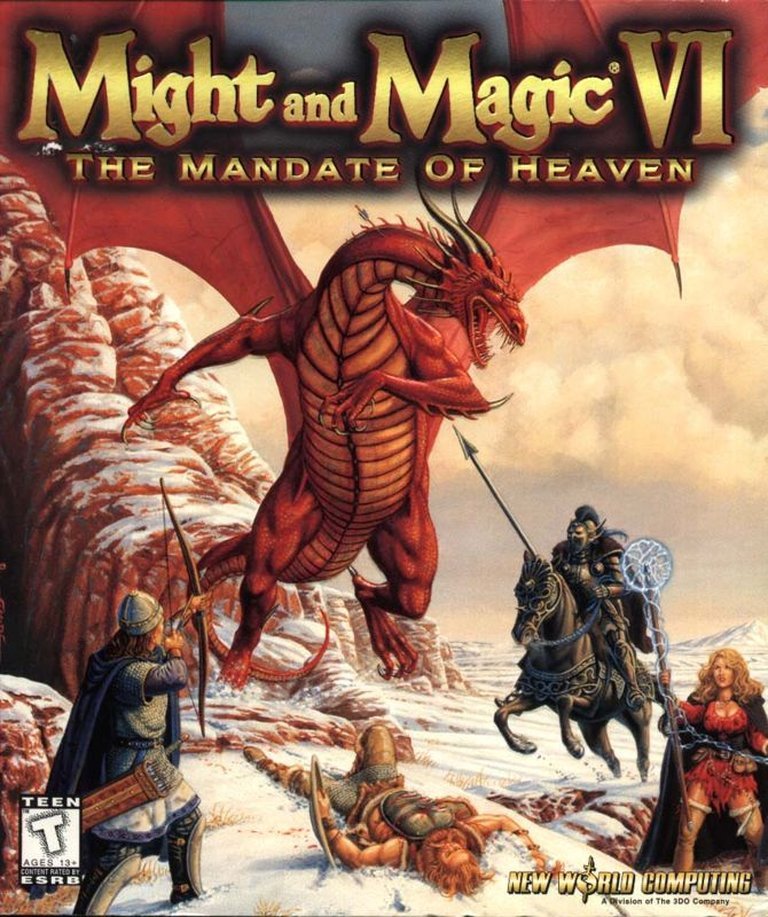
Description
Might and Magic VI: The Mandate of Heaven is set in the fantasy world of Enroth, where the corrupt Guardian Sheltem has been defeated, and the war between the Ancients and the alien Kreegans has entered a new phase. The Kreegans, led by Xenofex, have invaded Enroth, and the local king, Roland Ironfist, has gone missing after being betrayed by a mage named Sulman. The game follows four adventurers as they battle the Kreegans and search for the missing king, navigating a world filled with real-time combat and 3D exploration.
Gameplay Videos
Might and Magic VI: The Mandate of Heaven Free Download
Might and Magic VI: The Mandate of Heaven Cracks & Fixes
Might and Magic VI: The Mandate of Heaven Mods
Might and Magic VI: The Mandate of Heaven Guides & Walkthroughs
Might and Magic VI: The Mandate of Heaven Reviews & Reception
gamespot.com : Might and Magic VI is a classically designed role-playing game that features both a huge gaming world and lots of attention to detail.
gamers-haven.org : MM6 was simply that good. While parts VII and later were technically improved, they felt rushed and incomplete; their reviews came up mixed.
gamesof1998.com : Might & Magic VI: The Mandate of Heaven would prove there was life in the old dog yet, and was well worth the wait.
Might and Magic VI: The Mandate of Heaven: Review
Introduction
In the golden age of late-’90s RPGs, Might and Magic VI: The Mandate of Heaven emerged as a defiant love letter to old-school dungeon-crawling. Released in 1998 by New World Computing, this sixth installment revitalized a storied franchise by marrying grid-free 3D exploration with a relentless focus on combat and character progression. Amidst a sea of narrative-driven contemporaries like Fallout and Baldur’s Gate, MMVI stood apart as a gargantuan, unapologetically complex experience—one that celebrated the joy of exploration and stat-crunching. This review argues that The Mandate of Heaven is both a pinnacle of traditional RPG design and a transitional work that bridged classic mechanics with modern sensibilities, cementing its place as a cult classic.
Development History & Context
The Studio’s Vision
New World Computing, led by series creator Jon Van Caneghem, sought to modernize the Might and Magic formula after a five-year hiatus. Shifting from the grid-based worlds of World of Xeen (1994), the team embraced real 3D environments, allowing free movement and camera rotation—a radical departure that mirrored the industry’s pivot toward immersive sims like The Elder Scrolls II: Daggerfall.
Technological Constraints
Built using the “Horizon” and “Labyrinth” engines, MMVI combined 3D terrain with 2D sprites for characters and objects—a pragmatic choice given hardware limitations. While visually dated compared to Quake-era shooters, the game’s colorful art style and dynamic weather effects (fog, snow, rain) created a cohesive atmosphere.
The 1998 Landscape
At release, RPGs were evolving toward cinematic storytelling (Final Fantasy VII) and tactical depth (Fallout). MMVI bucked trends by doubling down on systemic depth: its open-ended structure and focus on combat drew comparisons to Wizardry, while its real-time/turn-based hybrid combat predated Divinity: Original Sin’s flexibility. Critics lauded its ambition, but some questioned its relevance in an era increasingly dominated by narrative and graphical spectacle.
Narrative & Thematic Deep Dive
Plot and Characters
Set on the planet Enroth, MMVI follows four adventurers embroiled in a war against the Kreegans—aliens posing as demons—who exploit the disappearance of King Roland to spread their cult, the Temple of Baa. The story weaves political intrigue (the titular “Mandate of Heaven” reflects divine legitimacy) with cosmic conflict, tying into the broader Heroes of Might and Magic lore. While the main quest is straightforward—unite Enroth’s factions, defeat Xenofex—the game’s charm lies in its quirky tone, blending Star Trek references (Vulcan salutes in temples) with apocalyptic stakes.
Themes and Dialogue
Beneath its campy exterior, MMVI explores themes of technological hubris (the Ancients’ war against the Kreegans) and the fragility of power. NPC interactions are minimalistic, with dialogue often serving utilitarian purposes, but the writing excels in environmental storytelling. The Oracle Melian, a sapient supercomputer, underscores the series’ sci-fi roots, while the cultists’ fanaticism critiques blind faith.
Gameplay Mechanics & Systems
Core Gameplay Loop
MMVI thrives on cyclical exploration: recruit allies, raid dungeons, loot gear, and repeat. The world is massive, featuring 12 towns, dozens of dungeons, and vast biomes (deserts, tundras, volcanic wastes). Unlike modern RPGs, progression is nonlinear—players can tackle areas out of order, often stumbling into deadly foes.
Combat and Character Progression
The hybrid combat system is a standout. Real-time skirmishes allow kiting and positioning, while turn-based mode enables tactical precision against formidable bosses (dragons, liches). The class system—Knights, Sorcerers, Clerics, and hybrids like Druids—offers flexibility, but mastering skills (e.g., Sword, Fire Magic) requires finding Expert/Master trainers. Promotions (e.g., Knight → Champion) via quests add depth, though late-game balance skews toward spellcasters.
Flaws and Innovations
The skill point system, while revolutionary for its time, feels grindy due to enemies’ sheer numbers. Dungeons like the Tomb of Varn are masterclasses in level design, but excessive trash mobs (e.g., 50+ enemies per screen) test patience. The UI, though functional, suffers from clunky inventory management and a lack of keyboard shortcuts.
World-Building, Art & Sound
Setting and Atmosphere
Enroth is a living, breathing world. Towns like Free Haven and Ironfist bustle with NPCs, while dungeons range from haunted castles to alien pyramids. The mix of high fantasy and sci-fi—an MM staple—leans into pulpy absurdity, with robotic Guardians and laser weapons hidden beneath medieval trappings.
Visual and Auditory Design
Despite primitive 3D, the art direction shines: sprites are richly detailed (dragons tower ominously; spells light up battlefields), and weather effects enhance immersion. The soundtrack, composed by Paul Romero and Rob King, mixes haunting choral themes with upbeat exploration tunes. Sound design is utilitarian—swords clank, spells sizzle—but lacks modern polish.
Reception & Legacy
Launch Reception
Critics praised MMVI’s scope (PC Gamer: “a must-have for RPG fans”) but critiqued its pacing and dated visuals. It earned an 83% average on MobyGames, with particular acclaim for its dungeon design and skill system. However, comparisons to Baldur’s Gate (released months later) highlighted its narrative simplicity.
Long-Term Impact
MMVI influenced later RPGs like Arx Fatalis and Legend of Grimrock with its grid-less exploration. Its real-time/turn-based combat hybrid inspired indie darlings like Legend of Grimrock. Modding communities keep the game alive, with patches (GrayFace’s mod) fixing bugs and adding quality-of-life features.
Conclusion
Might and Magic VI: The Mandate of Heaven is a flawed masterpiece—a game that revels in excess, for better and worse. Its vast world, deep character customization, and inventive combat remain compelling, even as its repetitive encounters and aging tech test modern sensibilities. For RPG enthusiasts, it’s a historical document: a bridge between the dungeon-crawling past and the open-world future. While not the pinnacle of storytelling or polish, MMVI embodies a bygone era of unfettered ambition, earning its place as one of the genre’s most memorable adventures.
Final Verdict: A foundational RPG that rewards perseverance with unmatched scale and charm—best suited for veterans craving a meaty, unapologetically old-school challenge.