
- Release Year: 1998
- Platforms: Windows
- Publisher: SegaSoft, Inc.
- Developer: Human Soft Inc.
- Genre: Action
- Perspective: 1st-person
- Game Mode: LAN, Online PVP, Single-player
- Gameplay: 3D combat, Quick-reflex, Underwater Combat, Vehicle combat
- Setting: Futuristic, Sci-fi
- Average Score: 54/100
Description
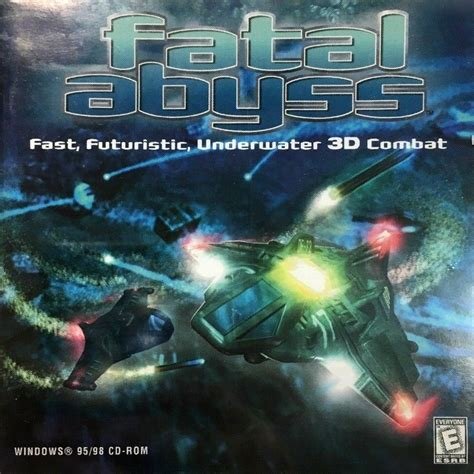
In the future, ‘Fatal Abyss’ pits players in an underwater war between factions fighting over Bacteria 241, a revolutionary energy source discovered on the ocean floor. As a pilot for Eco Systems, you engage in fast-paced 3D combat against renegades from Proteus Tech across 24 missions spanning seven distinct underwater environments. The game emphasizes reflexes and action, offering a variety of vehicles equipped with over 10 weapons and defensive systems, with gameplay perspectives ranging from first-person to third-person views and strategic map overlays.
Gameplay Videos
Fatal Abyss Reviews & Reception
en.wikipedia.org (52/100): The game received mixed reviews according to the review aggregation website GameRankings.
gamespot.com (56/100): This is either the most challenging game of the decade or one of the most flawed games of the year.
mobygames.com (54/100): Average score: 54% (based on 10 ratings)
gamegenie.com : The gameplay was good; it tried to simulate underwater combat, and did its job.
Fatal Abyss Cheats & Codes
PC
Add the command-line parameter to enable the cheat function, then use the key during gameplay.
| Code | Effect |
|---|---|
| iwannaextrafunctions | Enables the keypad level skip function. |
| * (on numeric keypad) | Skips to the next level at the start of a mission. |
Fatal Abyss: A Forgotten Depths Analysis
Introduction
In the turbulent waters of late-90s PC gaming, Fatal Abyss (1998) emerges as a curious artifact – an ambitious but flawed attempt to merge Descent-style 6DOF combat with submarine warfare. Developed by Hungarian studio Human Soft under SegaSoft’s short-lived PC initiative, this futuristic underwater shooter now rests at the bottom of gaming history, remembered as a technical showpiece hamstrung by design limitations. Through exhaustive analysis of its development history, mechanics, and contested legacy, this review examines why Fatal Abyss remains a compelling case study of unrealized potential in the 3D gaming revolution.
Development History & Context
Born amidst SegaSoft’s aggressive PC expansion following the Saturn’s decline, Fatal Abyss originated from Budapest-based Human Soft – a studio previously known for arcade ports like Scud: Industrial Evolution. The project reflected several late-90s industry dynamics:
-
Technological Constraints: Built for base Pentium 166 systems with 2MB VRAM, the proprietary 3D engine prioritized framerate over detail, resulting in sparse environments (GameGenie noted “lack of fish/rocks”). Multiplayer required HEAT.net integration – SegaSoft’s ambitious but ill-fated online service.
-
Creative Vision: Producer Greg Becksted sought to create “fast, futuristic underwater combat” distinct from sim-focused contemporaries (Submarine Titans). Programmer Zsombor Heffter’s team developed unique water physics with bubble trails and pressure-based depth limits.
-
Hungarian Gaming Landscape: As one of Eastern Europe’s early 3D efforts, the 68-person crew faced resource limitations. MobyGames credits reveal overlapping roles – composer Konrad Kis also contributed sound effects, reflecting constrained budgets.
Critics later noted signs of rushed production: minimal manual documentation, unbalanced enemy AI, and inconsistent visual polish foreshadowed the game’s mixed reception.
Narrative & Thematic Deep Dive
At its core, Fatal Abyss presents a skeletal corporate warfare premise:
– Bacteria 241: A MacGuffin energy source triggering conflict between altruistic Eco Systems and ruthless Proteus Tech
– Mirrored Campaigns: 12 missions per faction with identical objectives (escort/destroy) – what IGN called “déjà vu design”
– Minimal Storytelling: Brief text briefings replace cutscenes; voice acting limited to repetitive AI warnings (“Critical damage!”)
While ostensibly inspired by Dune‘s resource wars, thematic potential drowns under repetitive action. Unlike System Shock 2 (released months later), characters lack identities – Proteus Tech’s “world domination” motives never escalate beyond mission text. The aquatic setting becomes mere backdrop rather than narrative driver, squandering opportunities for environmental storytelling seen in contemporary titles like Ecco the Dolphin.
Gameplay Mechanics & Systems
Fatal Abyss blends Descent-style movement with vehicular combat mechanics:
Core Loop:
- Vehicle Selection: Scout (speed), Attack (balance), or Heavy (firepower) subs with customizable loadouts
- Mission Structure: 24 objectives across 7 maps, emphasizing “quick-reflex shootouts” (MobyGames)
- Resource Management: Energy cells power weapons/repairs, requiring risky docking station visits
Innovative Systems:
- Multi-Perspective Views: Dynamic switching between 1st-person cockpit, 3rd-person chase, and strategic sonar map
- Depth-Based Mechanics: Crush depths punished ascension – a novel risk/reward element
- 16-Player Multiplayer: HEAT.net support enabled large-scale submarine deathmatches
Critical Flaws:
- Brutal Difficulty: PC Gamer cited “3-4 enemies attacking simultaneously” creating unfair encounters
- Control Issues: Mouse sensitivity problems made precise aiming impossible (Game Revolution)
- Progression Unlocks: Limited vehicle customization failed to offset repetitive missions
Despite promoting “no resource management,” energy constraints paradoxically forced cautious play – clashing with advertised arcade action.
World-Building, Art & Sound
Fatal Abyss presents audiovisual contradictions:
Visual Design:
- Environment: Barren, texture-repeating seabeds (CGW: “sparse”) contrasted with:
- Weapontrail bubbles creating dynamic depth cues
- Implosion effects with particle-driven debris fields
- Technical Execution:
- Glitchy 2D explosions (“Wolfenstein-era” per GameGenie) clashed with detailed 3D submarines
- Real-time lighting via headlights/weapons (a 1998 technical feat)
Auditory Landscape:
- Sound Design:
- Repetitive torpedo alerts grated over long sessions
- Crush depth warnings lacked urgency until instantaneous death
- Music: Erno Zalka’s synth-orchestral score earned praise (GameSpot: “moody… MechWarrior 2-esque”)
Collectively, the game achieved bleak isolation but failed to match Aquanox‘s alien wonder or Sub Culture‘s whimsical charm.
Reception & Legacy
Upon November 1998 release, reviews diverged sharply:
Critical Response:
- Positive: PC Accelerator (60/100) praised “fast multiplayer,” Computer Gaming World (70/100) lauded “impressive explosions”
- Negative: PC Gamer (24/100) declared it “done better elsewhere,” Game Revolution (D) criticized “cookie-cutter design”
Commercial Impact:
- Likely underperformed given SegaSoft’s 1999 closure and rare physical copies today
Lasting Influence:
- Eastern European Development: Paved way for Hungarian studios like Digital Reality (Imperium Galactica II)
- Aquatic Combat Genre: Flawed physics inspired refined successors (Aquanox 2)
- Multiplayer Experimentation: 16-player battles presaged casual online arenas
Modern retrospectives remain scarce – its primary legacy resides as a MobyGames curio and abandonware artifact.
Conclusion
Fatal Abyss embodies the late-90s 3D shooter boom’s growing pains – conceptually daring (submarine Descent with corporate intrigue) but executionally uneven. While its HEAT.net multiplayer hinted at potential and technical flourishes (implosion effects, adaptive sonar) impressed period critics, fatal flaws in controls, narrative scaffolding, and mission design sunk its reputation. Today, it remains a fascinating relic less for what it achieved than what it represents: a bold, deeply imperfect attempt to navigate uncharted waters where few developers dared to dive. For historians of Eastern European game development or Sega’s PC misadventures, Fatal Abyss warrants rediscovery; for all others, it remains stranded in the abyss of forgettable mediocrity.