
- Release Year: 2016
- Platforms: PlayStation 4, Windows
- Publisher: Creaciones Interactivas de Mexico, S.A. de C.V.
- Developer: Creaciones Interactivas de Mexico, S.A. de C.V.
- Genre: Action
- Perspective: Side view
- Game Mode: Single-player
- Gameplay: Platform, Shooter
- Setting: Fantasy
- Average Score: 64/100
Description
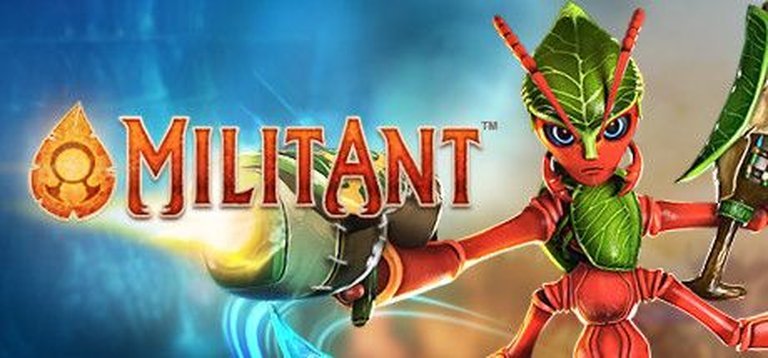
MilitAnt is a 2.5D action game developed by Xibalba Studios, set in a fantasy world inspired by animated films like ‘A Bug’s Life’ and ‘Ant Z’. Players control an advanced ant who must defend its colony from invading termites seeking precious crystals. The game features side-scrolling shooter mechanics with platforming elements, inspired by the Contra series. Players navigate through eight varied locations, battling over thirty enemy types with a variety of weapons, including shotguns and rocket launchers. The protagonist’s multiple limbs allow the use of up to four weapons simultaneously, adding a strategic layer to combat.
Gameplay Videos
Where to Buy MilitAnt
PC
MilitAnt Cracks & Fixes
MilitAnt Guides & Walkthroughs
MilitAnt Reviews & Reception
metacritic.com (44/100): MilitAnt’s poorly implemented targeting system combined with its weak visual presentation and mediocre platforming squander its interesting premise.
reddit.com : The Witness would easily be my choice for the best game of 2016.
metacritic.com (84/100): Hitman is unquestionably the finest game in the series. It might be one of the best stealth games ever made.
MilitAnt: Review
A Flawed But Ambitious Homage to Retro Shooters
Introduction
In the crowded landscape of indie shooters, MilitAnt (2016) stands out for its audacious premise: a microscopic war between insect factions armed with shotguns, flamethrowers, and rocket launchers. Developed by Mexico’s Xibalba Studios, the game aimed to marry the brutal charm of Contra with the whimsical world-building of A Bug’s Life. While its creativity and nostalgic appeal earned it accolades in incubation programs, MilitAnt was ultimately hobbled by technical limitations and divisive design choices. This review argues that despite its flaws, MilitAnt remains a fascinating artifact—a love letter to retro shooters that struggles to modernize their magic.
Development History & Context
Xibalba Studios, a small Mexican team founded by Ricardo Villarreal, sought to create a game that blended childhood doodles of insect warfare with the frenetic energy of 1980s arcade classics. Inspired by Contra’s run-and-gun gameplay and the animated charm of Pixar’s insect-centric films, the studio envisioned a “fast twitch side-scrolling blastacular” that could compete in an era dominated by AAA blockbusters.
Developed in Unity, MilitAnt faced significant technological constraints. Budget limitations forced compromises in animation polish and AI behavior, while the shift to 2.5D—a blend of 2D gameplay with 3D environments—resulted in occasional visual clunkiness. Despite these hurdles, the project garnered early praise, winning Intel’s “Best Shooter” award and nominations at Game Connection America.
Released in July 2016 for PlayStation 4 and PC, MilitAnt entered a market saturated with retro revivals (Shank 2, Mercenary Kings) and demanding precision-platformers (Celeste, Shovel Knight). Its timing was both a blessing and a curse: while indie-friendly platforms like Steam welcomed experimental titles, the game’s rough edges alienated critics expecting modern refinements.
Narrative & Thematic Deep Dive
MilitAnt’s plot is straightforward yet evocative. Players control a lone ant soldier defending their colony from termite invaders hellbent on seizing “Crystalite,” a precious energy source. The narrative channels post-apocalyptic survival tropes on a microscopic scale, painting a grim portrait of interspecies rivalry. While lacking nuanced characters or dialogue, the game’s environmental storytelling shines: derelict mines, jungles teeming with hostile fauna, and barren wastelands hint at a world ravaged by resource wars.
Themes of sacrifice and resilience permeate the campaign. The ant protagonist—a silent, disposable grunt—embodies the futility of war, while termite bosses like the “Wasp Air Force General” caricature militaristic excess. However, the story never digs deeper than surface-level allegory, opting instead for bombastic set-pieces over emotional weight.
Gameplay Mechanics & Systems
At its core, MilitAnt is a side-scrolling shooter with platforming elements. The game’s standout feature is its weapon system: players can equip four firearms simultaneously, mixing shotguns, electric rifles, and sentry guns to overwhelm enemies. This “loadout freedom” encourages experimentation, though progression is gated by Crystalite earned from bosses and challenges.
The combat loop oscillates between exhilarating and frustrating. While mowing down termite hordes with a flamethrower delights, MilitAnt’s targeting system—criticized as “unreliable” by Game Rant—often misfires, turning precision shots into chaotic sprays. Platforming segments suffer similarly, with imprecise jumps leading to cheap deaths.
Boss battles, scored by God of War composer Gerard K. Marino, are a highlight. The towering Queen Beetle and Spider Tank demand pattern memorization and reflexes, though their difficulty spikes (Video Chums called them “relief to finish, not fun to play”) highlight the game’s uneven balance.
World-Building, Art & Sound
MilitAnt’s aesthetic is a paradox. Its 2.5D environments burst with color and personality, from sun-drenched anthills to neon-lit termite hives. Character designs—armored ants, cyborg wasps—channel a “bizarre Starship Troopers meets A Bug’s Life” vibe. Yet textures often appear muddy, and animations lack polish, earning comparisons to “a PS2 game” (GameGrin).
Sound design salvages some immersion. Marino’s orchestral tracks elevate boss fights into epic showdowns, while ambient noises—buzzing wings, skittering legs—anchor the insectoid setting. The absence of voice acting, however, leaves the world feeling sterile.
Reception & Legacy
MilitAnt garnered middling reviews, with a Metascore of 44 and a Steam rating of 40% positive. Critics praised its creativity (GameSpew: “an unusual take on side-scrolling shooters”) but lambasted its janky controls (MAN!AC: “old technology ruins a nice idea”). Players were equally divided: some lauded its “pure, plain fun” (Steam user metroid1980), while others called it “offensively bad” (GameGrin).
Commercially, the game faded into obscurity, though its Cross-Buy support on PlayStation platforms earned minor goodwill. Its legacy lies in its ambition: MilitAnt proved indie studios could tackle grand themes and mechanics, even if execution faltered.
Conclusion
MilitAnt is a textbook example of unfulfilled potential. Its imaginative premise, weapon customization, and Gerard Marino’s score showcase Xibalba Studios’ passion, yet clunky controls and technical shortcomings undermine the experience. For hardcore fans of retro shooters, it offers fleeting bursts of nostalgia-driven joy. For most, however, it remains a curiosity—a flawed but earnest homage to a bygone era. In the pantheon of indie darlings, MilitAnt is neither a triumph nor a disaster, but a fascinating middleground worth studying.