
- Release Year: 2020
- Platforms: Android, iPad, iPhone, Macintosh, Nintendo Switch, Windows
- Publisher: Fellow Traveller Games, Torpor Games UG
- Developer: Torpor Games UG
- Genre: Political, Role-playing (RPG), Simulation
- Perspective: Text-based
- Game Mode: Single-player
- Gameplay: Business simulation, Managerial, Moral choices, Narrative-driven, Political simulation
- Setting: Fictional country (Sordland), Political drama
- Average Score: 78/100
Description
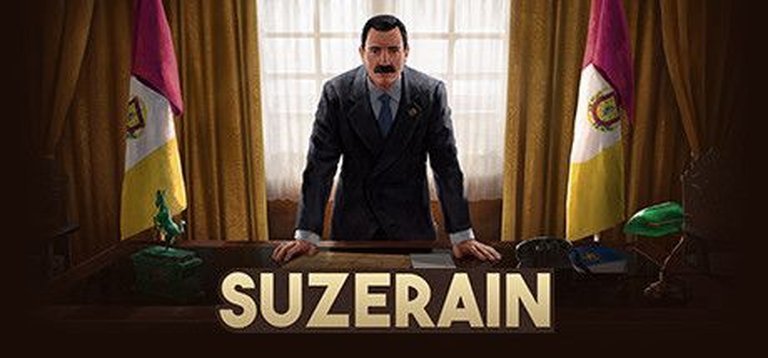
Suzerain is a political simulation RPG where players assume the role of Anton Rayne, the newly elected president of the fictional nation of Sordland, navigating a tense Cold War-inspired setting. Through text-based interactions and strategic decision-making, players balance diplomacy, economic policies, corruption, and public opinion while managing political factions and crises. Choices have far-reaching consequences that determine the fate of the nation, with multiple branching paths and endings reflecting ideological clashes and socio-economic challenges.
Gameplay Videos
Where to Buy Suzerain
PC
Suzerain Free Download
Suzerain Guides & Walkthroughs
Suzerain Reviews & Reception
metacritic.com (81/100): A riveting politico-economic drama that seamlessly turns into a journey of self-knowledge.
opencritic.com (76/100): Suzerain is a fascinating text-based adventure about the trials and tribulations of politics, complete with engaging characters and twists aplenty.
vice.com : it is one of the most fascinating political strategy games of the past several years.
thirdcoastreview.com : the writing is well done, and the alternate-Earth world-building is superb.
Suzerain Cheats & Codes
PC
Open the file “savegame.xml” located at C:\Users\
| Code | Effect |
|---|---|
| [“SuzVar.GovernmentBudget”]=12 | Sets the government budget to the specified value (e.g., 12, up to a maximum of 15). |
| [“SuzVar.PersonalWealth”]= | Sets the player’s personal wealth to the specified value. |
| [“SuzVar.CountryUnrest”]=3 | Sets the country unrest level to 3 (default), can be adjusted between -3 and 3. |
| [“SuzVar.PublicOpinion”]=50 | Sets the public opinion to the maximum value of 50. |
| [“SuzVar.BludishOpinion”]=100 | Sets the Bludish opinion to the maximum value of 100. |
| [“SuzVar.Economy”]=9 | Sets the economy development bar to full (value 9). |
| [“ReformsVar.Assembly_Vote”]= | Sets the number of votes the player receives in the Assembly for constitutional reforms. |
| [“ReformsVar.Court_Vote”]= | Sets the number of votes the player receives in the Supreme Court for constitutional reforms. |
| [“SuzVar.Economy_Agnland”]= | Sets the economy level of Agnland. |
| [“SuzVar.Economy_Bergia”]= | Sets the economy level of Bergia. |
| [“SuzVar.Economy_Lorren”]= | Sets the economy level of Lorren. |
Suzerain: Review
A Masterclass in Political Simulation and Narrative Depth
Introduction
In an era where video games often prioritize explosive action or escapist fantasy, Suzerain emerges as a daring anomaly—a text-based political simulator that plunges players into the brutal, intoxicating world of governance. Developed by the Berlin-based indie studio Torpor Games, this 2020 gem transforms the mundane complexities of policymaking into a gripping drama of power, compromise, and consequence. Set against the backdrop of a fictional Cold War-inspired universe, Suzerain does not merely entertain; it educates, challenges, and unsettles. This review posits that Torpor Games has crafted Suzerain into a landmark achievement in interactive storytelling—a game that redefines the political simulation genre through its uncompromising realism, narrative richness, and systemic depth.
Development History & Context
Vision Amid Constraints:
Torpor Games, founded in 2018 by Ata Sergey Nowak, Ilka Karademir, and Özgün Kilit, conceived Suzerain as a response to the lack of politically nuanced games. Drawing from Max Weber’s Politics as a Vocation and Machiavelli’s The Prince, alongside influences like House of Cards and The West Wing, the studio sought to simulate leadership’s emotional and ethical weight. Built on Unity with a modest team, the game’s text-centric design circumvented budgetary limitations, channeling resources into writing a staggering 450,000-word script—rivaling The Lord of the Rings in length.
A Landscape Starved for Substance:
Released in December 2020 during a surge of indie innovation, Suzerain defied an industry dominated by AAA spectacles. While contemporaries like Crusader Kings III abstracted politics into grand strategy, Torpor opted for intimacy, focusing on a single presidential term in the fictional republic of Sordland. This choice reflected a broader indie trend—exemplified by Disco Elysium—of prioritizing narrative depth over graphical polish, proving that compelling prose could rival photorealism in immersion.
Narrative & Thematic Deep Dive
A Nation on the Brink:
Players assume the role of Anton Rayne, the newly elected president of Sordland—a fractured democracy emerging from decades of authoritarian rule under the Sollist regime. Inspired by mid-20th-century Turkey, Sordland grapples with ethnic tensions (particularly with the persecuted Bludish minority), economic recession, and the specter of war with the bellicose monarchy of Rumburg. The brilliance of Suzerain’s narrative lies in its refusal to caricature ideology: whether pursuing liberal reforms, socialist policies, or hardline nationalism, every path reveals agonizing trade-offs.
Characters as Ideological Vectors:
The cabinet embodies Sordland’s political schisms. Interior Minister Lileas Graf represents the Old Guard’s reactionary pragmatism, advocating crackdowns on dissent, while Justice Minister Nia Morgna champions constitutional reforms at the risk of destabilizing the state. These characters are not mere quest-givers but ideological combatants whose loyalty is contingent on the player’s choices. Familial subplots—like Rayne’s strained marriage and his daughter Franc’s political awakening—layer personal stakes onto national crises, evoking The West Wing’s humanist sensibility.
Themes of Power and Morality:
Suzerain interrogates Machiavellian pragmatism vs. Weberian idealism. Passing a constitution that curbs presidential powers may satisfy reformers but invites paralysis when crises demand swift action. Aligning with the capitalist ATO (Arcasian Treaty Organization) offers economic relief but risks debt traps and cultural erasure, while embracing the socialist CSP (Contanan Security Pact) invites sanctions and civil unrest. The game’s genius is its rejection of moral binaries—even “benevolent” policies like universal healthcare can bankrupt the state, sparking coups or revolutions.
Gameplay Mechanics & Systems
The Architecture of Governance:
At its core, Suzerain is a menu-driven RPG where decisions ripple across four domains:
1. Economy: A delicate balancing act of privatization vs. nationalization. Defunding healthcare to invest in infrastructure may boost GDP but trigger public outrage.
2. Constitution: Rewriting Soll’s authoritarian charter demands parliamentary maneuvering. Will you empower the legislature, risking gridlock, or consolidate executive control, inviting corruption?
3. Diplomacy: Navigating alliances involves high-stakes summits. A misstep at the AN (Alliance of Nations) assembly could embolden Rumburg’s expansionist Queen Beatrice Livingston.
4. Crisis Management: From terrorism in Bergia to oligarchic coups, events unfold via branching dialogues where rhetoric matters—a single sardonic remark can alienate a key ally.
The 2.0 “Amendment” Update:
The 2023 overhaul refined mechanics like budget management, introducing tiered spending (low/medium/high) to reflect real-world fiscal constraints. Privatization became riskier, with layoffs sparking protests, while the expanded Codex integrated news dispatches that contextualize player choices within the game’s lore.
The Kingdom of Rizia Expansion (2024):
This prequel casts players as King Romus Toras, tasked with modernizing a feudal monarchy. New systems like Authority (political capital) and Energy (personal stamina) deepen roleplaying, while war mechanics—absent in the base game—allow players to command armies in turn-based conflicts. The DLC’s focus on royal intrigue (e.g., appeasing nobles vs. empowering parliament) complements Sordland’s republican drama, enriching the Suzerainverse’s geopolitical tapestry.
World-Building, Art & Sound
A Textual Tapestry:
Suzerain’s visuals are minimalist—static character portraits (reminiscent of Disco Elysium) and a parchment-style UI evoke a Cold War dossier. Yet this austerity enhances immersion, forcing players to imagine the smoke-filled rooms and protest marches described in vivid prose. The world map, dotted with pins for alliances and crises, becomes a tactile representation of Sordland’s fragility.
Sound as Political Weapon:
Composer James Spence’s score blends melancholic piano motifs with tense strings, mirroring Rayne’s isolation. Diegetic sounds—typewriters clacking during speeches, crowds chanting during riots—anchor players in the era. The absence of voice acting (except for newsreels) sharpens focus on the script’s Shakespearean weight, where every whispered conspiracy or demagogic rant crackles with subtext.
Lore as Living History:
The Codex, accessible mid-dialogue, details everything from the Nurist faith (a Christianity/Islam analogue) to the Valgslandian Revolution (a proxy for the Russian Revolution). This encyclopedic depth—bolstered by Reddit-shared timelines of the “Century of Revolutions”—transforms Sordland from a backdrop into a character, its scars and ideologies echoing real-world struggles.
Reception & Legacy
Critical Acclaim:
Suzerain earned an 81 Metacritic score and cult status for its boldness. Der Spiegel hailed it as “perhaps the most realistic video game about politics,” while Vice praised its “sharp historical insight.” Critics lauded its refusal to trivialize governance—though some noted the steep learning curve as a barrier.
Awards and Influence:
The game won the 2021 German Computer Game Award for “Best Expert Game” and the Games for Change “People’s Choice Award.” Its legacy endures in narrative-driven indies (The Conformist, Torpor’s upcoming Sordland-set prequel) and modding communities dissecting its political models.
Commercial Impact:
Despite modest sales (~300,000 units by 2025), Suzerain resonated in China, prompting a Mandarin localization. The 2.0 and Rizia updates sustained engagement, with Steam reviews praising its “90% replayability” and ideological neutrality.
Conclusion
Suzerain stands as a watershed moment in interactive storytelling—a game that dares to treat politics not as a power fantasy but as a crucible of impossible choices. Its text-driven intimacy, systemic brilliance, and unflinching realism evoke the moral weight of Papers, Please while surpassing it in scope. Torpor Games has crafted more than a game; it is a council of state, a Nietzschean abyss that stares back. In an industry often accused of juvenility, Suzerain is a defiant monument to maturity—proof that the quiet drama of a beleaguered leader signing a budget can be as riveting as any dragon hunt. For historians, journalists, and anyone who believes games can illuminate the human condition, Suzerain is not merely essential—it is indispensable.
Final Verdict: A masterwork that belongs alongside Disco Elysium and Tyranny in the pantheon of narrative RPGs, Suzerain is 9/10—flawed only in its occasional opacity, but transcendent in ambition and execution.