
- Release Year: 2015
- Platforms: Windows
- Publisher: Digital Homicide Studios L.L.C.
- Developer: Digital Homicide Studios L.L.C.
- Genre: Action
- Perspective: Diagonal-down
- Game Mode: Single-player
- Gameplay: Arcade
- Average Score: 27/100
Description
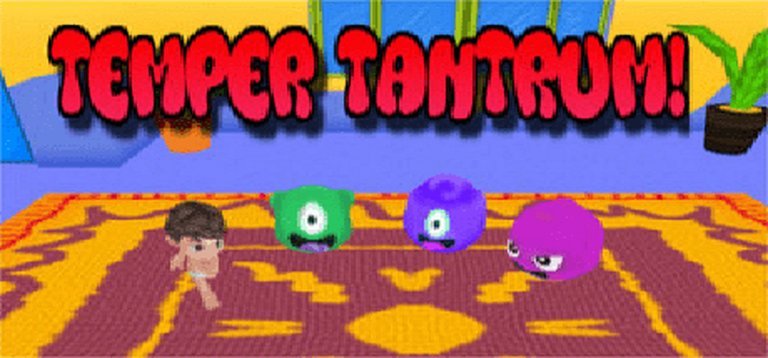
In ‘Temper Tantrum!’, players take control of a mischievous child named Johnny who is determined to avoid bedtime. The game is set in a series of household environments where Johnny wreaks havoc, breaking furniture and eating candy to boost his speed. The objective is to destroy everything in sight while avoiding the pursuit of monstrous figures like Mr. NightNight, Mr. Sleepytime, and Mr. Boogerman, who will force Johnny to take a nap if caught. The game features fast-paced arcade-style gameplay with a fixed, flip-screen perspective.
Temper Tantrum! Reviews & Reception
metacritic.com (35/100): This is most realistic role play of all time. I dont see nothing like this is amazing man.
howlongtobeat.com (20/100): Very buggy, terrible controls, extremely repetitive, and the camera flails around uncontrollably.
Temper Tantrum!: A Cautionary Tale of Asset Flips and Indie Gaming Excess
Introduction
In the vast graveyard of forgotten indie games, Temper Tantrum! (2015) stands as a grim monument to the pitfalls of low-effort game development. Developed by the infamous Digital Homicide Studios, this Windows-based arcade title became a footnote in gaming history—not for innovation, but as a case study in lazy design and corporate hubris. This review unpacks the game’s legacy as a textbook “asset flip,” its mechanical emptiness, and its role in fueling debates about quality control in digital storefronts.
Development History & Context
A Studio’s Notorious Legacy
Digital Homicide Studios, led by brothers James and Robert Romine, carved a niche as one of Steam’s most reviled developers in the mid-2010s. Known for churning out cheap, derivative titles (Toddler Tantrum!, Slaughtering Grounds), the studio became synonymous with “shovelware.” Temper Tantrum! arrived amid their litigious feud with critic Jim Sterling, who branded their output “embarrassing.”
Technological Constraints? Or Laziness?
Built in Unity using pre-purchased assets—3DRT-Toonworld Interiors for levels, generic “Jelly Monsters” for enemies—the game exemplifies the “asset flip” trend. While Unity democratized game development, Temper Tantrum! showcased its misuse: zero original art, placeholder animations, and a slapped-together design. The studio’s reliance on public domain/free-to-play models reflected a cash-grab mentality, not creative ambition.
The 2015 Indie Landscape
The mid-2010s saw indie gaming’s golden age (Undertale, Rocket League), but also a flood of low-quality titles on Steam. Greenlight’s lax curation allowed projects like Temper Tantrum! to thrive briefly before backlash spurred Valve’s policy reforms.
Narrative & Thematic Deep Dive
Plot: Destructive Simplicity
Players control “Johnny,” a toddler rebelling against bedtime by smashing household objects. The “narrative” is a thin excuse for chaos: evade sleep-enforcing enemies (Mr. NightNight, Mr. Boogerman) while hoarding candy for speed boosts.
Characters and Dialogue: Nonexistent
Johnny lacks personality beyond his tantrum, while enemies are generic blob-like figures. With no dialogue or context, the game’s world feels sterile and unfinished.
Themes: Rebellion Without Purpose
The game’s shallow premise—chaos vs. order—could have explored childhood autonomy or parental authority. Instead, it revels in meaningless destruction, offering no commentary or emotional resonance.
Gameplay Mechanics & Systems
Core Loop: Repetition Over Fun
- Objective: Break every object in three identical-looking houses.
- Movement: Floaty, imprecise controls make navigation frustrating.
- Combat: No combat—just evasion of sluggish AI enemies.
- Progression: Candy grants temporary speed boosts, but level resets on death negate any sense of growth.
UI and Innovation: A Study in Failure
- The camera swings wildly, inducing motion sickness.
- The score system feels pointless, with no leaderboards or rewards.
- Sugar Rush mechanic could have added depth but is underdeveloped.
World-Building, Art & Sound
Visuals: Asset-Store Aesthetic
The game’s “charm” relies on stock Unity assets: garishly colored furniture, cookie-cutter rooms, and uninspired enemy designs. The fixed diagonal perspective limits visibility, exacerbating the claustrophobic chaos.
Sound Design: An Afterthought
Generic crash sounds and a looping MIDI-like soundtrack amplify the amateurish feel. There’s no voice acting or atmospheric audio to elevate the experience.
Atmosphere: Chaotic, Not Captivating
While the premise suggests anarchic fun, the execution feels hollow. The lack of visual or auditory cohesion renders the world forgettable.
Reception & Legacy
Critical and Commercial Reception
- Metacritic: User scores averaged 3.5/10, with complaints about bugs and monotony.
- MobyGames/VideoGameGeek: No critic reviews, but user ratings (3/10) cement its reputation as a failure.
- Sales: The game was pulled from storefronts amid Digital Homicide’s legal battles and Steam’s curation reforms.
Influence: A Cautionary Tale
Temper Tantrum! became shorthand for “asset flip” disdain. Its infamy helped fuel debates about Steam’s quality control, contributing to platform policy changes. Digital Homicide’s 2016 dissolution marked the end of an era—and a warning to developers prioritizing quantity over quality.
Conclusion
Temper Tantrum! is not just a bad game—it’s a cultural artifact. Its shoddy design, cynical development practices, and historical context make it essential reading for understanding indie gaming’s growing pains. While it fails as entertainment, it succeeds as a lesson: creativity cannot be outsourced to an asset store. For historians and critics, Temper Tantrum! is a definitive case study in how not to make a game. For players? Avoid unless you’re masochistically curious—or need a reminder of how far gaming has come.
Final Verdict: A hollow, lazy product that deserves its obscurity. Temper Tantrum! earns its place in history only as a warning.