
- Release Year: 1998
- Platforms: Windows
- Publisher: Imagineer Co., Ltd., Infogrames Europe SA, Ocean Software Ltd.
- Developer: Digital Image Design Ltd.
- Genre: Simulation, Strategy, Tactics
- Perspective: 1st-person
- Game Mode: LAN, Online PVP, Single-player
- Gameplay: Dynamic campaigns, Flight Simulation, Mission planning, Vehicular combat
- Setting: Military, Modern
- Average Score: 87/100
Description
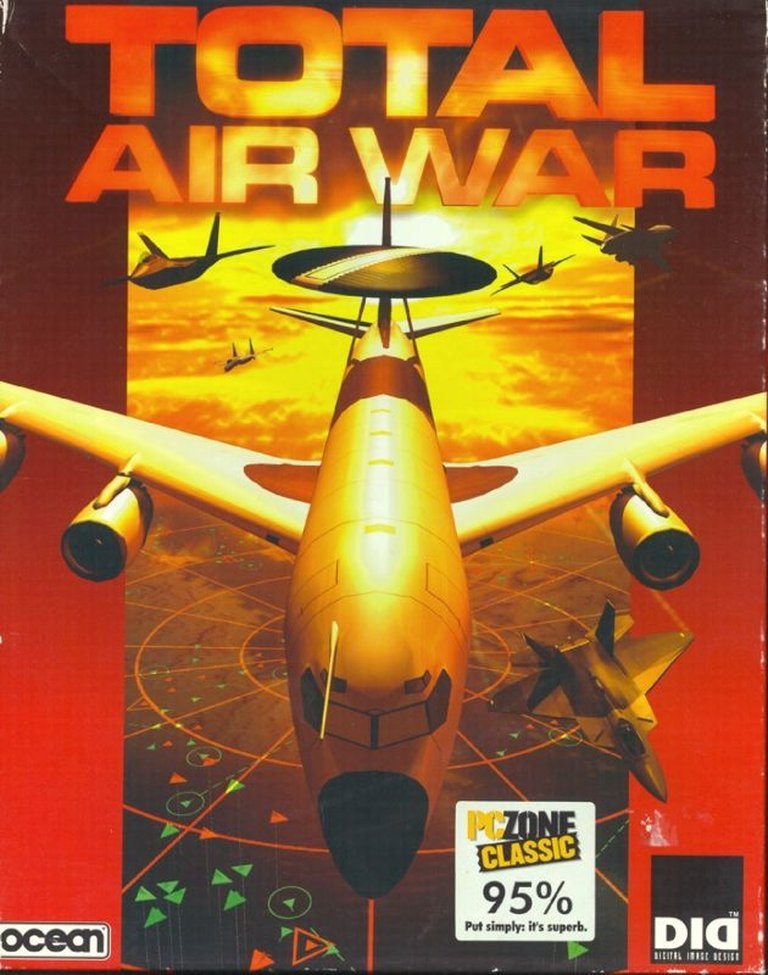
Total Air War is an F-22 Raptor flight simulator that combines dynamic campaign management with intense aerial combat. Set around the Red Sea, the game generates unpredictable alliances and mission scenarios, allowing players to fly combat sorties, edit missions, or strategically direct allied forces via AWACS command. Campaign outcomes evolve based on mission success, offering a blend of hands-on flight action and tactical decision-making.
Gameplay Videos
Total Air War Patches & Updates
Total Air War Mods
Total Air War Guides & Walkthroughs
Total Air War Reviews & Reception
gamespot.com : This is, quite simply, one of the most addictive, entertaining, and approachable jet combat sims I’ve ever seen.
Total Air War: The Pinnacle of 90s Air Combat Simulations
Introduction
In the pantheon of late-90s combat flight simulators, Digital Image Design’s Total Air War (1998) remains a cult-classic anomaly — a technical marvel hobbled by corporate turmoil yet revered for its audacious systems design. As the spiritual successor to F-22 Air Dominance Fighter (1997), TAW promised a revolutionary blend of tactical aerial combat and dynamic strategic warfare. Though commercially overshadowed by contemporaries like Falcon 4.0, its legacy endures as a daring fusion of genres that predated modern “sandbox” military simulations. This review dissects Total Air War as both a flawed masterpiece and a cautionary tale of ambition versus execution in an era of seismic industry shifts.
Development History & Context
The Rise and Fall of Digital Image Design
British studio DID carved its reputation with technically ambitious sims like TFX (1993) and EF2000 (1995), the latter selling 700,000 copies and setting benchmarks for terrain scale and avionics realism. Yet by 1997, internal strife plagued the studio. F-22 Air Dominance Fighter shipped unfinished, omitting its promised dynamic campaign and alienating fans. TAW—conceived as an expansion—was hastily repositioned as a standalone sequel to recoup losses, fueling accusations of greed from players (GameStar: “Not the feine englische Art“).
Technological Ambitions in the Glide-to-DirectX Transition
Developed amidst the twilight of 3DFX Glide dominance, TAW targeted emerging Direct3D compatibility while retaining Voodoo-card optimization. This split focus strained resources, resulting in rudimentary textures and aircraft models criticized as “betagt” (aged) upon release (PC Action). Compounding this, TAW’s novel campaign engine demanded hefty computational resources for 1998—Pentium 166 MHz, 32MB RAM—pushing boundaries but limiting accessibility.
A Landscape of Giants
Launching alongside Falcon 4.0 and Jane’s USAF, TAW faced fierce competition. Its innovation lay not in raw simulation depth but in scope: a real-time, geopolitical war machine where players could toggle between cockpit and command roles. Yet publisher Infogrames’ minimal marketing (only 50,000 units pressed) and retail ambivalence toward its strategic complexity stifled reach.
Narrative & Thematic Deep Dive
Cold War Shadows in the Red Sea
TAW forsakes scripted campaigns for procedurally generated conflicts across Sudan, Eritrea, and Saudi Arabia, framed by volatile alliances between fictionalized stand-ins for the US, Russia, and China. Missions escalate via Colonel John Warden III’s “Five Rings” doctrine—targeting leadership, infrastructure, and supply lines in phased campaigns. This procedural narrative, while devoid of character-driven plots, simulates war’s chaos: stray into neutral airspace, and entire nations might turn hostile.
Themes of Fragile Control
The game’s core tension lies in its dual identities: as a pilot, you dogfight MiG-29s in meticulously modeled F-22 cockpits; as an AWACS commander, you orchestrate battles via tactical maps. This duality mirrors real military paradoxes—individual heroism versus systemic pragmatism—but lacks narrative payoff. “Success” feels clinically algorithmic, a critique echoed by WomenGamers.com: “It registers results, not drama.”
Gameplay Mechanics & Systems
The Dynamic Campaign: A Living War
TAW’s crown jewel is its campaign engine, generating missions in real-time based on strategic AI decisions. Players climb ranks from novice CAP sorties to high-strike missions, with optional AWACS oversight letting you redirect allies mid-battle. The Mission Planner allows deep customization—waypoints, escort wings, payloads—but relentless tempo penalizes hesitation: dawdle, and the AI resolves sorties autonomously (Computer Gaming World: “Extremely stable… but exhausting“).
Combat and Control: Jarring Juxtapositions
DID’s flight model balanced arcade accessibility (easy mode autopilot) with simulation rigor (fuel management, stealth EMCON protocols). Yet systems clashed: AWACS interface navigated via point-and-click felt disconnected from the MFD-heavy cockpit, while bugs like autopilot runway crashes (GameSpot) or unrewarded ejections marred immersion. Multiplayer (8-player LAN/internet) added longevity but suffered from primitive netcode.
UI: Ambition Versus Clarity
The cockpit HUD and AWACS radar provided data-rich immersion but overwhelmed newcomers. Critics noted confusing “target view” briefings (Adrenaline Vault: “useless zoomed-out images“) and a steep learning curve unmitigated by tutorials. Modders later salvaged this with community guides, but vanilla TAW demanded patience.
World-Building, Art & Sound
The Red Sea as Digital Battleground
Terrain spanned 1,200 x 800 km, rendering deserts, mountains, and coastal cities with then-impressive LOD scaling. While earth tones dominated, modders like Polak later enhanced textures, revealing untapped artistry beneath technical constraints. Weather effects—dynamic clouds, day/night cycles—were pioneering but inconsistently optimized; Glide wrappers unlocked 1024×768 resolutions post-release.
Sonic Authenticity and Absence
Radio chatter via the DSP Truespeech Codec heightened immersion, with wingmen barking status updates mid-fight. Yet sound design otherwise faltered: engine roars felt thin, and explosions lacked weight. The absence of a musical score (beyond menu themes) amplified the simulation’s sterile aura.
Reception & Legacy
Critical Acclaim, Commercial Obscurity
TAW earned accolades—a 95% from PC Zone, “Best Flight Sim 1998” from PC Player—and an AIAS “Simulation of the Year” nomination. However, sales languished amid Infogrames’ disinterest and DID’s 1999 collapse. Staff exoduses birthed Evolution Studios (later Rage), leaving TAW orphaned.
Modding Renaissance and Legal Entropy
The game’s afterlife proved remarkable: circa 2006, hackers like Krusade cracked DID’s proprietary RA compression, enabling texture/model swaps. The Air Dominance Project collective spawned TAW 2.0 (2008)—a mod bundling HD skies, campaigns, and fixes—but legal threats from Atari (née Infogrames) purged forums and downloads by 2009. Despite this, the community persists via Combatsim.com and bespoke engines reverse-engineering DID’s tech.
Influence on the Genre
TAW’s DNA threads through Eagle Dynamics’ dynamic campaigns in DCS World and ARMA’s combined-arms ethos. Its conceptual daring—real-time strategy layered over hardcore simulation—remains unmatched, a testament to a studio pushing boundaries before imploding under corporate indifference.
Conclusion
Total Air War is a time capsule of late-90s ambition: flawed, fractured, yet ferociously innovative. Its dynamic campaign engine set benchmarks studios still chase, while its hybrid cockpit/AWACS gameplay offered unparalleled scale. Hindered by technical compromises and publisher myopia, TAW cratered commercially but crystallized as a modder’s playground and design case study. For historians, it exemplifies a transitional era when simulation complexity collided with consumer expectations—and for players, it remains a buried relic awaiting rediscovery. Final Verdict: A visionary, imperfect gem that redefined air combat’s possibilities, Total Air War earns its place as the Citizen Kane of niche sims—admired, dissected, and forever mourned.