
- Release Year: 2001
- Platforms: Windows
- Publisher: 1C Company, JoWooD Productions Software AG, Snowball.ru
- Developer: JoWood Vienna
- Genre: Strategy, Tactics
- Perspective: Isometric
- Game Mode: Online PVP, Single-player
- Gameplay: Business simulation, Managerial
- Average Score: 76/100
Description
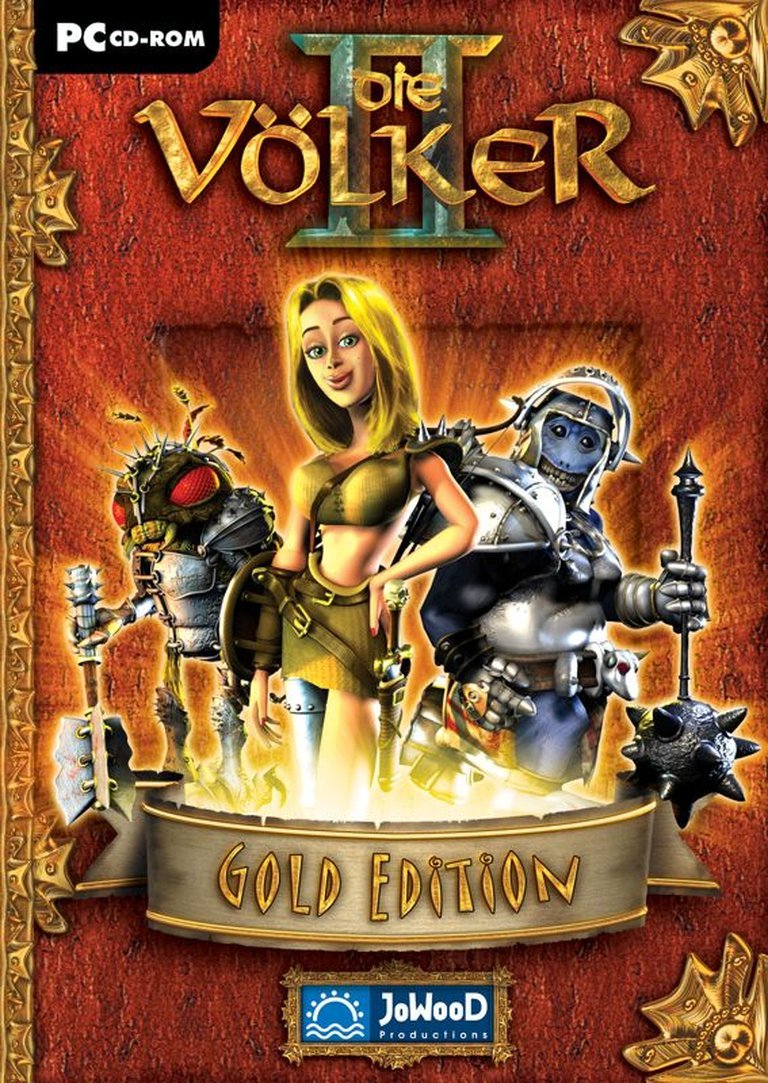
The Nations: Gold Edition is a strategy and business simulation game where players manage civilizations through economic planning, production chains, and tactical decision-making. This enhanced edition includes the base game and Bonus Pack, featuring 22 new missions, an expanded story, additional music and video sequences, a rebalanced research system, and new threats like bandits. Players can refine trade, production, and military strategies while creating custom missions using the downloadable editor, offering an experience akin to titles like The Settlers and Cultures.
Gameplay Videos
The Nations: Gold Edition Free Download
The Nations: Gold Edition Cracks & Fixes
The Nations: Gold Edition Patches & Updates
The Nations: Gold Edition Reviews & Reception
en.wikipedia.org (80/100): English reviews for The Nations were lukewarm, with praise for the theme and presentation.
metacritic.com (65/100): Metascore 65, mixed or average.
mobygames.com (68/100): Critics average score: 68%.
myabandonware.com (91/100): 4.56/5 – 9 votes.
The Nations: Gold Edition Cheats & Codes
PC
Press C during game and enter following:
| Code | Effect |
|---|---|
| cheats on | puts cheats on |
| cheats off | puts cheats off |
| happy hour | Your people get healed and slightly more happy |
| nice gift | the flying merchant gives you 100 resources of all |
| toggle fog | you can see the map |
PC (Alternate)
Press ENTER and the type in “cheat keys on”. Then press alt+f5.
| Code | Effect |
|---|---|
| alt+f5 | Get 1000 resources |
The Nations: Gold Edition: A Flawed Gem of Early 2000s Strategy Gaming
Introduction
In the shadow of titans like Age of Empires and The Settlers, JoWooD Productions’ The Nations: Gold Edition (2002) carved out a niche as a deeply intricate, if uneven, real-time strategy (RTS) experiment. A re-release of The Nations (2001) with expanded content, the game sought to refine its predecessor’s ambition of blending Settlers-style resource management with Sims-like character autonomy. While praised for its whimsical art and systemic depth, it stumbled under the weight of its own complexity. This review interrogates its legacy: a game that dared to innovate but fell short of greatness, yet remains a fascinating relic of early 2000s European game design.
Development History & Context
Studio Vision & Constraints
Developed by Austria’s JoWooD Vienna (known for Gothic and SpellForce), The Nations was conceived as a sequel to 1999’s Alien Nations (Die Völker). The studio aimed to elevate the franchise by introducing independently acting units with personalities—a novel concept for the era. However, technological limitations of the early 2000s hampered this vision; pathfinding AI and hardware demands strained the game’s performance, particularly on lower-end systems.
The 2001–2002 Strategy Landscape
Released amid a golden age of RTS games (Warcraft III, Empire Earth), The Nations stood out by deemphasizing combat in favor of economic simulation. The Gold Edition (2002) bundled the base game with a Bonus Pack featuring 22 new missions, rebalanced mechanics, and a mission editor—a response to player feedback about repetitive gameplay and imbalance. Despite these fixes, it struggled to escape comparisons to Blue Byte’s The Settlers, which offered a smoother, more polished take on the genre.
Narrative & Thematic Deep Dive
Plot & Characters
Set on the alien planet Lukkat, the game follows three factions:
– Pimmons: Comic, blue-skinned creatures rebelling against a prophecy of divine intervention.
– Amazons: A matriarchal humanoid society prioritizing diplomacy.
– Sajikis: Insectoid traders negotiating between chaos and order.
The story centers on Korn, a Pimmon revolutionary whose actions destabilize Lukkat’s fragile peace. While the narrative is serviceable, it primarily exists to contextualize missions; character development is minimal, relying on environmental storytelling and faction-specific questlines (e.g., Amazonian alliances versus Sajiki mercantilism).
Themes
– Religion vs. Progress: Korn’s prophecy critiques blind faith in leaders.
– Gender Roles: Amazons subvert traditional gender norms, though gameplay still segregates labor by gender (e.g., women as gatherers, men as builders).
– Colonialism: The factions’ competing ideologies mirror real-world struggles for cultural dominance.
Gameplay Mechanics & Systems
Core Loop: Management Over Mayhem
Unlike contemporaries focused on conquest, The Nations tasks players with nurturing a thriving society. Key systems include:
– Resource Chains: Complex production webs (e.g., wood → planks → furniture) require careful planning.
– Unit Autonomy: Named citizens with schedules (work, meals, sleep) evoke The Sims, but their “personalities” rarely impact gameplay beyond superficial quirks.
– Evolutionary Stages: Advancing unlocks new buildings and units but imposes restrictions (e.g., Stage 1 caps at 20 buildings).
Gold Edition Innovations
– Bandits & Evil Buildings: Random threats disrupt supply lines, forcing defensive investments.
– Research Rewards: Completing tech trees boosts divine favor (a meta-progression system).
– Mission Editor: A groundbreaking tool for player-created scenarios, though poorly documented.
Flaws & Frustrations
– UI Clutter: A sprawling interface drowns players in icons.
– Pacing Issues: Slow early-game progression and repetitive late-game chores test patience.
– Shallow Combat: Military units feel tacked-on, lacking strategic depth.
World-Building, Art & Sound
Visual Design
The game’s isometric perspective and cartoonish art style breathe life into Lukkat. Each faction boasts distinct architecture—Pimmon huts exude rustic charm, Amazonian temples gleam with marble, and Sajiki hives pulsate with organic grotesquery. However, zooming out often triggers framerate dips, a technical shortcoming of the era.
Soundtrack & Atmosphere
Composed by Jesper Kyd (Hitman, Assassin’s Creed), the score blends ethereal choirs with tribal percussion, enhancing the alien mystique. Ambient sounds (babbling brooks, chirping insects) ground the world, though voice acting is limited to grunts and mission briefings.
Reception & Legacy
Critical Response
Reviews were mixed (68% average on MobyGames):
– Praise: “Bright colors and amusing design make a visually splendid game” (PC PowerPlay).
– Criticism: “Repetitive gameplay and a dismal tutorial” (Jeuxvideo.com).
Commercial Performance
Despite underwhelming sales, the Gold Edition cultivated a cult following, particularly in Germany and Russia. Its mission editor sustained a modest modding community until the mid-2000s.
Industry Impact
While not a trailblazer, The Nations influenced later games like Banished and Frostpunk by demonstrating the appeal of nonviolent RTS gameplay. Its emphasis on systemic complexity also presaged the rise of “managerial” sims like Cities: Skylines.
Conclusion
The Nations: Gold Edition is a game of contradictions: imaginative yet ungainly, ambitious yet flawed. Its lush world and intricate systems reward patient players, but clunky mechanics and pacing issues diminish its appeal. For historians, it exemplifies early 2000s European design—bold, experimental, and unafraid to stumble. While not essential, it remains a compelling curio for RTS enthusiasts and a testament to JoWooD’s unrealized potential. Final Verdict: A fascinating misfire, worth revisiting as a time capsule, not a masterpiece.