
- Release Year: 2022
- Platforms: Windows
- Genre: Action
- Perspective: 1st-person
- Game Mode: Single-player
- Gameplay: Shooter
- Setting: Futuristic, Sci-fi
- Average Score: 71/100
Description
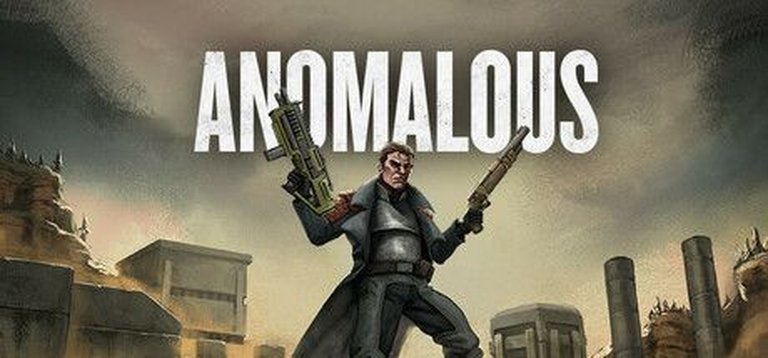
Anomalous is an indie retro-styled first-person shooter developed by Byron Dunwoody, using Unreal Engine to blend the fast-paced combat of ’90s FPS titles like Quake with the dystopian atmosphere of Half-Life 2. Set in the oppressive city of Kosolov, players battle hordes of mutated cyborg monstrosities known as Anomalies while unraveling the secrets of a totalitarian regime. With dual-wielding weapons, brutal enemy designs, and a dark sci-fi narrative, the game delivers chaotic, run-and-gun action across 15 levels, culminating in a climactic finale involving nuclear destruction and survival.
Gameplay Videos
Where to Buy Anomalous
PC
Anomalous Free Download
Anomalous Patches & Updates
Anomalous Mods
Anomalous Guides & Walkthroughs
Anomalous Cheats & Codes
PC
Enter code strings at the title screen via the coffee cup icon to open the secret input box.
| Code | Effect |
|---|---|
| leXXbruteloader | Directly completes all HCXX content (adult scenes requiring special unlocking). |
| formbruteloader | Unlocks all forms at once, from cat girl to slime. |
| horudevmode | Unlocks everything (transformations, scenes, etc.) for instant browsing. |
| horusynergies | Shows all known word synergies and combo outcomes. |
| horuwords | Displays the game’s valid word list for rapid testing. |
| debug | Easter egg – developer message appears in the top-right corner. |
| test | Easter egg – developer message appears in the top-right corner. |
| dev | Easter egg – developer message appears in the top-right corner. |
| horu | Author name easter egg – author’s comments appear in the top-right corner. |
| horubrain | Author name easter egg – author’s comments appear in the top-right corner. |
| cat | Transforms into a basic cat girl. |
| seXX | Triggers deeper transformations. |
| family | Creates abstract family-themed transformations. |
| godot | Game engine meme transformation. |
| slime | Slime girl; needs to be input twice and can be paired with color words for different colored slime girls. |
| lewdbruteloader | Loads all adult scenes and allows cycling through them. |
Anomalous: A Brutal Love Letter to Retro FPS Design Trapped in an Industrial Nightmare
Introduction
In the crowded resurgence of “boomer shooters” mining nostalgia for ’90s-era first-person shooters, Byron Dunwoody’s Anomalous stands apart as a grim oddity—a cocktail of Quake’s speed, Half-Life 2’s dystopian aesthetic, and the oppressive weight of industrial decay. Released in early access in January 2022 before its full launch in September 2024 after 1,659 days of development, Anomalous is a passion project that channels the experimental dread of Valve’s abandoned beta concepts into a pixelated, shotgun-blast tour de force. Yet for all its reverence for retro design, Anomalous wrestles with its identity: a short, flawed experiment that thrills in its mechanical purity but frays under the weight of unrealized ambition.
Development History & Context
Developed entirely by South African solo creator Byron Dunwoody over four and a half years, Anomalous began as a homage to the scrapped aesthetic of Half-Life 2’s beta—a realm of jagged industrial landscapes and body horror left on Valve’s cutting-room floor. Built in Unreal Engine 4 with PhysX physics, Dunwoody envisioned a 30-level campaign split into episodic chunks before trimming it to 15 levels due to scope creep and resource constraints (“Almost there! 2-3 months left,” Steam post, Feb 2023). The game’s Early Access period (Jan 2022–Sep 2024) saw iterative overhauls: grapple hooks were scaled back after player pushback, maps were redesigned to reduce “visual clutter” (“Progress Report,” Aug 2024), and the protagonist evolved from a Doomguy-style cipher to a longcoat-clad fighter.
Released amid a wave of retro-FPS darlings like Dusk and Ultrakill, Anomalous leveraged its “Retraux” (TV Tropes) pixel-art aesthetic as both a stylistic choice and a pragmatic solution to Dunwoody’s solo-dev limitations. The result is a game deeply rooted in 1998-era tech ethos—running smoothly on modest hardware like the GTX 1050—while wrestling with modern design expectations.
Narrative & Thematic Deep Dive
Anomalous’s premise is a blunt-force allegory: the city-state of Kosolov, a hyper-industrialized dictatorship, forcibly converts its dead into biomechanical soldiers (the “Anomalies”) to wage war on the outside world. The player, a voiceless grunt, fights through laboratories, prisons, and silos to escape the collapsing city.
The narrative unfolds through scattered “lore prompts”—floating blue markers offering cryptic logs (“uploaded minds,” “dimensional entities”) that evoke Half-Life’s environmental storytelling but lack its cohesion. Early drafts leaned into cosmic horror, implying Kosolov’s elites contacted otherworldly “benefactors” (TV Tropes), but the final game streamlines this into a mundane tale of fascistic ambition. The original Downer Ending—detonating nukes while embracing death—was replaced with a last-second escape via elite train, a compromise criticized as narratively toothless.
Thematically, Anomalous is a tapestry of industrialized decay: “meat moss” carpets walls, factories churn out cyborg zombies, and the muted palette of rust and concrete mirrors the game’s bleak ethos. Yet its commentary on authoritarianism feels undercooked—more Whole-Plot Reference (TV Tropes) to Warhammer 40K’s Necropolis than a fresh critique.
Gameplay Mechanics & Systems
At its core, Anomalous is a purist’s throwback to late-’90s FPS design:
– Movement & Combat: A sprint speed of 1,300 units (reduced from 1,500 post-Early Access to reduce “floatiness”) enables rapid strafe-jumping. Weapons—from dual-wielded shotguns to a sniper rifle serving as the BFG—require no reloads, fostering relentless offense.
– Enemy Design: Foes fall into archetypes: Headcrab-like crawlers, Doom Imp-inspired plasma troopers, and Mini-Bosses like Displacers (teleporting energy beings) and hulking Brutes. AI routines, however, fluctuate; jetpacking enemies often misjudge trajectories, while human soldiers shred players with hitscan precision (Glass Cannon trope).
– Progression & Flaws: Each mission resets health/armor (Bag of Spilling), discouraging caution. Later updates added a kick attack and grapple nodes (partially scrapped), yet weapon balance remains uneven—the super shotgun trivializes Brutes, while the rocket launcher feels underpowered.
– Level Design: Despite overhauls, levels like “Kosolov Nightfall” still suffer from boxy corridors and “overly busy streets” (“Progress Report”). Secrets and lore collectibles reward exploration, but the shortened 3–4 hour campaign strains variety.
The UI leans retro-minimalist, though the absence of a map (even post-update) frustrates in maze-like zones like “MEAT”—a slaughterhouse level retooled from “Silent Hill nightmare” to “industrial factory” (Steam post, Sep 2024).
World-Building, Art & Sound
Anomalous’s aesthetic is its most striking achievement. Dunwoody’s low-fi pixel art—deliberately invoking Quake’s chunky textures—masks UE4’s modernity, bathing Kosolov in sickly greens and blood-red accents. The city feels like a corpse: machinery groans, flesh melds with steel, and the Meat Moss trope manifests as pulsating wall tumors.
Sound design weaponizes dissonance: industrial clangs, monster screeches, and the rhythmic thud of the double barrel sell visceral combat. The soundtrack—collaborative metal/techno tracks by BOD—shifts from ominous synths in early levels to frenetic “argent metal” during boss fights, echoing Doom (2016)’s pulse. Yet the art’s fidelity to ’90s limitations hampers readability; projectiles blend into cluttered backdrops, leading to cheap deaths.
Reception & Legacy
Anomalous debuted to “Very Positive” Early Access reviews (81% positive on Steam) buoyed by retro-FPS enthusiasts, but post-launch sentiment dipped to “Mostly Positive” (71/100, Steambase). Critics praised its “hyper-fast action” (IndieGameLover) and atmosphere but critiqued repetitive encounters and abrupt pacing.
Its legacy is nuanced: while overshadowed by genre titans like Cultic or Amid Evil, Anomalous exemplifies solo-dev ambition. Dunwoody’s public grappling with scope—cutting levels, retooling endings—offers a case study in indie project management. TV Tropes codified its tropes (Excuse Plot, Industrialized Evil), cementing its cult status, yet its commercial impact remains modest (Steam price peaked at $7.99 post-Early Access).
Conclusion
Anomalous is a paradox: a flawed gem that thrills in its uncompromising vision yet stumbles under its self-imposed restraints. Dunwoody’s ode to industrial decay and retro-FPS purity delivers adrenaline-soaked combat and atmospheric dread, but its abbreviated campaign, inconsistent AI, and narrative thinness leave it stranded between homage and innovation. For genre devotees, it’s a worthwhile detour into Kosolov’s nightmares—a proof of concept that, like its mutated citizens, never quite transcends its mangled parts. In the pantheon of retro shooters, Anomalous is not a revolution, but a visceral, bloody footnote.