
- Release Year: 2002
- Platforms: Windows
- Publisher: Dar al Fikr
- Developer: Afkar Media
- Genre: Action
- Perspective: 3rd-person (Other)
- Game Mode: Single-player
- Gameplay: Shooter
- Setting: Historical events, Middle East
- Average Score: 79/100
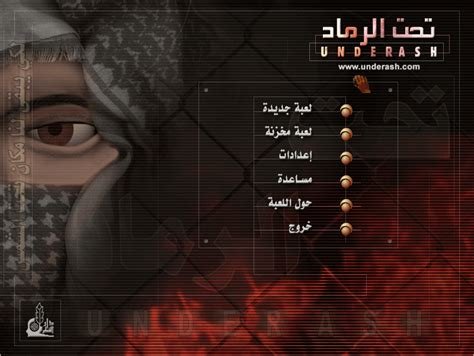
Description
Under Ash is a third-person shooter set during the first Intifada (1989-1993) in the Israeli-Palestinian conflict, focusing on the perspective of Ahmad, a young Palestinian from East Jerusalem. Players engage in guerrilla warfare using rocks, slings, and stolen weapons against the better-equipped Israeli army across real-world locations like Jerusalem and Hebron. The game, one of the first commercial Arab titles, is steeped in anti-Israeli rhetoric, portraying the conflict through a highly partisan lens while omitting references to Palestinian militant tactics like suicide bombings.
Under Ash Reviews & Reception
myabandonware.com (79/100): This is one of the very rare times where i actually cannot install or launch the game at all
Under Ash Cheats & Codes
PlayStation 2 (PS2)
Select ‘Cheat Codes’ at the options menu, then enter the code.
| Code | Effect |
|---|---|
| d3struct | Unlock all Levels |
| boxoffice | Unlock all Movies |
| likepaulie | Always Special |
| straightedge | Infinite Rail/Lip balance |
| oldskool | Unlock Natas Kaupas |
| sellout | Unlock Nigel Beaverhausen |
| 4-wheeler | Unlock Paulie |
| aprilsman | Unlock Phil Margera |
| costars! | Unlock bonus characters (Ben Franklin, Bull Fighter, etc.) |
PC
Head to the options area, then to the Cheat Codes area and type in the cheats.
| Code | Effect |
|---|---|
| straightedge | Infinite Rail/Lip balance |
| likepaulie | Infinite Special |
| oldskool | Unlock Natas Kaupas |
| Sellout | Unlock Nigel Beaverhausen |
| 4-wheeler | Unlock Paulie |
GameCube (GC)
Go into the cheats menu, and type in the password.
| Code | Effect |
|---|---|
| likepaulie | Always Special |
| urown3d | Unlock all Levels |
| sikflick | Unlock all Movies |
| wakpak | Unlock all Story Mode Characters |
| unscrewed | Unlock Natas Kaupas |
| britteeth | Unlock Nigel Beaverhausen |
| xxlarge | Unlock Phil Margera |
PSP
From the main menu, go to ‘Game Options’, then ‘Cheat Codes’ and enter the password.
| Code | Effect |
|---|---|
| m00raker | Moon Gravity |
| tightrope | Perfect Rail |
| playbill | Unlock all Movies |
Xbox
Under Option go to Cheats and enter the code.
| Code | Effect |
|---|---|
| accesspass | Unlock all Levels |
| frontrowseat | Unlock all movies |
| likepaulie | Always Special |
| straightedge | Perfect rails |
Under Ash: A Contested Legacy in the Ashes of Conflict
Introduction
In the smoldering landscape of politically charged video games, Under Ash (2001) stands as a defiant monument—not for its technical prowess, but for its unapologetic mission to reframe the Palestinian narrative within interactive media. Developed by Syrian studio Afkar Media and published by Dar al Fikr, this third-person shooter thrust players into the boots of Ahmad, a Palestinian youth battling Israeli forces during the First Intifada (1989–1993). Dubbed one of the Arab world’s first commercial games, Under Ash weaponizes interactivity as propaganda, casting players as underdog resistors in a lopsided conflict. Its legacy is irrevocably tied to controversy, serving as both a cultural milestone and a lightning rod for criticism. This review argues that Under Ash is less a game than a political statement—a flawed yet historically significant artifact that exposes gaming’s potential as a battleground for ideological warfare.
Development History & Context
Studio Vision Amidst Geopolitical Tumult
Afkar Media emerged in the early 2000s from a landscape starved of Arab perspectives in gaming. Led by designer Radwan Kasmiya, the studio sought to counter Western-dominated war games like America’s Army (2002) and Delta Force, which often cast Arab figures as villains. Kasmiya framed Under Ash as “digital resistance,” aiming to humanize Palestinian struggles while eschewing military fetishism. Publisher Dar al Fikr’s general manager, Adnan Salim, amplified this stance, branding Israel “Beelzebub” (the devil) on the game’s website and accusing critics of “plotting with Israeli greed.”
Technological Constraints
Built on the 3D GameStudio engine, Under Ash faced limitations endemic to early-2000s indie development. Its rudimentary polygons and stiff animations paled against contemporaries like Max Payne (2001), yet this austerity aligned with its guerrilla ethos. Levels were confined to urban labyrinths—Jerusalem’s alleyways, Hebron’s markets—reflecting both technical necessity and thematic focus on claustrophobic resistance.
A Landscape Unprepared
At release, gaming’s political consciousness was embryonic. While Spec Ops: The Line (2012) later deconstructed war’s morality, 2001’s market prioritized escapism. Under Ash forced players into asymmetrical warfare with minimal weaponry—a radical departure from power fantasies. Its very existence challenged the industry’s Eurocentric narratives, predating critical darlings like This War of Mine (2014) by over a decade.
Narrative & Thematic Deep Dive
Plot as Political Pedagogy
Under Ash chronicles Ahmad’s journey from stone-throwing protestor to guerrilla fighter across historically charged locales: the Dome of the Rock, Al Ramlah Prison, and the West Bank. Missions escalate from sabotaging checkpoints to rescuing prisoners, yet victories feel pyrrhic—each level underscores Palestinian vulnerability. Israeli soldiers are depicted as faceless oppressors, with dialogue painting them as “inhumane” aggressors, while civilians (if harmed) trigger instant game-over screens. This binary framing ignores Palestinian militant tactics like suicide bombings, instead romanticizing resistance as David-vs-Goliath idealism.
Thematic Machinery
The game’s core themes—occupation, martyrdom, and systemic oppression—are hammered relentlessly. The infamous “Game Over” text epitomizes its tone: “You are dead. Now they will get your ID, torture your family, and destroy your house.” Such writing weaponizes despair, positioning Ahmad’s struggle as unwinnable yet morally necessary. This fatalism mirrors real-world Palestinian sentiment but reduces nuance to dogma.
Characterization as Symbolism
Ahmad lacks depth beyond his role as everyman martyr. He is a cipher for collective struggle, devoid of personal backstory or growth. NPCs—fellow resistors—exist solely to reinforce themes of solidarity. Conversely, Israeli forces are grotesque caricatures, echoing state propaganda. This one-dimensionality serves Under Ash’s agenda but undermines its potential as humanist critique.
Gameplay Mechanics & Systems
Guerrilla Design
Combat evolves from primitive (slingshots, rocks) to scavenged firearms (stolen from dead soldiers), emphasizing resource scarcity. Stealth is encouraged—open confrontations usually end in death—yet rudimentary AI dulls tension. Enemy soldiers charge predictably, their aggression more comical than threatening.
Progression & Punishment
No XP or skill trees exist; progression is linear and narrative-driven. Checkpoints are sparse, and permadeath mechanics amplify frustration. The difficulty curve verges on punitive—a deliberate choice mirroring real conflict’s brutality but testing player patience. UI elements are minimalist, with health and ammo displayed via crude icons.
Flaws as Ideological Tools
Mechanical jank—clunky controls, erratic hit detection—could be dismissed as budget constraints. Yet these flaws symbiotically reinforce the game’s thesis: Palestinians fight with inferior tools. When Ahmad fumbles a grenade throw or clips through geometry, it inadvertently mirrors the disorder of asymmetric warfare.
World-Building, Art & Sound
Aesthetic Austerity
Afkar Media rendered Jerusalem in bleak, low-poly detail—crumbling walls, makeshift barricades—evoking a warzone’s starkness. Textures are muddy, colors desaturated (dominated by ash grays and blood reds). While technically crude, this visual poverty accentuates the setting’s despair.
Sound as Resistance
Ambient tracks blend sparse percussion with Middle Eastern motifs (oud strains, choral chants), creating a dirge-like atmosphere. Gunfire echoes with tinny reverb, emphasizing weapon fragility. Voice acting (in Arabic) lends authenticity, though stilted line delivery undermines emotional weight.
Atmosphere Over Immersion
Under Ash’s power lies in oppressive mood, not realism. Dust clouds obscure sniper sightlines; distant sirens hint at encroaching violence. These elements craft tension but falter under primitive tech—explosions lack punch, and animations stutter.
Reception & Legacy
Controversial Launch
Upon release in 2001, Under Ash sold 10,000 copies in Syria within a week. Western outlets like the BBC condemned it as propaganda, while Arab gamers hailed its cultural defiance. Critically, it polarized players—MobyGames’ user average sits at 0.5/5 (based on three ratings), citing frustration and bias, while Kotaku noted its “impossible difficulty” as thematic shorthand for Palestinian futility.
Evolving Reputation
Today, Under Ash is studied less as a game than a sociohistorical artifact. Academics cite it in discourses on gaming’s political potential, while sequels like Under Siege (2005) expanded Afkar Media’s “resistance gaming” portfolio. Its influence echoes in titles like Special Force (Hezbollah’s 2003 answer), cementing a niche genre of conflict simulators from marginalized perspectives.
Industry Impact
Indirectly, Under Ash foreshadowed empathy-driven war games (This War of Mine, Papers, Please) and bolstered arguments for diverse storytelling. Yet its reductive politics also caution against propagandistic simplicity—a lesson heeded by later works like Death Stranding’s nuanced pacifism.
Conclusion
Under Ash is neither a great game nor a fair one. Its mechanics creak, its narrative screams in monochrome, and its politics admit no gray. Yet within its flaws lies undeniable power: a raw, angry rebuttal to gaming’s historical silences. By forcing players into the shoes of the “other,” it challenged—and continues to challenge—the medium’s complacency in reinforcing dominant narratives. For historians, it’s a vital relic of Arab game development’s nascency; for critics, a cautionary tale about interactivity’s capacity for manipulation. In the annals of video games, Under Ash burns brightest as a defiant spark—one that illuminates both the promise and peril of games as weapons of ideology.
Final Verdict: A historically essential but critically flawed experiment in political gaming—worth studying, if not savoring.