
- Release Year: 2012
- Platforms: Macintosh, Windows
- Publisher: Positech Games
- Developer: Positech Games
- Genre: Strategy, Tactics
- Perspective: Top-down
- Game Mode: Single-player
- Gameplay: Customization, Map editor, Tank, Tower defense, Vehicular
- Setting: Alternate history, War, World War I
- Average Score: 78/100
Description
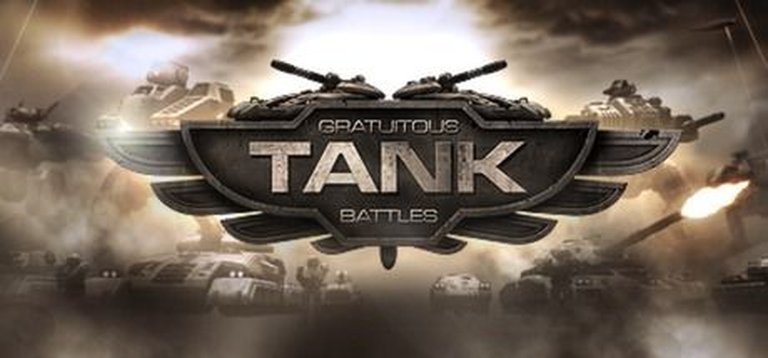
Gratuitous Tank Battles is a unique blend of tower defense, strategy, simulation, and real-time strategy set in an alternate history where World War I never ended. Players take on the role of a commander in the allied forces, managing tanks and other vehicles to defend against waves of enemy attacks. The game offers extensive customization options for units and a clever AI system, providing a deep tactical experience.
Gameplay Videos
Where to Buy Gratuitous Tank Battles
PC
Gratuitous Tank Battles Cracks & Fixes
Gratuitous Tank Battles Mods
Gratuitous Tank Battles Reviews & Reception
metacritic.com (69/100): Mixed or average reviews based on 9 critic reviews.
pcgamer.com (88/100): Gratuitous Tank Battles excellent customisation and clever AI makes for one of the best tower defence games around.
Gratuitous Tank Battles: Review
A Tower Defense Oddity That Weaponizes Player Creativity Against Itself
Introduction
In the crowded trenches of tower defense games, Gratuitous Tank Battles (2012) stands as a bizarre yet brilliant anomaly. Developed by indie studio Positech Games, this alternate-history WWI-meets-sci-fi strategy hybrid dares players to outsmart their own designs in a perpetual arms race. While its janky edges and lack of polish drew criticism, GTB’s deep unit customization, adaptive AI, and asymmetric gameplay redefined what tower defense could be. This review argues that GTB is a flawed masterpiece—a game whose experimental systems and grimly inventive vision of eternal war deserve recognition amidst its rough-hewn execution.
Development History & Context
Positech Games, the one-man studio led by Cliff Harris, had already carved a niche with Gratuitous Space Battles (2009), a strategy game celebrated for its ship customization and player-driven challenges. GTB emerged as a spiritual successor, transplanting that ethos into a land-war framework. Released in 2012—amidst a golden age for indie games like FTL and Hotline Miami—GTB embraced the era’s DIY spirit.
Harris aimed to subvert tower defense tropes by letting players attack and defend, leveraging Steam Workshop-style sharing years before it became standard. However, technological constraints marred the experience: critics noted persistent crashes at launch, and the game’s modest visuals paled next to AAA contemporaries. Yet GTB’s ambition—to turn players into both armchair generals and arms dealers—shone through, embodying the indie scene’s risk-taking ethos.
Narrative & Thematic Deep Dive
Set in a world where WWI never ended, GTB’s lore paints a darkly hilarious satire of militaristic folly. By 2114, soldiers wielding laser rifles charge alongside diesel-powered mechs, while generals spout 1914-era nationalist slogans. The narrative isn’t delivered through cutscenes but through emergent storytelling: players witness endless waves of customized troops obliterated in seconds, underscoring the absurdity of perpetual war.
Themes of futility and technological escalation permeate every trench. Unit descriptions mock war’s dehumanization (e.g., “Disposable Infantry: Cheap, cheerful, and ethically questionable”), while the lack of a traditional campaign victory reinforces the cyclical horror. It’s Dr. Strangelove meets Warhammer 40,000, with a bleak wit that rewards attentive players.
Gameplay Mechanics & Systems
GTB’s core loop is a tug-of-war between creation and destruction:
Dual Roles: Attacker vs. Defender
- Defender: Classic tower defense—place turrets, trenches, and troops to halt enemy advances.
- Attacker: Deploy customized unit waves, plotting paths through kill zones. The twist? Saved attacks can be replayed as defense scenarios, forcing players to counter their own strategies.
Unit Customization
The game’s crown jewel: players design units from chassis to weapons, balancing cost, armor, and firepower. A flame-tank might shred infantry but crumple against artillery—until the AI steals your blueprint and turns it against you. This adaptive opponent ensures no strategy stays viable for long.
Map Editor & Online Challenges
A robust editor lets players craft and share maps, while online challenges pit them against others’ armies. Sadly, the lack of direct multiplayer limited its longevity.
Flaws
Early bugs—like crashes during unit deletion—tainted the experience. The unlock system also drew ire, gating essential tools behind repetitive grinding.
World-Building, Art & Sound
GTB’s top-down visuals mix WWI aesthetics with retro-futurism: biplanes duel drones, and crudely rendered mechs stomp through No Man’s Land. While functional, the graphics were panned as “underwhelming” (XGN), lacking the polish of contemporaries like Defense Grid.
Sound design fares better: booming artillery and laser zaps sell the chaos, though the absence of a dynamic soundtrack leaves battles feeling sterile. Yet the art’s minimalism accidentally reinforces the setting’s bleakness—war as a spreadsheet with explosions.
Reception & Legacy
At launch, GTB earned mixed-to-positive reviews (Metacritic: 69; Steam: 52% positive). Critics praised its innovation:
– PC Gamer (88/100): “One of the best tower defense games around.”
– Games.cz (70/100): “A toyer’s paradise… but not for instant gratification.”
However, negatives fixated on its roughness:
– GameSpy (40/100): “A boring TD with half-baked originality.”
Post-launch patches stabilized performance, and the Western Front DLC (2012) added content, but GTB never achieved mainstream success. Its legacy lies in influencing later hybrids like They Are Billions and Dungeon Warfare, proving that player-driven systems and asymmetry could revitalize stagnant genres.
Conclusion
Gratuitous Tank Battles is a game of contradictions: brilliant in concept, uneven in execution. Its customizability and AI-driven arms race remain peerless, offering endless depth for patient strategists. Yet clunky presentation and initial instability alienated casual players.
Over a decade later, GTB stands as a cult classic—a testament to indie experimentation’s highs and lows. For those willing to endure its jagged edges, it’s a trench worth storming.
Final Verdict: A flawed but fascinating artifact of indie ambition—best enjoyed by masochistic tacticians and history buffs with a dark sense of humor.