
- Release Year: 1998
- Platforms: PlayStation, Windows
- Publisher: Dice Multi Media Europe B.V., Electronic Arts, Inc.
- Developer: Electronic Arts Canada
- Genre: Simulation, Sports
- Perspective: Third-person
- Game Mode: LAN, Online PVP, Single-player
- Average Score: 80/100
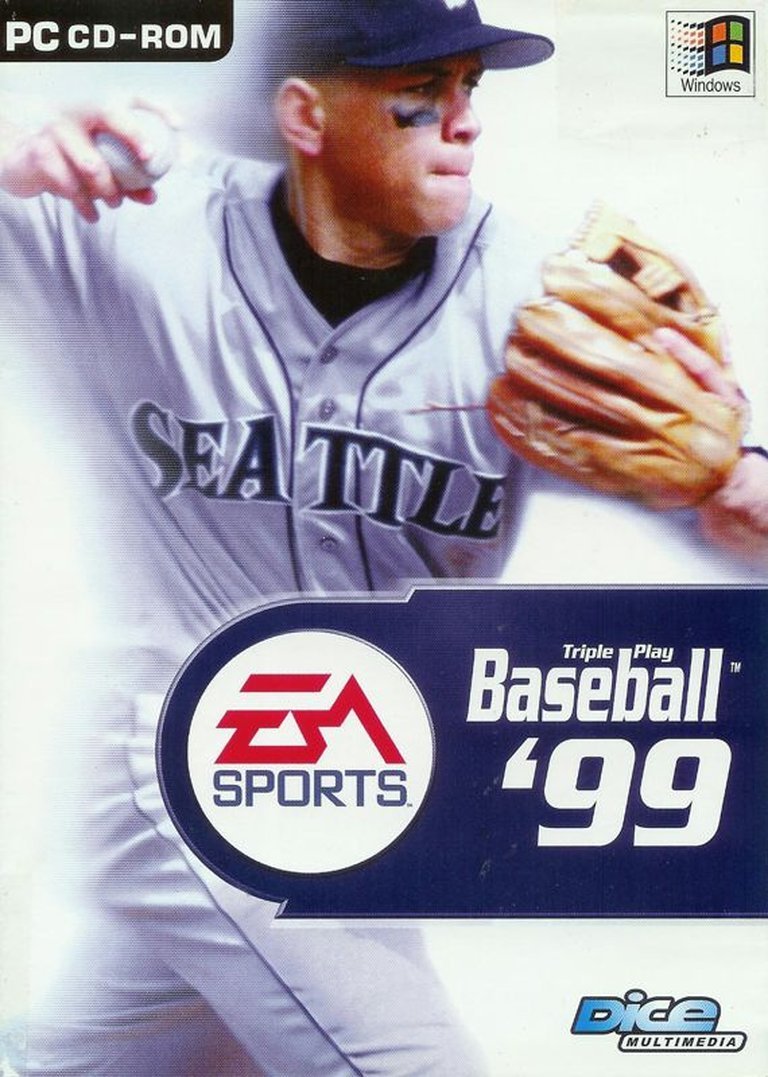
Description
Triple Play 99 is EA Sports’ baseball simulation featuring official Major League Baseball statistics, teams, and players from the 1998 season. The game includes multiple modes such as exhibition matches, home run derby, playoffs, tournaments, season play, and a career mode that spans multiple seasons. Players can build custom teams via a full-league draft using trade points or manage games through a stats-focused manager mode. Enhanced with 3D hardware support and commentary by Jim Hughson and Buck Martinez, the game offers multiplayer options like split-screen (PlayStation) and online/LAN/modem support (PC).
Gameplay Videos
Triple Play 99 Free Download
Triple Play 99 Patches & Updates
Triple Play 99 Mods
Triple Play 99 Guides & Walkthroughs
Triple Play 99 Reviews & Reception
en.wikipedia.org (83/100): GameSpot called it the premier simulation‑style baseball game on the market.
retro-replay.com : Triple Play 99 delivers a robust baseball simulation experience that caters to both casual players and die‑hard fans of the sport.
mobygames.com (74/100): This iteration of EA’s baseball simulation adds 3D hardware support, a career mode, and a full‑league draft.
espn.com (83/100): The good news is that Triple Play 99 does deliver many notable improvements. The bad news is that this year’s version comes complete with its own set of annoying bugs.
sportsvideogamereviews.com : It has awful gameplay and disgusting graphics.
Triple Play 99 Cheats & Codes
PlayStation
Hold L1 + L2 + R1 + R2 and enter the following button sequences during gameplay unless otherwise specified.
| Code | Effect |
|---|---|
| L2, L1, R1, R2, L1, R1, R2 | Unlock bonus stadiums (Coliseum, Neo-Vancouver, Anytown USA) |
| L2, R1, L1, R2 | Unlock bonus stadiums (alternative code) |
| Triangle, Square, Triangle, Circle, X, Square, Left, Right | Hit home runs |
| Up, Down, Triangle, Square, Triangle, Circle, X, Square | Strike out the batter |
| L1x12, R1x21 | Unlock extra players (at player roster screen) |
| Triangle + Up (10 times) | Two designated hitters (during opening FMV) |
| Square or Triangle | Air horns (during home run run) |
| X | Organ music (during home run run) |
| Circle | Whistles (during home run run) |
| Right, Left, Up, Down, Right, Left | Control camera |
| X, Down, Down, X | Crowd disappointment sound |
| Triangle, X, X, Triangle | Soft crowd cheer sound |
| Square, Left, Left, Square | Loud crowd cheer sound |
| Circle, Right, Right, Circle | Crowd boo sound |
| Triangle, Up, Up, Triangle | Crowd applause sound |
| Left, Square, Right, Circle | Announcer commercials |
| Up, Triangle, Right, Circle | Announcer historical commentary |
| Down, X, Right, Circle | Announcer trivia |
| Circle, Right, Square, Left | Announcer nicknames |
| X, Down, Triangle, Up | Announcer weather |
| Up, Triangle, Down, X | Announcer crowd comments |
| Left, Square, Up, Triangle | Additional batter information |
| X, Square, Circle, Triangle + D-pad (3+ times) | Secret credits (developer announcements) |
PC
Hold 1+2+3+4 (top row) and enter the following codes during gameplay unless otherwise specified.
| Code | Effect |
|---|---|
| Tab, Shift, Tab, Alt, Ctrl, Shift, Left, Right | Mammoth home run |
| Up, Down, Tab, Shift, Tab, Alt, Ctrl, Shift | Easy strikeout |
| Shift, Left, Left, Shift | Big crowd cheer |
| Tab, Up, Up, Tab | Little crowd cheer |
| Ctrl, Down, Down, Ctrl | Crowd gasps |
| Alt, Right, Right, Alt | Crowd boos |
| d | Crowd whistles |
| s | Piano sound |
| a | Horn sound |
| w | Bigger horn sound |
| Down, Ctrl, Right, Alt | Stadium information |
| Alt, Right, Shift, Left | Nickname game |
| Left, Shift, Right, Alt | Sponsor comment |
| Shift, Left, Left, Shift | Crowd cheers |
| Alt, Right, Right, Alt | Crowd boos |
| Ctrl, Down, Down, Ctrl | Crowd gasps |
Sidewinder Gamepad (PC)
Hold both trigger buttons plus Y and Z and enter the following codes.
| Code | Effect |
|---|---|
| X, A, X, C, B, A, Left, Right | Home run |
| Up, Down, X, A, X, C, B, A | Strikeout |
| Up, X, Right, C | Historical commentary |
| X, Up, Up, X | Crowd cheer |
Gravis Gamepad Pro (PC)
Hold L1+L2+R1+R2 and enter the following codes.
| Code | Effect |
|---|---|
| Button 4, B1, B4, B3, B2, B1 | Home run |
| Up, Down, Button 4, B1, Button 4, B3, B2, B1 | Strikeout |
| Up, Button 4, Right, B3 | Historical commentary |
| Button 4, Up, Up, Button 4 | Crowd cheer |
Triple Play 99: The Swing for Realism and the Strike of Technical Limits
Introduction
When EA Sports released Triple Play 99 in March 1998, it arrived at the zenith of baseball gaming’s transformation from arcade-style spectacle to simulation-grade realism. As the third entry in Electronic Arts’ Triple Play series and the first to debut on Windows and PlayStation in the same year, it promised a quantum leap with 3D hardware support, an immersive career mode, and TV-style presentation. Yet, beneath its glossy sheen lay a game wrestling with the technological constraints of its era—uneven frame rates, gameplay bugs, and a divided critical reception. This review argues that Triple Play 99 remains a pivotal, if flawed, artifact of late-’90s sports gaming: a title that bridged the gap between statistical depth and moment-to-moment action while foreshadowing the cinematic polish of modern simulations.
Development History & Context
Triple Play 99 emerged from EA Canada, helmed by executive producer Steven Rechtschaffner (later known for SSX) and a team of 112 credited developers. Released alongside the 1998 MLB season—marketed with Mariners superstar Alex Rodriguez on its cover—it was part of EA’s strategy to dominate sports sims through licensed realism. Technologically, it was a product of its time: PC gaming was embracing 3D acceleration (supported via 3dfx Voodoo cards), while the PlayStation struggled with hardware limitations. The game’s development coincided with the debut of expansion teams like the Arizona Diamondbacks and Tampa Bay Devil Rays, and painstakingly recreated all 30 MLB stadiums (save Seattle’s soon-to-be-demolished Kingdome, replaced by fictional venues).
The late ’90s sports gaming landscape was fiercely competitive. Rivals like Hardball 6 (Accolade) and MLB ’99 (Sony) vied for dominance, forcing EA to prioritize both statistical accuracy and accessibility. Triple Play 99’s crowning innovations—career progression, manager mode, and a full-league draft—were direct responses to fan demands for deeper franchise systems. Yet, these ambitions collided with technical hurdles, particularly on PlayStation, where frame rate inconsistencies plagued the final release.
Narrative & Thematic Deep Dive
As a sports simulation, Triple Play 99 eschewed traditional narrative for emergent storytelling woven through its modes. The Career mode tasked players with guiding a player or team across multiple seasons, tracking statistical milestones and contract negotiations—a proto-“Road to the Show” experience that generated organic drama. For example, leading a low-budget team to the playoffs through savvy draft picks (using Trade Points to acquire stars) or managing a pitcher’s stamina to avoid late-season collapses created high-stakes micro-narratives.
The Manager mode shifted focus to front-office strategy, reducing baseball to spreadsheets and lineups—a cerebral counterpart to on-field action. Here, themes of resource management and long-term planning dominated, echoing the real-world pressures of MLB GMs. Dialogue-wise, commentators Jim Hughson and Buck Martinez elevated immersion with dynamic play-by-play calls, trivia, and even faux commercials (e.g., noting a fan’s car lights left on). This audio tapestry—paired with vendor shouts and ambient crowd noise—forged a sense of place rare for its era.
Beneath these systems lay a thematic tension: Triple Play 99 straddled arcade immediacy (giant home runs, exaggerated animations) and simulation rigor (injuries, pitch counts). This duality alienated purists but broadened its appeal to casual fans—a balancing act EA would refine in later MVP Baseball titles.
Gameplay Mechanics & Systems
Core Gameplay Loops
- Pitching & Batting: The pitching interface divided critics. Using a cursor-steering mechanic, pitchers aimed a ball that could veer wildly post-release—praised for realism but lambasted as “playing baseball in mud” (Electronic Gaming Monthly). Batters countered with timing-based swings, though collision detection glitches occasionally turned routine plays into errors.
- Fielding & Base Running: Automation simplified catching, but manual controls struggled with responsiveness, leading to infield chaos. Base running utilized a clunky menu-driven system, often resulting in outs due to input lag.
Progression & Customization
- Career Mode: Players could simulate or play through multi-season campaigns, tracking stats like ERA and HRs. Endurance mattered: pitchers fatigued after 100+ pitches, risking injuries if overused.
- Full-League Draft: A forward-thinking system let players build teams from scratch using Trade Points, which dictated budget constraints. Drafting a power-hitting lineup or defensive specialists required strategic trade-offs.
- Manager Mode: Reduced gameplay to data analysis, simulating games via stats while adjusting rosters, rotations, and scouting reports.
UI & Innovation
The UI was a standout—clean menus, quick navigation, and adjustable camera angles (including a cinematic “TV broadcast” view). However, the PS1 version suffered from a sub-30 FPS frame rate, crippling gameplay fluidity. PC players, meanwhile, enjoyed smoother performance and sharper textures via 3D acceleration, though critics noted the visual leap was marginal without a Voodoo card.
World-Building, Art & Sound
Triple Play 99’s stadiums were its crown jewel, painstakingly replicating MLB parks—from Fenway’s Green Monster to the neon-lit Bank One Ballpark. PC players witnessed dynamic lighting (day/night transitions) and crowds that reacted to plays, while PS1 textures looked muddy by comparison. Player models mixed realism with quirks: faces lacked detail, but signature swings (e.g., Griffey Jr.’s smooth stroke) and animations (collisions, diving catches) added personality.
Sound design was revolutionary. Hughson and Martinez’s commentary—recorded with over 1,300 lines—ranged from insightful (“Sosa’s stance suggests fastball hunting”) to whimsical (fake ads for “popcorn vendors”). The soundscape extended to ambient details: vendors hawking concessions, PA announcements, and organ music. This auditory richness compensated for graphical shortcomings, selling the illusion of a live broadcast.
Reception & Legacy
Critical & Commercial Reception
Triple Play 99 earned a 74% average critic score (MobyGames), with stark platform divides:
– PC: Praised for depth and 3D visuals (GameSpot: 8.3/10; PC Action: 84%).
– PlayStation: Hammered for frame rates (IGN: 7/10; EGM: “like playing baseball in mud”).
Critics lauded its ambition but roasted its bugs: fielders teleporting, AI baserunning blunders, and a notorious “invisible wall” glitch. Still, it garnered EGM’s 1999 “Best Play-by-Play” runner-up award and outsold rivals like Hardball 6.
Industry Influence
The game’s legacy is twofold. It accelerated EA’s push for sports realism, inspiring the deeper franchise modes of MVP Baseball 2003-05. Meanwhile, its TV-style presentation became an industry standard, echoed in MLB: The Show’s broadcast mimicry. Yet, its flaws also served as cautionary tales; future titles prioritized stable performance over ambitious scope.
Conclusion
Triple Play 99 is neither a masterpiece nor a relic—it’s a transitional work that encapsulates the daring and growing pains of late-’90s sports gaming. Its career mode, statistical rigor, and audio-visual spectacle set benchmarks, while its technical stumbles underscored the era’s hardware limitations. For historians, it remains essential as a bridge between the arcade stylings of Triple Play 98 and the simulation golden age of EA’s MVP series. Though surpassed by successors, Triple Play 99 retains a cult status, a testament to its aspirational swing for the fences—even if it didn’t quite clear the wall.