
- Release Year: 1999
- Platforms: Windows
- Publisher: Beijing Unistar Software Co., Ltd., Odin Soft Co., Ltd., TangTang Soft, UserJoy Technology Co., Ltd., Z-Soft
- Developer: Odin Soft Co., Ltd.
- Genre: Strategy, Tactics
- Perspective: Diagonal-down
- Game Mode: Single-player
- Gameplay: City building, Equipment upgrades, Morale system, Real-time, Unit management, Wargame
- Setting: Ancient, China, Imperial
- Average Score: 93/100
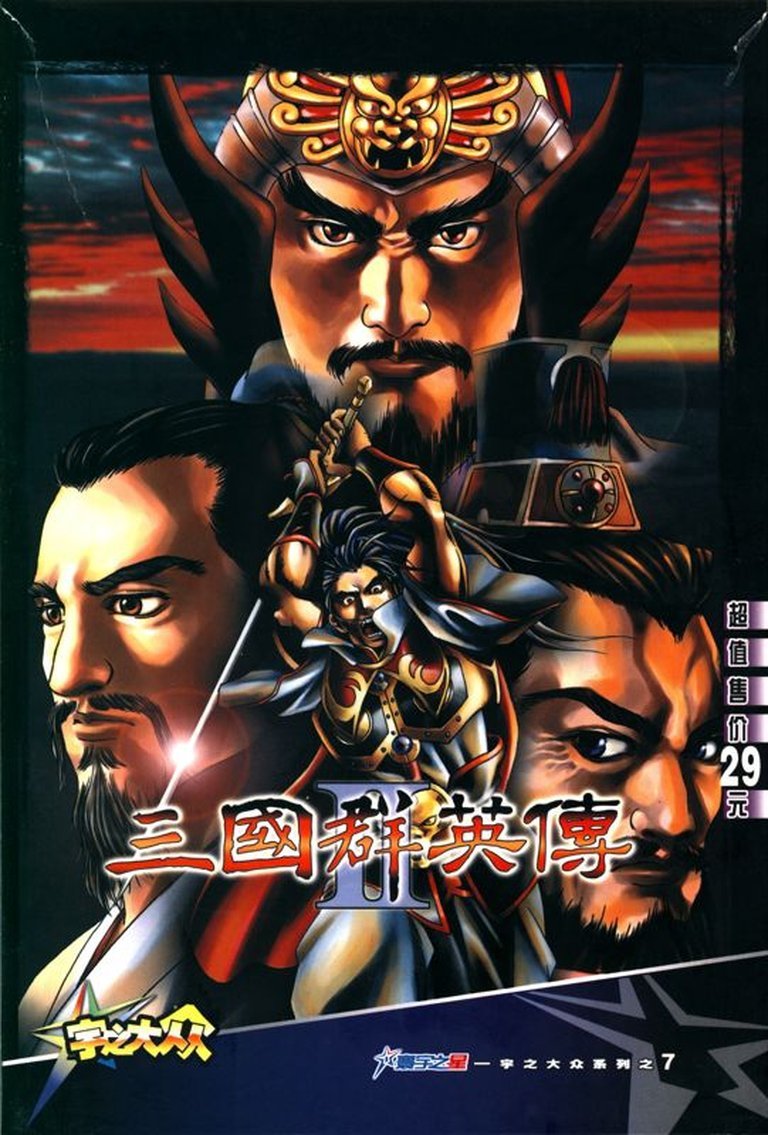
Description
Heroes of the Three Kingdoms 2 is a strategy game set in ancient China during the tumultuous Three Kingdoms period. Players engage in tactical combat, city building, and prisoner management across more than 60 cities and fortresses. The goal is to eliminate rival monarchs by strategically commanding regiments with varying tactics, skills, and equipment. Attributes like loyalty, morale, and fatigue influence the outcomes of battles, making each conflict unique and challenging.
Heroes of the Three Kingdoms 2 Reviews & Reception
steambase.io (93/100): A triumphant return to form for the series.
metacritic.com : A triumphant return to form for the series.
mobygames.com : A triumphant return to form for the series.
kotaku.com : A triumphant return to form for the series.
store.steampowered.com : A triumphant return to form for the series.
Heroes of the Three Kingdoms 2 Cheats & Codes
PC
Enter ‘dall’ (case-insensitive) in large screen mode to activate cheat mode. Function keys (F1-F6/U) provide additional effects in specific contexts.
| Code | Effect |
|---|---|
| dall | Enables cheat mode (allows control of computer-side troops and access to other cheats) |
| F1 (Big Map) | Pauses time |
| F2 (Big Map) | Enters internal affairs |
| F3 (Big Map) | Adds 10,000 gold to all cities |
| F4 (Big Map) | Fills all city reserve troops |
| F5 (Big Map) | All generals level up (including enemies) |
| F6 (Big Map) | All our generals level up |
| U (General Info) | Upgrades selected general by one level |
| F1 (Combat) | Computer side suddenly bursts out |
| F2 (Combat) | Our general uses the Falling Moon Bow |
| F3 (Combat) | Enemy uses the general skill we just used |
| F4 (Combat) | Computer randomly releases general skills |
| F5 (Combat) | We use the general skill the enemy just used |
| R001 | Life Healing Technique |
| R003 | Earth Spring Rush |
| R004 | Rocket |
| R005 | Ambush Formation |
| R006 | Wooden Wheel Attack |
| R007 | Tiger Roar |
| R008 | Fire Thunder |
| R009 | Lightning Strike |
| R010 | Flame Dragon |
| R011 | Fu Yan |
| R013 | Flying Knife |
| R014 | Thunder wave |
| R015 | Rocket |
| R016 | Tiger roar |
| R017 | Ambush formation |
| R019 | Rear ambush |
| R020 | Wooden wheel attack |
| R021 | Flame Dragon Unparalleled |
| R022 | Lightning Shock Kill |
| R023 | Tiger Roar Yang Yan |
| R024 | Fire Thunder Explosion |
| R025 | Huanglong Tianxiang |
| R026 | Earth Spring Whale Wave |
| R027 | Death Dam |
| R028 | Lightning Flash |
| R029 | Flame Dragon Killing Formation |
| R030 | Rocket Sky attack |
| R031 | Rear ambush formation |
| R032 | Fire thunder star shower |
| R033 | Raging dragon wave |
| R034 | Red flame torrent |
| R035 | Wooden wheel wave strike |
| R036 | Red flame sea of fire |
| R037 | Rear ambush formation |
| R038 | Roaring earth |
| R039 | Thunder light scorched prison |
| R040 | House of Flying Daggers |
| R041 | Flame Dragon Ultimate Kill |
| R043 | Crazy Thunder Heavenly Prison |
| R044 | Heaven and Earth Useless |
| R045 | Flying Arrow |
| R047 | Burst Rock |
| R048 | Falling Rock |
| R049 | Sword Chaos |
| R050 | Half Moon Slash |
| R051 | Rotating Dragon |
| R052 | Sunset Bow (Attache) |
| R053 | Eight-sided Fire |
| R054 | Revolving Light |
| R055 | Turquoise Sword |
| R056 | Taiji Gate |
| R057 | Ambush Formation |
| R058 | Eight-Door Golden Lock |
| R059 | Ghost Halberd |
| R060 | Return to Heaven |
| R061 | Earth Grass Thorn |
| R062 | Lienzu Laser |
| R063 | Icicle Thorn |
| R064 | Four Direction Sword Thrust |
| R065 | Car Rush |
| R066 | Divine Sword |
| R067 | Eight Sided Fire Spin |
| R068 | Assault Stone |
| R069 | Dragon Cannon |
| R070 | Fire Bull Formation |
| R071 | Gate of Life and Death |
| R072 | Flying Arrows |
| R073 | Grass Stabs |
| R074 | Dragon Cannon Laser |
| R075 | Rotating Dragon Wall |
| R076 | Icicle Peaks |
| R077 | Fiery Rotating Lamp |
| R078 | Tai Chi Array |
| R079 | Rolling Stone Pressure |
| R080 | Bagua Qizhen |
| R081 | Ambush Battery |
| R082 | Four-Charge Chariot |
| R083 | Three Suns and Moon Slash |
| R084 | Divine Sword Flash |
| R085 | Continuous Wave |
| R086 | Sword Dance |
| R087 | Flying Arrow Shock |
| R088 | Three Holy Flowers Slash |
| R089 | Divine Fire Swirl |
| R090 | Dragon Cannon kill |
| R091 | Torch and Stone Explosion |
| R092 | Fire Bull Dance |
| R093 | Thorns everywhere |
| R094 | Rolling Stones Crash |
| R095 | Sword Dance |
| R096 | Split Slash |
| R097 | Ice Wind Blade Dance |
| R098 | Divine Sword Flash |
| R099 | Fire Wall |
| R100 | Whirling Dragon Tianwu |
| R101 | Gate of Hell |
| R102 | Pillar of Fire |
| R103 | Furious Divine Fire |
| R104 | Dance of Gods and Ghosts |
| R105 | Torch Stone Purgatory |
| R106 | Burning Wall |
| R107 | Sun and Moon Slash |
| R108 | Fire Bull Collapse |
| R109 | Five Hell Flower Slash |
| R110 | The Amityville Horror |
Heroes of the Three Kingdoms 2: An Exhaustive Review
Introduction
The year is 1999. As the gaming world eagerly awaits the dawn of a new millennium, Taiwanese developer Odin Soft releases Heroes of the Three Kingdoms 2 (Sanguo Qunying Zhuan 2), a sequel that would cement its place as a cult classic in the strategy genre. Built atop the foundation of its 1998 predecessor, this real-time tactical wargame merges historical grandeur with innovative mechanics, inviting players to rewrite the turbulent history of China’s Three Kingdoms period. While not a mainstream hit in Western markets, its 2020 Steam re-release—boasting a 93% “Very Positive” rating—proved its enduring allure. This review argues that Heroes of the Three Kingdoms 2 is a masterclass in blending narrative-driven strategy with granular tactical systems, despite the constraints of its era.
Development History & Context
Studio Vision & Technological Constraints
Developed by Odin Soft (later absorbed by UserJoy Technology), Heroes of the Three Kingdoms 2 emerged during a golden age of RTS titles like Age of Empires and Command & Conquer. However, Odin Soft eschewed West-centric designs, instead focusing on East Asian historical authenticity. The team sought to refine the first game’s formula by introducing real-time strategic time concepts, dynamic city management, and deeper character progression—ambitions constrained by 1999’s hardware limitations.
The game’s 2D scrolling visuals and diagonal-down perspective were pragmatic choices, allowing the developers to prioritize scale over graphical fidelity. With 60 cities and fortresses to conquer, the game pushed the era’s computational limits, relying on streamlined sprites and menu-driven interfaces to manage complexity. Despite these constraints, Odin Soft delivered a CD soundtrack and battlefield animations that elevated its presentation above contemporaries like Romance of the Three Kingdoms II.
Gaming Landscape
In 1999, the strategy genre was bifurcated between turn-based epics (e.g., Civilization) and fast-paced RTS titles. Heroes of the Three Kingdoms 2 carved a niche by hybridizing these approaches: players orchestrated grand campaigns in real-time but paused to micromanage cities and armies. This design resonated in East Asia, where Romance of the Three Kingdoms lore held cultural weight, but struggled to find footing in Western markets dominated by Blizzard and Westwood Studios.
Narrative & Thematic Deep Dive
Plot & Characters
Like its source material—Luo Guanzhong’s Romance of the Three Kingdoms—the game eschews a linear narrative. Instead, players shape history by guiding one of the era’s warlords (e.g., Cao Cao, Liu Bei, Sun Quan) to dominance. The absence of a fixed story is a strength: emergent tales of betrayal, alliances, and prison camp management arise organically.
Characters are defined by loyalty, morale, and fatigue stats, which dynamically shift based on player actions. A general’s desertion after losing a battle or a city’s rebellion due to low taxes mirrors the novel’s themes of meritocracy versus nepotism. Dialog is sparse but purposeful, with flavor text emphasizing the weight of decisions like executing prisoners or redistributing plundered weapons.
Themes
At its core, the game interrogates the ethics of power. Will you rule through fear (public executions, heavy taxation) or inspire loyalty via equitable governance? Thematically, it echoes Sun Tzu’s The Art of War, emphasizing psychological warfare: a demoralized army crumbles even with superior numbers.
Gameplay Mechanics & Systems
Core Loop
The gameplay revolves around three pillars:
1. City Management: Tax populations, recruit troops, and search for hidden items (weapons, horses) to equip generals.
2. Army Movement: Deploy regiments—each requiring a general and division—across a sprawling map of ancient China.
3. Tactical Combat: Engage in real-time battles where terrain, unit fatigue, and equipment alter outcomes.
Innovations & Flaws
- Equipment System: Generals can now wield three items (up from one in the first game), with visual changes reflecting their gear (e.g., a prized horse alters sprites).
- Prisoner System: Captured officers can be recruited, ransomed, or executed—a mechanic that rewards long-term strategic thinking.
- UI Limitations: Menus are functional but cluttered, a relic of pre-QoL design. Modern players may struggle with unintuitive hotkeys.
Combat is both the highlight and lowlight. While the sheer spectacle of hundreds of sprites clashing is impressive, pathfinding issues and chaotic unit collisions occasionally undermine tactical depth.
World-Building, Art & Sound
Visual Design
The game’s 2D art leans into a stylized rendition of imperial China. Battlefields are richly detailed with pagodas, forests, and rivers, though unit sprites lack differentiation. Cities appear as fortified icons on the campaign map, evoking the era’s territorial fragmentation.
Atmosphere & Sound
A CD-quality soundtrack blends traditional Chinese instrumentation with martial drums, amplifying the tension of conquest. Ambient sounds—clashing steel, marching feet—are repetitive but effective. While lacking voice acting, the game’s audio-visual synergy compensates, immersing players in its ancient milieu.
Reception & Legacy
Initial Reception
Upon release, the game earned praise for its scale and innovation but drew criticism for its steep learning curve. While obscure in the West, it became a sleeper hit in East Asia, selling sufficiently to spawn five sequels by 2007.
Modern Reassessment
The 2020 Steam re-release sparked a resurgence, with players lauding its addictive progression and historical depth. Its 93% approval rating reflects its status as a “comfort food” strategy title—flawed yet irresistibly replayable.
Industry Influence
Though overshadowed by giants like Total War, its blend of RTS and grand strategy inspired later hybrids like Sangokushi Taisen and Kingdom Heroes 8. The prisoner management system notably predated Crusader Kings III’s intrigue mechanics by decades.
Conclusion
Heroes of the Three Kingdoms 2 is a time capsule of late-’90s ambition—a game that dared to marry epic strategy with intimate storytelling. While its interface and pacing show their age, its core vision remains compelling: a sandbox where history is yours to command. For RTS enthusiasts and Three Kingdoms devotees, it stands as a forgotten pioneer, deserving of its retrospective acclaim. In the pantheon of video game history, it may not be a crown jewel, but it is undeniably a lustrous artifact.
Final Verdict: A flawed gem that rewards patience—a must-play for strategy purists and Sinophiles alike.