
- Release Year: 2007
- Platforms: Windows
- Publisher: uWish Games, ZOO Digital Publishing Ltd.
- Developer: BSS Web Consulting
- Genre: Compilation
- Game Mode: Single-player
- Gameplay: logic, Puzzle
- Average Score: 71/100
Description
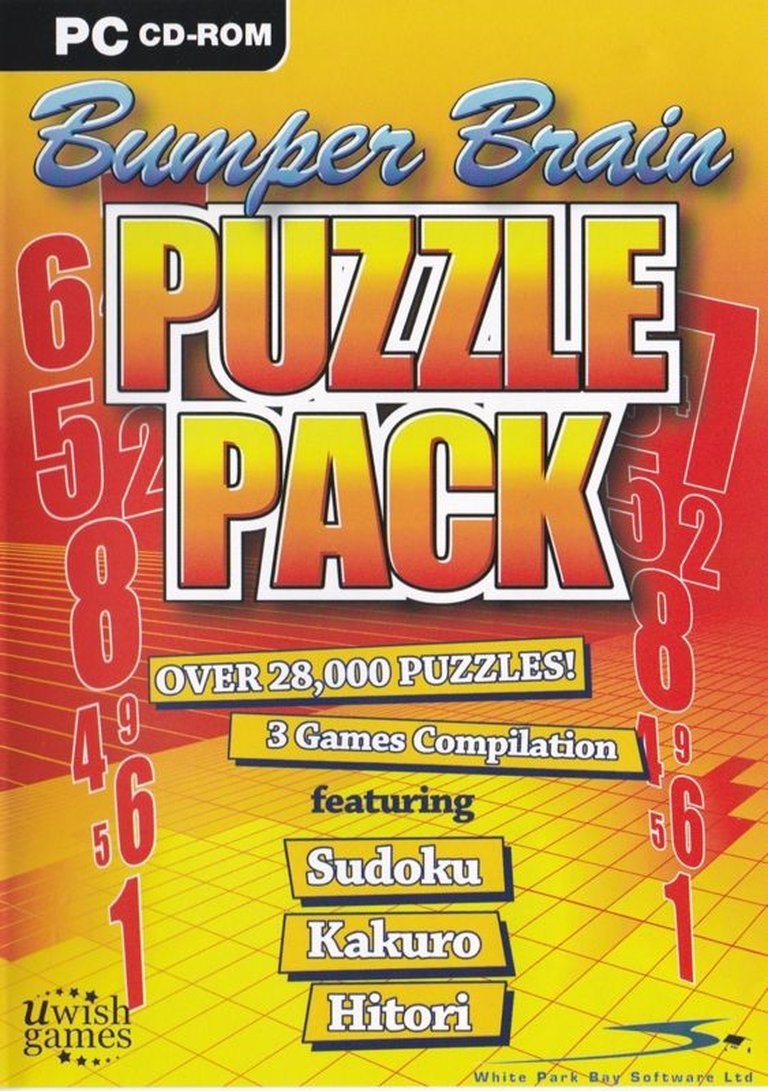
Bumper Brain Puzzle Pack is a 2007 puzzle compilation for Windows, featuring three Japanese logic games: Sudoku with 10,000 puzzles across three difficulty levels, Kakuro with 9,900 puzzles, and Hitori with 8,888 puzzles. Designed for single-player use, the games install as separate products—Super Sudoku, Super Kakuro, and Super Hitori—each offering mouse-based gameplay, adjustable grid sizes, customizable backgrounds, and tools like hints and auto-solve options for an engaging mental challenge.
Bumper Brain Puzzle Pack Reviews & Reception
metacritic.com (80/100): What this game lacks in charm, it makes up for in numbers.
metacritic.com (75/100): Not bad at all.
metacritic.com (70/100): Again, a solid title and a puzzle-player must.
metacritic.com (70/100): Brain Buster is a solid, and pretty entertaining puzzle collection.
metacritic.com (61/100): The simple fact is that Brain Buster Puzzle Pak is a great title for beginners.
Bumper Brain Puzzle Pack: Review
In the pantheon of puzzle games, few titles have managed to encapsulate the essence of cerebral challenge and sheer volume quite like Bumper Brain Puzzle Pack. Released in 2007, this compilation of Japanese puzzle games stands as a testament to the enduring appeal of logic-based entertainment. With a staggering number of puzzles across three distinct genres, Bumper Brain Puzzle Pack offers an unparalleled depth of content that keeps players engaged for hours on end. This review delves into the intricacies of this classic title, examining its development history, narrative themes, gameplay mechanics, world-building, and lasting legacy.
Development History & Context
Studio and Creators’ Vision
Bumper Brain Puzzle Pack was developed by BSS Web Consulting, a studio known for its contributions to the puzzle genre. The game was published by ZOO Digital Publishing Ltd. and uWish Games, both of which played crucial roles in bringing this compilation to the Windows platform. The creators’ vision was clear: to provide a comprehensive collection of high-quality puzzles that would appeal to both casual and hardcore enthusiasts.
Technological Constraints and Gaming Landscape
The mid-2000s were a time of transition in the gaming industry. The rise of handheld consoles like the Nintendo DS and the increasing popularity of puzzle games on mobile devices created a fertile ground for titles like Bumper Brain Puzzle Pack. The game’s release on Windows allowed it to reach a broader audience, leveraging the PC’s processing power to deliver a smooth and engaging experience. The technological constraints of the era were minimal, as the game’s requirements were modest, making it accessible to a wide range of users.
Influence of Japanese Puzzle Culture
Japan has long been a bastion of puzzle innovation, with companies like Nikoli leading the way in creating complex and engaging logic puzzles. Bumper Brain Puzzle Pack draws heavily from this rich tradition, featuring puzzles that are both challenging and culturally significant. The inclusion of Sudoku, Kakuro, and Hitori reflects the global influence of Japanese puzzle design, which has captivated audiences worldwide.
Narrative & Thematic Deep Dive
Plot and Characters
Bumper Brain Puzzle Pack is devoid of a traditional narrative, focusing instead on the pure enjoyment of puzzle-solving. There are no characters to speak of, and the dialogue is limited to instructional text and hints. This minimalist approach allows the gameplay to take center stage, unencumbered by extraneous storytelling elements.
Underlying Themes
The primary theme of Bumper Brain Puzzle Pack is the pursuit of mental stimulation and the satisfaction of solving complex problems. Each puzzle type—Sudoku, Kakuro, and Hitori—presents its own unique challenges, requiring players to employ different strategies and thought processes. The game encourages perseverance and critical thinking, rewarding players with a sense of accomplishment as they progress through the increasingly difficult levels.
Gameplay Mechanics & Systems
Core Gameplay Loops
The core gameplay loop of Bumper Brain Puzzle Pack revolves around solving puzzles. Players can choose from three distinct types:
- Sudoku: A classic number-placement puzzle where the goal is to fill a 9×9 grid with digits so that each column, row, and 3×3 section contains all of the digits from 1 to 9.
- Kakuro: A crossword-style puzzle that involves filling in a grid with numbers based on the sums provided in the clues.
- Hitori: A puzzle where the objective is to eliminate numbers from a grid so that no number appears more than once in any row or column, and no two adjacent cells contain numbers.
Combat and Character Progression
There is no combat or character progression in Bumper Brain Puzzle Pack. The game’s progression is solely based on the player’s ability to solve puzzles. As players complete puzzles, they unlock new levels of difficulty, providing a continuous challenge that keeps them engaged.
User Interface
The user interface of Bumper Brain Puzzle Pack is straightforward and intuitive. Players navigate the menus using a mouse, selecting puzzles and adjusting settings with ease. The interface is clean and uncluttered, ensuring that the focus remains on the puzzles themselves.
Innovative and Flawed Systems
One of the innovative aspects of Bumper Brain Puzzle Pack is its hint and solve options, which provide players with assistance when they get stuck. This feature is particularly useful for beginners or those who encounter particularly challenging puzzles. However, the game’s lack of a tutorial or in-depth instructions can be a drawback for newcomers, who may find it difficult to understand the rules of each puzzle type.
World-Building, Art & Sound
Setting and Atmosphere
Bumper Brain Puzzle Pack does not have a traditional setting or atmosphere, as it is primarily a collection of puzzles. However, the game’s visual design contributes to a sense of calm and focus, with a clean and minimalist aesthetic that complements the puzzle-solving experience.
Visual Direction
The visual direction of Bumper Brain Puzzle Pack is characterized by its simplicity and clarity. The puzzles are presented in a grid format, with numbers and symbols that are easy to read and understand. The game’s color scheme is muted, with a focus on black, white, and shades of gray, which helps to reduce distractions and keep the player’s attention on the task at hand.
Sound Design
The sound design of Bumper Brain Puzzle Pack is minimalistic, with soft background music and subtle sound effects that accompany the player’s actions. The music is designed to be non-intrusive, providing a soothing backdrop to the puzzle-solving experience. The sound effects, such as the click of a mouse or the appearance of a number, are satisfying and reinforce the sense of accomplishment that comes with solving a puzzle.
Reception & Legacy
Critical and Commercial Reception
Bumper Brain Puzzle Pack received mixed reviews upon its release. Critics praised the game’s depth of content and the quality of its puzzles, but some found fault with its lack of innovation and the absence of a tutorial. The game’s commercial performance was modest, but it found a dedicated following among puzzle enthusiasts who appreciated its extensive collection of challenges.
Evolution of Reputation
Over the years, Bumper Brain Puzzle Pack has gained a cult following among puzzle aficionados. Its reputation has evolved from that of a niche title to a classic in the genre, recognized for its sheer volume of content and the depth of its challenges. The game’s influence can be seen in subsequent puzzle titles, which often draw inspiration from its design and mechanics.
Influence on Subsequent Games and the Industry
Bumper Brain Puzzle Pack has had a significant impact on the puzzle genre, demonstrating the potential for extensive collections of logic-based challenges. Its success paved the way for other puzzle compilations, which sought to replicate its formula of depth and variety. The game’s emphasis on mental stimulation and critical thinking has also influenced the broader gaming industry, encouraging developers to create titles that prioritize cognitive engagement over flashy graphics or complex narratives.
Conclusion
Bumper Brain Puzzle Pack stands as a testament to the enduring appeal of puzzle games. With its extensive collection of Sudoku, Kakuro, and Hitori puzzles, the game offers an unparalleled depth of content that keeps players engaged for hours on end. Its minimalist design and focus on mental stimulation make it a classic in the genre, recognized for its sheer volume of challenges and the depth of its gameplay. Despite its mixed reception upon release, Bumper Brain Puzzle Pack has gained a dedicated following and continues to influence the puzzle genre to this day. For those seeking a cerebral challenge, this title remains a must-play, offering a timeless experience that transcends the boundaries of time and technology.