
- Release Year: 2015
- Platforms: Macintosh, Windows
- Publisher: AOS GAME
- Developer: AOS GAME
- Genre: Strategy, Tactics
- Perspective: Free camera
- Game Mode: Online PVP
- Gameplay: Real-time
- Average Score: 34/100
Description
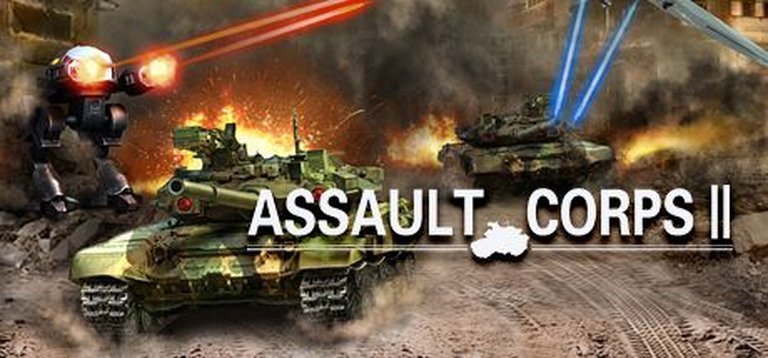
Assault Corps II is a full 3D multiplayer real-time strategy game that blends elements of MOBA-style gameplay. Developed by the independent game studio AOS GAME, this title offers a dynamic and competitive experience where players can engage in strategic battles using a variety of units and tactics. The game features a free camera perspective, allowing for a comprehensive view of the battlefield, and supports multiplayer options over the internet.
Where to Buy Assault Corps II
PC
Assault Corps II Cracks & Fixes
Assault Corps II Reviews & Reception
steambase.io (34/100): Mostly Negative
Assault Corps II Cheats & Codes
PC
Press Ctrl+Alt+Shift+C to enter a cheat code.
| Code | Effect |
|---|---|
| prestige #N | Adds #N to prestige (can be negative) |
| core #N | Adds #N to core slots (can be negative) |
| aux #N | Adds #N to aux slots (can be negative) |
| sea #N | Adds #N to sea transports num (can be negative) |
| air #N | Adds #N to air transports (can be negative) |
| rail #N | Adds #N to rail transports (can be negative) |
| exp #N | Sets experience of the selected unit to #N |
| str #N | Sets strength of the selected unit to #N |
| ent #N | Sets entrenchment of the selected unit to #N |
| fuel #N | Sets fuel of the selected unit to #N |
| ammo #N | Sets ammo of the selected unit to #N |
| turns #N | Adds #N to scenario turn count. Can be negative. |
| weather #N | Sets current weather (0=clear, 1=overcase, 2=raining, 3=snowing) |
| ground #N | Sets ground state (0=dry, 1=muddy, 2=frozen) |
| fog of war | Shows enemy’s units on the map (the opponent will not see our units until he enteres this code on his turn). Entering the code again disables this mode. |
| all eqp | Allows to buy any future equipment. Entering the code again disables this mode. |
| no zoc | Disables ZOC for our units. Entering the code again disables this mode. |
| uber units | Every attack of our units completely kills the opponent. Entering the code again disables this mode. |
| turbo units | All units move at speed 50. Entering the code again disables this mode. |
| force retreat | Any attack by our units forces the enemy to retreat. Entering the code again disables this mode. |
| endscn #N | Ends current scenario with outcome #N (in campaigns 0=decisive victory, 1=marginal victory, 2=loss). |
| chess | Makes all combats play exactly as they were predicted (unless rugged defense happens) |
| reform units | All killed units move to reserve with zero strength and can b |
Assault Corps II: Review
Introduction
Though it arrived in a golden age of MOBAs and real-time strategy (RTS) revivals, Assault Corps II (2015) remains a footnote in gaming history—an obscure, ambitious misfire from indie developer AOS GAME. Marketed as a “full 3D multiplayer RTS” with MOBA elements, the game promised large-scale battles and deep tactical customization but stumbled under the weight of technical shortcomings and a lack of polish. This review interrogates Assault Corps II’s fleeting potential, its flawed execution, and why it serves as a cautionary tale about the challenges indie studios face when tackling complex genres.
Development History & Context
Developed by the five-person team at AOS GAME, Assault Corps II emerged during a resurgence of both RTS games (StarCraft II, Company of Heroes 2) and MOBAs (Dota 2, League of Legends). The studio aimed to bridge these genres, targeting players hungry for fast-paced, team-based strategy with modern military theming. However, limited resources and ambition collided:
- Technological Constraints: Built for Windows and macOS using rudimentary 3D tech, the game’s performance suffered from poor optimization, even on modest systems.
- Monetization Model: Priced at $2.99 on Steam, the budget price reflected its indie roots but failed to compensate for its lack of content depth.
- Competitive Landscape: Released alongside polished titles like Grey Goo and Heroes of the Storm, Assault Corps II lacked the visual fidelity and network infrastructure to compete.
AOS GAME’s vision—to create a “simulation of modern military equipment confrontations”—was noble but undercut by its small team’s inability to deliver on scale.
Narrative & Thematic Deep Dive
Assault Corps II eschews traditional storytelling, focusing instead on mechanical and thematic coherence:
- Setting: A near-future battle arena where players command 18 unit types, from tanks to helicopters, in abstract military skirmishes.
- Themes: Collaboration and resource management dominate, with “tens of thousands” of players theoretically battling on a single server (though this feature never materialized reliably).
- Tone: The game leans into sterile militarism, with unit designs and maps devoid of personality or narrative context, prioritizing function over fiction.
While thematic depth isn’t the focus, the absence of lore or character left the experience feeling hollow—a missed opportunity to contextualize its strategic systems.
Gameplay Mechanics & Systems
Assault Corps II’s mechanics blend RTS base-building and MOBA-like hero control, but uneven execution fractures the core loop:
Strengths:
- Unit Diversity: 18 combat units, each with unique skills (e.g., helicopters with strafing runs, tanks with artillery barrages).
- Progression Systems: Players research tech trees to enhance armor, speed, and firepower, adding a meta-strategy layer.
- Multiplayer Focus: Modes like 8v8 battles and resource wars aimed to foster teamwork, though connectivity issues often sabotaged matches.
Weaknesses:
- Janky Controls: Units responded sluggishly to inputs, and the camera system—praised as “free” in marketing—struggled with 3D space.
- Unbalanced Systems: Steam reviews criticized certain units (e.g., gunships) as overpowered, while AI pathfinding frequently broke.
- Barebones UI: Cluttered menus and minimal feedback (e.g., unclear damage values) frustrated players.
The result was a game that looked complex on paper but felt shallow and unpolished in practice.
World-Building, Art & Sound
AOS GAME’s aesthetic choices reflect budgetary limitations rather than artistic intent:
- Visual Design: Low-poly 3D models and drab, repetitive maps (11 total) lacked detail or environmental storytelling. Unit designs were functional but uninspired.
- Sound Design: Generic combat noises and forgettable music failed to heighten tension. Players noted a lack of audio feedback for critical actions (e.g., skill activations).
- Atmosphere: The game’s “modern military” theme felt pasted-on, with no narrative or visual flair to distinguish it from competitors.
While the 3D engine allowed for free camera rotation, the overall presentation was dated even for 2015.
Reception & Legacy
Assault Corps II launched to quiet disdain:
- Critical Reception: The game holds a “Mostly Negative” rating on Steam (35% positive), with players citing broken servers, bland gameplay, and abandoned updates. Phrases like “worse than some $5 games” and “no connection to the ♥♥♥♥ server” dominate reviews.
- Commercial Performance: Its low price point and niche appeal led to minimal sales. By 2016, player counts dwindled to near-zero.
- Legacy: While ignored by the broader industry, Assault Corps II serves as a case study in indie overreach—a reminder that ambitious multiplayer projects demand robust infrastructure and post-launch support.
Conclusion
Assault Corps II is a lesson in unrealized potential. AOS GAME’s vision—to merge RTS depth with MOBA accessibility—was commendable, but technical inadequacies, poor balance, and a lack of post-launch care doomed it. For historians, it’s a curiosity; for players, it’s a relic best left unexcavated. While indie studios should dream big, Assault Corps II underscores the importance of aligning scope with resources—a cautionary tale etched into Steam’s negative reviews.
Final Verdict: A flawed, forgettable experiment that collapsed under its own ambitions. Assault Corps II earns no place in the RTS pantheon.