
- Release Year: 2019
- Platforms: Macintosh, Windows
- Publisher: Oachkatzlschwoaf Interactive
- Developer: Oachkatzlschwoaf Interactive
- Genre: Simulation, Strategy, Tactics
- Perspective: Diagonal-down
- Game Mode: Single-player
- Gameplay: Business simulation, City building, construction simulation, Managerial simulation, Point and select
Description
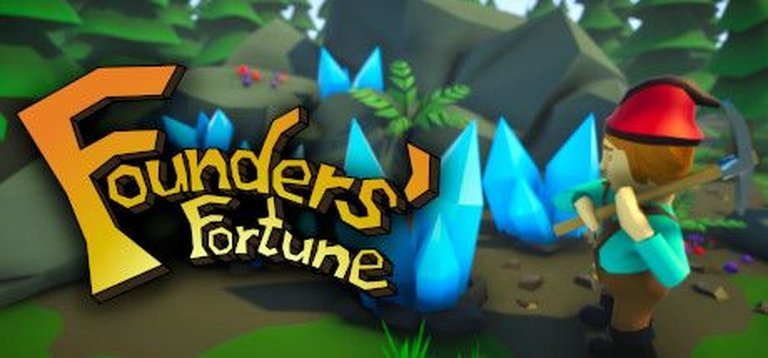
Founders’ Fortune is a colony simulation game where players build and manage a settlement on a vibrant alien planet. Balancing the needs of settlers, constructing infrastructure, and managing resources are key to survival. The game features dynamic events, character interactions, and strategic challenges as you guide your community from humble beginnings to a thriving society. With a mix of city-building, resource management, and interpersonal dynamics, players must navigate both environmental hurdles and the personalities of their colonists.
Gameplay Videos
Where to Buy Founders’ Fortune
Founders’ Fortune Cracks & Fixes
Founders’ Fortune Mods
Founders’ Fortune Guides & Walkthroughs
Founders’ Fortune: A Small-Scale Settlement Sim That Carves Its Own Niche
Introduction
In an era dominated by massive open-world epics and live-service behemoths, Founders’ Fortune (2019) dared to revisit the intimate, systemic charm of early colony simulators. Developed by Austrian indie studio Oachkatzlschwoaf Interactive, this Unity engine-powered passion project offers a deceptively complex cocktail of The Settlers-style resource management and RimWorld-inspired character psychology. Though never achieving mainstream breakout success, it quietly honed a cult following among simulation devotees who cherished its granular focus on emergent storytelling through systemic interactions. This review argues that while mechanically uneven, Founders’ Fortune represents one of indie gaming’s most sincere attempts to humanize the genre’s spreadsheet-like foundations.
Development History & Context
Indie Ambitions in a Strategy Renaissance
Emerging during gaming’s late-2010s “colony sim renaissance” (RimWorld‘s 2018 1.0 release, Oxygen Not Included‘s 2019 launch), Founders’ Fortune was developed by a core team of just 3-5 developers led by Daniel Gallenberger. The studio name—an untranslatable Bavarian-Austrian tongue-twister meaning “squirrel’s tail”—hinted at its folksy, small-scale ethos. Developed in Unity, the team prioritized moddability and player-driven narratives over AAA spectacle, entering Steam Early Access in 2018 to refine systems via community feedback—a crucible that reshaped its notoriously punishing early hunger mechanics.
Technological Constraints as Creative Fuel
Limited resources forced ingenious solutions: Polysquid Studios‘ low-poly environmental art created coherence despite minimal textures, while John Leonard French and Aether‘s dual-composer score blended folksy guitar with synthetic drones to mirror the game’s “frontier futurism” tone. Character portraits adopted a stylized, wooden puppet aesthetic—likely less an artistic choice than a concession to animation budget limits—yet inadvertently bolstered the game’s toybox diorama charm.
Narrative & Thematic Deep Dive
Emergent Drama in a Blank-Canvas World
Unlike narrative-driven contemporaries, Founders’ Fortune offers no premade plot or named protagonists. Its storytelling emerges through:
– Character Needs System: Colonists possess 18 distinct needs (hygiene, privacy, ambition) that fluctuate based on events—a malnourished settler may hoard food, sparking interpersonal conflicts.
– Procedural Flavor Text: Interactions generate contextual snippets (“Alois avoids Birgit after their argument over compost duty”) that collectively build soap-operatic arcs.
– Environmental Storytelling: Ancient ruins and abandoned campsites hint at prior failed colonies, reinforcing themes of civilization’s fragility.
Core themes dissect utopian ambition versus human fallibility: Can your meticulously planned settlement endure when colonists develop claustrophobia from crowded barracks? When a prized carpenter becomes alcoholic after losing their spouse to wolves? The game posits that true “fortune” lies not in material wealth, but in sustaining communal morale against entropy’s tide.
Gameplay Mechanics & Systems
The Feedback Loop of Fractal Management
Founders’ Fortune layers systems with obsessive granularity:
1. Farming: Crops require specific soil pH, sunlight exposure, and seasonal rotations (potatoes deplete nitrogen; beans replenish it).
2. Construction: Walls decay without maintenance, roofs collapse if support beams falter—architectural physics rare in the genre.
3. Crafting: Items have material properties (stone tools dull faster than bronze) and quality tiers impacting efficiency.
Innovations and Stumbles
- Psychology Engine: Colonists form friendships, rivalries, and trauma responses autonomously—a system praised by Generación Pixel (80%) as “remarkably polished.”
- Combat Flaws: Melee brawls feel “underbaked” (Gameplay Benelux), with floaty animations and simplistic enemy AI undermining tense raids.
- UI Paradox: While offering deep data (individual colonist skill degradation rates), menus bury critical stats behind nested tabs—a UX misstep for a game demanding multitasking.
World-Building, Art & Sound
A Hand-Painted Frontier
The game’s isometric diorama presentation evokes a living boardgame:
– Vibrant low-poly trees sway in procedural wind patterns.
– Day/night cycles drench forests in honeyed dawn light or Inispheric moon-blue shadows.
– Aigul Konyukhova‘s character designs blend Germanic folklore with steampunk quirks—villagers sport monocles, lumberjack plaids, and alchemist goggles.
Acoustic Ecology
Ray Gould‘s sound design reinforces immersion:
– Axe chops trigger woody, satisfying thwacks linearly panned based on camera position.
– Nighttime ambiance layers owl hoots, rustling grass, and distant wolf howls that subtly crescendo before raids.
– The soundtrack’s merging of medieval lutes and glitchy synths mirrors the setting’s “post-collapse techno-feudalism.”
Reception & Legacy
Cult Adoration and Mainstream Indifference
Launching July 2019, it earned a modest 80% from Generación Pixel, praising its “immersion” and “polished mechanics,” while Gameplay Benelux critiqued its “overwhelming possibilities lacking depth.” Player reception was polarized (average 2.0/5 from early adopters), with Steam reviews citing clunky combat and steep learning curves.
Commercially, it sold ≈20,000 copies (SteamSpy estimates), funding post-launch Mac support (2020) and QoL patches improving job prioritization—an indie success sustaining its 3-person team.
Ripple Effects in Indie Design
Though never genre-redefining, its innovations percolated through:
– Psychology Systems: Inspired Going Medieval (2021) to expand trait-driven colonist behaviors.
– Modding Ecosystem: Steam Workshop templates streamlined terrain editing—a boon to novice creators.
– Ethical Resource Mechanics: The eco-conscious farming (crop rotation, soil health) presaged sustainability themes in Terra Nil (2023).
Conclusion
Founders’ Fortune is neither a masterpiece nor a misfire—it’s a testament to indie tenacity. Its janky combat and UI labyrinths frustrate, yet no other colony sim so tenderly explores how a settler’s fear of darkness might unravel your utopia. For all its rough edges, the game radiates sincerity in every hand-placed foliage cluster and anxious colonist trembling during thunderstorms. While not the genre’s crown jewel, it remains an essential artifact of late-2010s indie experimentation—a reminder that fortune favors the bold, not necessarily the polished. ★★★☆ (3.5/5)