
- Release Year: 2007
- Platforms: Windows
- Publisher: Double Cluster
- Developer: Double Cluster
- Genre: Action, Platform
- Perspective: 3rd-person
- Game Mode: Single-player
- Gameplay: Platforming, Power-ups
- Setting: Anime, Fantasy, Manga
- Average Score: 80/100
Description
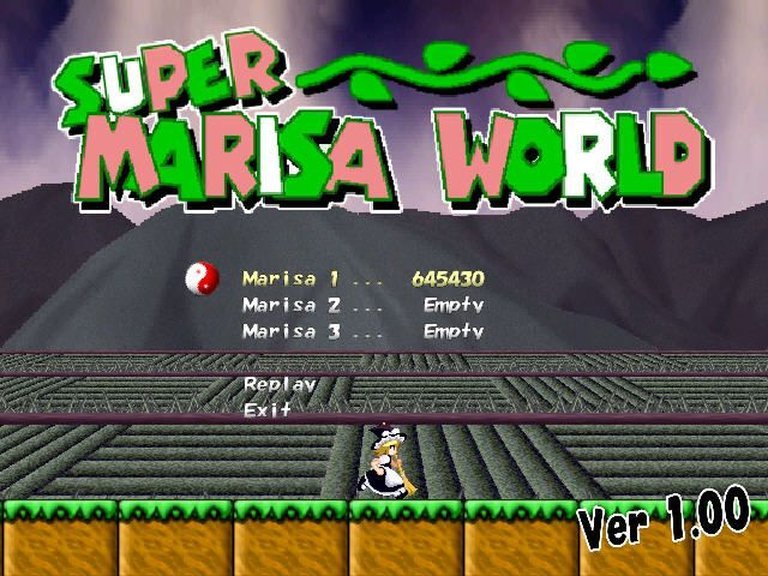
Super Marisa World is a 2D doujin platformer blending Mario-inspired gameplay with the characters and aesthetics of the Touhou Project series. Players control Marisa, a magician girl on a mission to rescue Patchouli Knowledge, navigating side-scrolling levels filled with fuzzball enemies (stand-ins for Goombas), projectile-dodging boss battles against other Touhou characters, and power-ups like a broomstick for flying and Reimu’s Miko Suit for ranged attacks. The game faithfully recreates Super Mario World’s mechanics while infusing bullet-hell elements and anime/manga visuals distinctive to the Touhou universe.
Gameplay Videos
Where to Buy Super Marisa World
PC
Super Marisa World Mods
Super Marisa World Reviews & Reception
mobygames.com (80/100): Average score: 4.0 out of 5
Super Marisa World: Review
In the vast and ever-evolving landscape of video games, few titles manage to capture the essence of nostalgia while simultaneously pushing the boundaries of creativity. Super Marisa World, a 2D doujin platform game released in 2007, stands as a testament to the power of fan-driven innovation. Developed by Double Cluster, this game masterfully blends the mechanics of classic Mario games with the enchanting characters and visual style of the Tōhō series. The result is a unique and captivating experience that has left an indelible mark on the gaming community. This review will delve into the various aspects of Super Marisa World, examining its development history, narrative depth, gameplay mechanics, world-building, and enduring legacy.
Development History & Context
The Studio: Double Cluster
Double Cluster, the studio behind Super Marisa World, is known for its dedication to creating high-quality doujin games. The studio’s name, which translates to “two clusters,” reflects its dual focus on blending different gaming universes. Super Marisa World is a prime example of this philosophy, seamlessly integrating the Tōhō Project’s characters and aesthetics with the gameplay mechanics of Super Mario World.
The Creators’ Vision
The creators of Super Marisa World aimed to pay homage to both the Tōhō and Mario franchises while adding their unique twist. The game’s protagonist, Marisa Kirisame, is a beloved character from the Tōhō series, known for her mischievous personality and magical abilities. By placing Marisa in a Mario-like world, Double Cluster created a fresh and exciting experience for fans of both series.
Technological Constraints of the Era
Released in 2007, Super Marisa World was developed during a time when 2D platformers were making a resurgence. The game’s 2D graphics and side-scrolling gameplay were a nod to the classic era of gaming, but the developers also incorporated modern elements such as detailed sprites and smooth animations. The game’s use of 3D backgrounds added depth and visual appeal, making it stand out among other 2D platformers of the time.
The Gaming Landscape
The early 2000s saw a renewed interest in retro-inspired games, with many developers drawing inspiration from the golden age of gaming. Super Marisa World capitalized on this trend by offering a unique blend of nostalgia and innovation. The game’s release coincided with a growing appreciation for doujin games, which often pushed the boundaries of creativity and experimentation.
Narrative & Thematic Deep Dive
Plot
The story of Super Marisa World revolves around Marisa Kirisame, who embarks on a quest to rescue her friend Patchouli Knowledge from an unknown threat. The narrative is simple yet engaging, with Marisa traversing various worlds inspired by the Tōhō series. Along the way, she encounters familiar faces from the Tōhō universe, each with their own unique challenges and boss battles.
Characters
Marisa Kirisame is the game’s protagonist, and her character is central to the game’s appeal. Known for her mischievous and independent nature, Marisa’s personality shines through in her interactions with other characters. Patchouli Knowledge, the damsel in distress, is another key character, though her role is more symbolic than active. The game also features a supporting cast of Tōhō characters, each adding depth and humor to the story.
Dialogue
The dialogue in Super Marisa World is a highlight of the game’s narrative. Marisa’s conversations with other characters are filled with wit and humor, often breaking the fourth wall and referencing Tōhō fanon. These interactions add a layer of depth to the characters and make the game’s world feel more immersive.
Themes
The game explores themes of friendship, adventure, and the power of imagination. Marisa’s journey is not just about rescuing Patchouli but also about discovering the true nature of the threats she faces. The game’s ending reveals that the entire adventure was a magical experiment conducted by Patchouli, adding a meta-narrative twist to the story.
Gameplay Mechanics & Systems
Core Gameplay Loops
Super Marisa World follows the classic platforming formula, with Marisa jumping over obstacles, collecting stars, and smashing enemies. The game’s levels are designed to be challenging but fair, with a mix of platforming sections and boss battles. The game’s difficulty ramps up gradually, ensuring that players are constantly engaged and challenged.
Combat
Marisa’s combat abilities are inspired by those of Mario, with a few unique twists. She can jump on enemies to defeat them, use power-ups like the Miko Suit for shooting, and the broomstick for flying and smashing. The game also features a variety of enemy types, each with their own behaviors and attack patterns.
Character Progression
Unlike traditional platformers, Super Marisa World does not feature a traditional character progression system. Instead, Marisa gains access to new abilities and power-ups as she progresses through the game. These power-ups, such as the Miko Suit and the broomstick, add depth to the gameplay and encourage players to experiment with different strategies.
UI
The game’s user interface is clean and intuitive, with clear indicators for health, power-ups, and other important information. The UI is designed to be unobtrusive, allowing players to focus on the gameplay without distractions.
Innovative or Flawed Systems
One of the game’s most innovative features is its use of Tōhō-style bullet hell elements in boss battles. These battles are fast-paced and challenging, requiring players to dodge a barrage of projectiles while dealing damage to the boss. The game also features a unique checkpoint system, with magic circles that allow Marisa to respawn at the last checkpoint if she dies.
World-Building, Art & Sound
Setting
The game’s setting is a blend of the Tōhō and Mario universes, with levels inspired by both series. The game features a variety of worlds, each with its own unique visual style and challenges. From the lush forests of the Tōhō universe to the iconic castles of the Mario series, the game’s worlds are diverse and engaging.
Atmosphere
The game’s atmosphere is enchanting, with a mix of whimsical and eerie elements. The Tōhō characters add a touch of mystery and magic to the game, while the Mario-inspired levels provide a sense of familiarity and nostalgia. The game’s use of 3D backgrounds adds depth and visual appeal, making the worlds feel more immersive.
Visual Direction
The game’s visual direction is a highlight of its design. The 2D sprites are detailed and expressive, capturing the essence of the Tōhō characters. The 3D backgrounds are beautifully rendered, adding depth and visual interest to the game’s levels. The game’s use of color is also noteworthy, with a vibrant and varied palette that enhances the game’s atmosphere.
Sound Design
The game’s sound design is another standout feature. The music is a blend of Tōhō and Mario themes, with arrangements that are both familiar and fresh. The sound effects are crisp and satisfying, adding to the game’s overall polish. The voice acting, while limited, is well-done and adds depth to the characters.
Reception & Legacy
Critical and Commercial Reception
Super Marisa World received critical acclaim upon its release, with reviewers praising its unique blend of Tōhō and Mario elements. The game’s challenging gameplay, engaging narrative, and beautiful visuals were all highlighted as strengths. Commercially, the game was a success, selling well among fans of both the Tōhō and Mario series.
Evolution of Reputation
Over the years, Super Marisa World‘s reputation has only grown. The game is often cited as one of the best Tōhō fangames, and its influence can be seen in numerous other games and media. The game’s unique blend of nostalgia and innovation has made it a beloved classic among fans.
Influence on Subsequent Games and the Industry
Super Marisa World has had a significant impact on the gaming industry, particularly in the realm of doujin games. Its success demonstrated the potential of blending different gaming universes and inspired numerous other developers to experiment with similar concepts. The game’s influence can be seen in various Tōhō and Mario fangames, as well as in commercial titles that draw inspiration from its unique blend of elements.
Conclusion
Super Marisa World is a masterclass in fan-driven innovation, seamlessly blending the mechanics of classic Mario games with the enchanting characters and visual style of the Tōhō series. Its engaging narrative, challenging gameplay, and beautiful visuals make it a standout title in the world of doujin games. The game’s enduring legacy is a testament to its quality and the creativity of its developers. For fans of Tōhō, Mario, or simply great platforming games, Super Marisa World is a must-play experience. Its place in video game history is secure, and its influence will continue to be felt for years to come.