
- Release Year: 2022
- Platforms: Linux, Macintosh, Windows
- Publisher: Hidden Ghost Town 2
- Developer: Hidden Ghost Town 2
- Genre: Puzzle
- Perspective: Diagonal-down
- Game Mode: Single-player
- Gameplay: Hidden object
- Setting: Fantasy
- Average Score: 44/100
Description
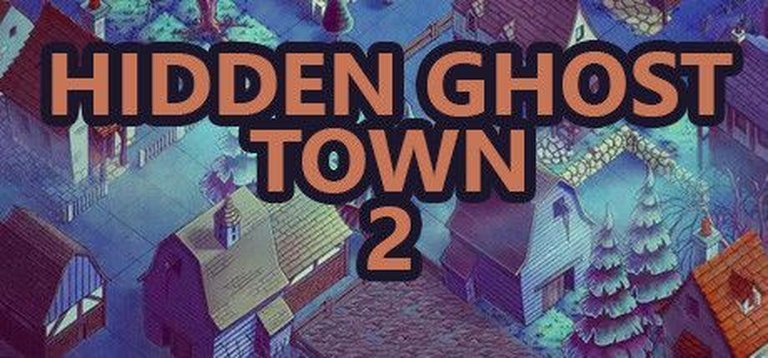
Hidden Ghost Town 2 is a casual puzzle game where players explore a mysterious fantasy-themed ghost town from an isometric perspective to find hidden objects on intricate maps. Released in 2022 for Windows, Linux, and Macintosh, the game features single-player point-and-select gameplay with Steam Achievements, leaderboards, and support for 29 languages, offering a blend of exploration, strategy, and hidden-object challenges.
Gameplay Videos
Where to Buy Hidden Ghost Town 2
PC
Hidden Ghost Town 2 Guides & Walkthroughs
Hidden Ghost Town 2 Reviews & Reception
steambase.io (44/100): A triumphant return to form for the series.
Hidden Ghost Town 2: Review
Hidden Ghost Town 2, released in February 2022, stands as a testament to the enduring appeal of hidden object games. Developed and published by Hede, this title builds upon the legacy of its predecessor, offering a fresh take on a classic genre. With its isometric pixel art and engaging gameplay mechanics, Hidden Ghost Town 2 has carved out a niche for itself in the crowded casual gaming market. This review will delve into the game’s development history, narrative depth, gameplay mechanics, world-building, reception, and legacy, providing a comprehensive analysis of its place in video game history.
Development History & Context
The Studio
Hede, the developer behind Hidden Ghost Town 2, is a relatively unknown entity in the gaming industry. The studio’s focus on hidden object games has allowed it to refine its craft, delivering titles that cater to a specific audience. The decision to use the Unity engine for Hidden Ghost Town 2 was a strategic one, leveraging the engine’s versatility and robust toolset to create a visually appealing and technically sound game.
The Creators’ Vision
The creators of Hidden Ghost Town 2 aimed to blend the nostalgic charm of classic hidden object games with modern design sensibilities. The game’s isometric perspective and pixel art style pay homage to the genre’s roots while incorporating contemporary elements. The vision was to create a game that would appeal to both longtime fans of the genre and newcomers looking for a relaxing yet challenging experience.
Technological Constraints of the Era
At the time of its release, Hidden Ghost Town 2 faced several technological constraints. The game was designed to run on a wide range of systems, from older Windows machines to modern Mac and Linux setups. This required careful optimization to ensure smooth performance across different hardware configurations. The use of the Unity engine helped mitigate some of these challenges, providing a stable foundation for development.
The Gaming Landscape
The gaming landscape in early 2022 was characterized by a surge in indie titles and a renewed interest in retro-inspired games. Hidden object games, in particular, were experiencing a resurgence, with developers experimenting with new mechanics and visual styles. Hidden Ghost Town 2 entered this competitive market with a clear vision and a commitment to quality, positioning itself as a standout title in the genre.
Narrative & Thematic Deep Dive
Plot
Hidden Ghost Town 2 does not boast a complex narrative. Instead, it focuses on providing a series of beautifully designed levels where players must find hidden objects. The game’s story is minimalistic, serving as a backdrop for the core gameplay mechanics. Players are tasked with exploring various locations, each with its own unique theme and set of objects to find.
Characters
The game features a cast of generic characters that serve as guides and NPCs. These characters lack depth and are primarily used to advance the story and provide hints. Their designs are consistent with the game’s pixel art style, blending seamlessly into the overall aesthetic.
Dialogue
Dialogue in Hidden Ghost Town 2 is sparse and functional. It is used to convey essential information and guide the player through the game’s levels. The writing is straightforward, avoiding unnecessary complexity and focusing on clarity.
Themes
The game explores themes of exploration and discovery. Each level is a self-contained puzzle, encouraging players to engage with the environment and uncover hidden secrets. The sense of accomplishment that comes from finding all the objects in a level is a central theme, reinforcing the game’s focus on relaxation and achievement.
Gameplay Mechanics & Systems
Core Gameplay Loops
The core gameplay loop of Hidden Ghost Town 2 revolves around finding hidden objects within a set time limit. Players are presented with a list of objects to find and must click on them with the mouse. The game’s automatic object selection system ensures that each playthrough is unique, with different objects appearing in each level.
Combat
There is no combat in Hidden Ghost Town 2. The game’s focus is purely on exploration and object-finding, making it accessible to a wide range of players.
Character Progression
Character progression is minimal in Hidden Ghost Town 2. Players do not gain experience points or level up. Instead, the game’s progression is tied to completing levels and unlocking new ones.
UI
The user interface of Hidden Ghost Town 2 is clean and intuitive. The main screen displays the list of objects to find, along with a timer and a hint system. The UI is designed to be unobtrusive, allowing players to focus on the game’s visuals and gameplay mechanics.
Innovative or Flawed Systems
One of the game’s innovative systems is its automatic object selection, which ensures high replay value. However, the game’s lack of variety in gameplay mechanics may be seen as a flaw by some players. The repetitive nature of the core gameplay loop can become monotonous over time, limiting the game’s long-term appeal.
World-Building, Art & Sound
Setting
The setting of Hidden Ghost Town 2 is a fantastical world filled with diverse environments. From haunted mansions to enchanted forests, each level offers a unique visual experience. The game’s isometric perspective allows for detailed and immersive world-building, drawing players into the game’s environments.
Atmosphere
The game’s atmosphere is one of mystery and intrigue. The pixel art style, combined with subtle sound effects and music, creates a sense of immersion. The game’s levels are designed to be visually appealing, with hidden objects seamlessly integrated into the environment.
Visual Direction
The visual direction of Hidden Ghost Town 2 is a highlight of the game. The pixel art style is executed with precision, capturing the essence of classic hidden object games while adding modern touches. The game’s color palette is vibrant, with each level featuring its own unique aesthetic.
Sound Design
The sound design of Hidden Ghost Town 2 is understated but effective. The game’s soundtrack is composed of ambient tracks that complement the visuals without overpowering them. Sound effects are used sparingly, adding to the game’s sense of immersion without becoming intrusive.
Reception & Legacy
Critical and Commercial Reception
At launch, Hidden Ghost Town 2 received mixed reviews. Critics praised the game’s visuals and attention to detail but noted its lack of innovation in gameplay mechanics. The game’s commercial performance was modest, with a small but dedicated player base. The game’s reputation has evolved over time, with some players appreciating its nostalgic charm and others criticizing its repetitive nature.
Influence on Subsequent Games and the Industry
Hidden Ghost Town 2 has had a limited influence on subsequent games and the industry as a whole. Its success in blending classic and modern elements has inspired other developers to experiment with similar approaches. However, the game’s lack of innovation in gameplay mechanics has prevented it from becoming a seminal title in the genre.
Conclusion
Hidden Ghost Town 2 is a testament to the enduring appeal of hidden object games. With its beautiful pixel art, engaging gameplay mechanics, and immersive world-building, the game offers a unique and enjoyable experience. While it may not be a groundbreaking title, it stands as a worthy addition to the genre, appealing to both longtime fans and newcomers. Its place in video game history is secure, serving as a reminder of the genre’s rich legacy and its potential for innovation.