
- Release Year: 2012
- Platforms: Windows
- Developer: David Szymanski
- Genre: Action
- Perspective: 1st-person
- Game Mode: Single-player
- Gameplay: Direct control, Shooter
- Setting: Fantasy
Description
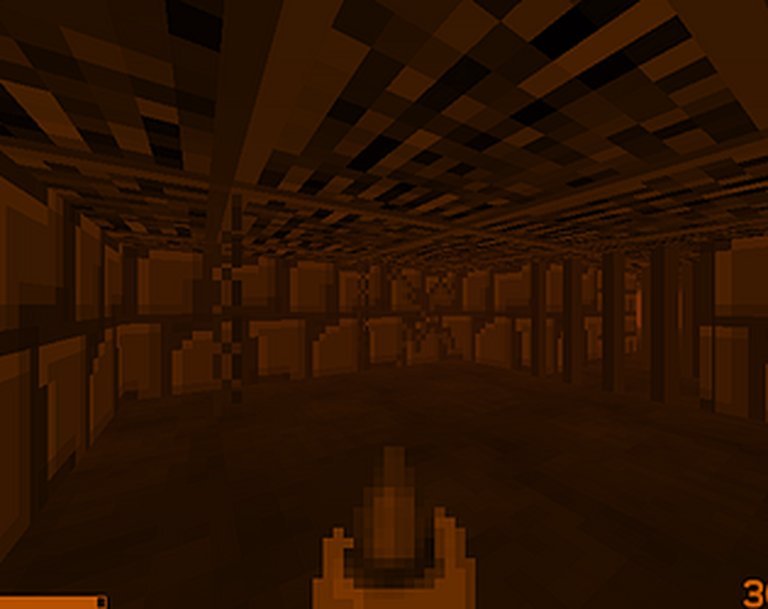
Pit: The Bite-Sized Shooter is a nostalgic homage to classic 1990s first-person shooters, featuring simplistic graphics and maze-like levels. Players control Thomas Gage, navigating a mysterious tunnel system in rural Pennsylvania while battling robots and ghosts. The game emphasizes pure action over storytelling, drawing inspiration from iconic titles like Wolfenstein 3D, Doom, Duke Nukem 3D, and Quake.
Pit: The Bite-Sized Shooter Reviews & Reception
itch.io : Pretty much the same vibe as “Down We Go!”, but feels more like a classic old-school action game.
kotaku.com : A little personal love letter to the FPSs of the early-mid 90s, featuring a variety of enemies and weapons to shoot them with.
Pit: The Bite-Sized Shooter Review
A Microscopic Masterclass in Retro Revival
Introduction
In an era dominated by sprawling open worlds and cinematic narratives, Pit: The Bite-Sized Shooter (2011) stands as a defiant throwback to the unadulterated chaos of 1990s first-person shooters. Developed by David Szymanski (later known for DUSK and Iron Lung), this solo passion project distills the essence of Wolfenstein 3D, Doom, and Quake into a compact, laser-focused experience. This review argues that Pit is not merely a nostalgia act but a deliberate deconstruction of retro shooter design, celebrating the genre’s primal appeal while acknowledging its constraints.
Development History & Context
The One-Man Army
David Szymanski, operating under the alias Jefequeso, single-handedly crafted Pit using GameMaker 8.1, a tool rarely associated with FPS development. This choice imposed significant limitations: sprite-based rendering, flat-shaded corridors, and rudimentary AI. Yet, Szymanski leaned into these constraints, later stating on his blog that the goal was to “[recreate] the feeling of playing Doom on a school computer lab PC.” The game’s development coincided with the early 2010s indie boom, a period when titles like Super Meat Boy and Minecraft proved that minimalist aesthetics could coexist with deep gameplay.
A Landscape in Transition
Released in 2011–2012, Pit arrived as AAA studios chased photorealism and multiplayer dominance (Call of Duty: Modern Warfare 3, Skyrim). Meanwhile, the retro-FPS revival was nascent, with projects like 2011’s Rise of the Triad: Ludicrous Edition still years away. Pit emerged as a grassroots counterpoint, rejecting modern design trends in favor of immediacy and brevity.
Narrative & Thematic Deep Dive
Plot as Scaffolding
The premise—Thomas Gage battling robots and ghosts in rural Pennsylvania tunnels—exists solely to contextualize the carnage. Dialogue is nonexistent; world-building is conveyed through environmental textures (notably an ice wall borrowed from Duke Nukem 3D) and enemy designs. Thematically, Pit channels isolation and desperation, its labyrinthine levels evoking a claustrophobic nightmare. Yet, this bleakness is undercut by a self-aware absurdity, epitomized by cheat codes that turn weapons gold or let players vaporize walls.
Gameplay Mechanics & Systems
The Core Loop: Purist Carnage
Pit’s gameplay is a tightly wound spring:
– Combat: Five weapons (pistol, shotgun, chaingun, etc.) mirror Doom’s arsenal, with punchy feedback thanks to Quake-inspired sound design.
– Enemies: Seven types, from floating skulls to robotic drones, demand tactical prioritization. Their AI is simplistic but effective, swarming the player in cramped spaces.
– Level Design: Non-linear, maze-like stages encourage exploration but often devolve into trial-and-error due to limited visual signposting.
Innovation in Restriction
The game’s most daring feature is its cheat system, which transforms gameplay into a playful sandbox. Entering “GOLDEN” grants overpowered weapons, while “DESTROYER” lets players obliterate walls—a mechanic ahead of its time, presaging Teardown’s destructible environments.
Flaws: Rough Edges as Aesthetic
Pit’s UI is spartan to a fault, lacking a map or objective markers. Save points are scarce, exacerbating frustration in later levels. Yet, these omissions feel intentional, reinforcing the game’s “lost ’90s shareware” ethos.
World-Building, Art & Sound
Visuals: Pixelated Claustrophobia
The art direction embraces limitation:
– Textures: Borrowed from id Software and 3D Realms classics, recontextualized into oppressive, monochromatic tunnels.
– Lighting: Flat, uniform shading amplifies the sense of entrapment, with flickering lights used sparingly for dramatic effect.
Sound: A Symphony of Gunfire
Szymanski’s sound design is a highlight:
– Weapons roar with sampled Quake assets, their bassy thumps echoing in tight corridors.
– Ambient tracks by fectoper layer eerie drones beneath the action, reminiscent of Half-Life’s unsettling atmosphere.
Reception & Legacy
Critical Quiet, Cult Adoration
At launch, Pit garnered little mainstream attention—no critic reviews on MobyGames, but a 4.5/5 user rating on itch.io based on 16 reviews. Players praised its “authentic retro feel” and “smart use of cheats,” while noting its niche appeal.
Ripples in the Indie Scene
Though not a commercial hit, Pit influenced later retro shooters:
– Its bite-sized campaign inspired DUSK’s episodic structure.
– The cheat-driven sandbox philosophy echoed in Prodeus’ modular difficulty.
– Szymanski’s DIY approach became a blueprint for solo devs leveraging GameMaker for 3D experiments.
Conclusion
Pit: The Bite-Sized Shooter is a time capsule and a manifesto. It captures the raw energy of ’90s shooters while interrogating their design limitations, proving that innovation can flourish within self-imposed constraints. For historians, it’s a fascinating case study in indie resourcefulness; for players, it’s a 30-minute adrenaline rush that respects their time. While not every element has aged gracefully, Pit remains a vital artifact of gaming’s iterative DNA—a reminder that sometimes, less is more.
Final Verdict: A flawed but essential curiosity, Pit earns its place in the pantheon of retro-revivalist labors of love.