
- Release Year: 2002
- Platforms: Windows
- Publisher: US – ACTION, s.r.o.
- Genre: Compilation
Description
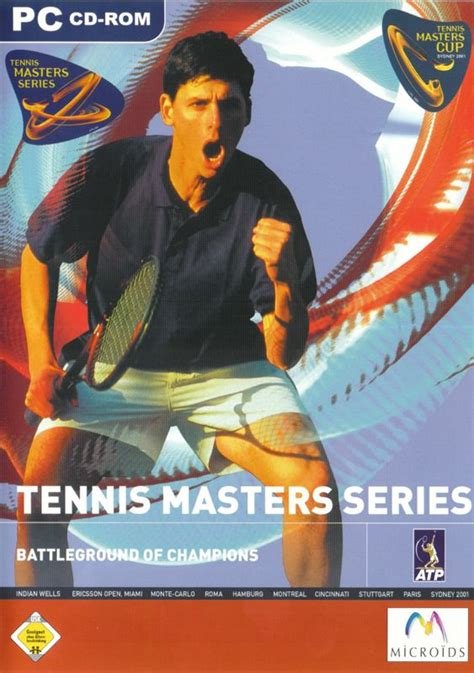
The ‘2in1 Pack – Tennis Masters Series / Ski-Doo Team Racing’ is a compilation game released in 2002 for Windows. It combines two distinct sports experiences: ‘Tennis Masters Series,’ a tennis simulation game that allows players to compete in exhibition matches or full seasons with a variety of fictional athletes, and ‘Ski-Doo Team Racing,’ a snowmobile racing game. The pack offers a blend of strategic tennis gameplay and high-speed racing action, catering to fans of both sports.
2in1 Pack – Tennis Masters Series / Ski-Doo Team Racing Cheats & Codes
PC
Enter one of the following names at the ‘Player And Tuning’ menu.
| Code | Effect |
|---|---|
| gimmealltracks | All tracks |
| gimmeallsleds | All snowmobiles |
| gimmesuperboost | Super boost |
| gimmeflyhigh | Lower gravity |
| gimmecheatreset | Disable active cheats |
| gimmegravity | Higher gravity |
| gimmetuning | Tuning |
2in1 Pack – Tennis Masters Series / Ski-Doo Team Racing: Review
Introduction
In the early 2000s, the gaming industry saw a surge in budget-friendly compilations designed to capitalize on niche genres. 2in1 Pack – Tennis Masters Series / Ski-Doo Team Racing (2002) epitomizes this trend, pairing a polished tennis simulation with an adrenaline-fueled snowmobile racer. While the combination is undeniably bizarre, this Windows-exclusive bundle offers a fascinating time capsule of an era when publishers sought to maximize value through eclectic genre mashups. This review argues that, despite its disjointed pairing, the compilation highlights the strengths and limitations of early-2000s sports simulations—serving neither as a masterpiece nor a disaster, but as a curious relic of its time.
Development History & Context
Developed by Microids Canada (Tennis Masters Series) and Daydream Software AB (Ski-Doo Team Racing), the two games were originally released separately in 2001 before being bundled by Czech publisher US – ACTION, s.r.o. in 2002.
Tennis Masters Series was built using the NetImmerse engine (later known as Gamebryo), leveraging motion capture to animate its fictional athletes. Licensed under the ATP Tour, it aimed to replicate the prestige of real-world tournaments like the Ericsson Open and Monte Carlo Masters. Meanwhile, Ski-Doo Team Racing leaned into the extreme sports craze of the late ’90s, emphasizing stunt-focused snowmobile combat across 15 tracks.
Both titles emerged during a transitional period for PC gaming. LAN multiplayer was still novel, and sports sims were often overshadowed by console-centric franchises like Tony Hawk’s Pro Skater and Madden. The decision to bundle these games reflected a pragmatic strategy to attract genre enthusiasts while minimizing shelf-space competition.
Narrative & Thematic Deep Dive
Neither game prioritizes narrative, but their themes diverge sharply. Tennis Masters Series is a sterile, almost clinical homage to professional tennis. With 67 fictional players and no career storylines, it focuses purely on the ritual of competition—qualifying rounds, Grand Slam-style tournaments, and the pursuit of a No. 1 ranking. The absence of real athletes (due to licensing constraints) creates a detached, almost arcade-like atmosphere.
In contrast, Ski-Doo Team Racing embraces chaotic spectacle. Its stunt mode, featuring 16 aerial tricks, channels the rebellious energy of early X-Games culture. The game’s “team racing” premise is purely cosmetic—no narrative ties bind its eight riders—but the adrenaline of high-speed crashes and mid-air flips compensates for its lack of depth.
Gameplay Mechanics & Systems
Tennis Masters Series
- Core Loop: Exhibition matches, full ATP seasons, and LAN-based doubles. Matches require tactical shot selection (flat serves, lobs, drop shots) and stamina management.
- Innovations: Localized French commentary for Monte Carlo and Rome tournaments, a rarity for the time.
- Flaws: Repetitive AI, no real players, and no quick-match options in season mode. Critics panned its “bare-bones” presentation (GameSpot: 5.9/10).
Ski-Doo Team Racing
- Core Loop: Circuit races and stunt challenges across indoor arenas and mountain slopes. Unlockable sleds and tuning options (lug height, clutch adjustments) add mild RPG elements.
- Innovations: LAN/online support for up to eight players, a bold feature for 2001.
- Flaws: Floaty physics, repetitive tracks, and a forgettable soundtrack. The Guardian noted its “lack of polish” compared to SSX.
World-Building, Art & Sound
Tennis Masters Series replicates the hushed grandeur of professional tennis. Courts are meticulously detailed, from the clay of Hamburg to the hardcourts of Miami, but the crowds feel lifeless, akin to cardboard cutouts. The British commentator’s dry delivery (“A thrilling rally!”) underscores the game’s sterile tone.
Ski-Doo Team Racing thrives in its absurdity. Tracks like “Frozen Peak” and “Ice Stadium” blend hyper-realistic snow textures with arcade-style jumps. The sound design shines here—the roar of engines and crunch of collisions are visceral, even if the techno soundtrack feels dated.
Reception & Legacy
At launch, Tennis Masters Series earned mixed reviews (IGN: 6.5/10; Jeuxvideo: 14/20), praised for its shot variety but criticized for lacking personality. Ski-Doo Team Racing fared worse, dismissed as a “B-tier Sled Storm” (PC Gamer).
The compilation itself left no cultural footprint, but its components hint at broader trends. Tennis Masters presaged the simulation-heavy Top Spin series, while Ski-Doo’s stunt focus echoed in later games like Ski-Doo: Snowmobile Challenge (2009). Neither revolutionized their genres, but both encapsulate a pre-Ubisoft era when mid-budget sports titles could thrive.
Conclusion
2in1 Pack – Tennis Masters Series / Ski-Doo Team Racing is neither essential nor abysmal—it’s curiously average. The tennis sim offers methodical, if soulless, gameplay, while the snowmobile racer delivers mindless fun in short bursts. For historians, the bundle exemplifies early-2000s market strategies, where publishers repackaged middling titles to squeeze out extra sales. For modern players, it’s a novelty best appreciated as a museum piece—a reminder of when “extreme sports” meant dodgy physics and LAN parties. In the pantheon of gaming history, this odd couple earns a footnote, not a crown.