
- Release Year: 2004
- Platforms: Windows
- Publisher: Cenega Czech s.r.o.
- Developer: Centauri Production s.r.o.
- Genre: Adventure, Educational
- Perspective: Side view
- Game Mode: Single-player
- Gameplay: Graphic adventure, Mini-games, Puzzle elements
- Setting: Fantasy
Description
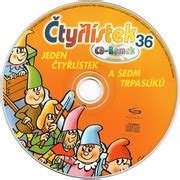
Čtyřlístek CD-Romek 36: Jeden Čtyřlístek a sedm trpaslíků, also known as Čtyřlístek: Fifinka má narozeniny, is the 36th installment in the Czech adventure game series distributed via the CD-Romek magazine. Set in a fantasy world, the game revolves around Fifinka’s birthday celebration and an encounter with seven dwarves. Combining a graphic adventure with mini-games and puzzles, it focuses on developing children’s perception, memory, orientation, and ecological thinking, while also introducing basic English language skills in an interactive format.
Čtyřlístek CD-Romek 36: Jeden Čtyřlístek a sedm trpaslíků: A Czech Edutainment Relic Revisited
Introduction: A Cultural Artifact in Gaming Form
For generations of Czech children, the mischievous adventures of Čtyřlístek (Four-Leaf Clover)—anthropomorphic icons Myšpulín, Bobík, Fifinka, and Pinďa—have been as foundational as morning bread rolls. Released in October 2004 as part of the CD-Romek magazine series, Jeden Čtyřlístek a sedm trpaslíků (One Four-Leaf Clover and Seven Dwarfs, colloquially known as Fifinka má narozeniny/Fifinka’s Birthday) represents a fascinating artifact of early-2000s Czech edutainment. Developed by Centauri Production and distributed by Cenega Czech, this 36th installment leveraged beloved comic characters to deliver an interactive experience blending adventure, logic puzzles, and rudimentary English lessons. This review argues that while technologically constrained and culturally hyper-specific, the game embodies a crucial transitional moment in Central European children’s media—where print traditions collided with digital experimentation, yielding flawed yet historically significant gameplay.
Development History & Context: The CD-Romek Ecosystem
A Magazine’s Digital Ambitions
CD-Romek (2000–2005) emerged as a pioneering multimedia hybrid: a bi-monthly periodical bundling comic stories with interactive CD-ROMs. Initially a localized version of Poland’s Familijny CD-Romek, it evolved into a distinctly Czech product under Cenega’s stewardship, alternating between Čtyřlístek-themed issues and those starring another icon, Ferda Mravenec (Ferda the Ant). Issue #36, released in October 2004, coincided with the magazine’s peak before its abrupt 2005 cancellation due to “declining interest in outdated adventure concepts” (chrz.wz.cz).
Technological Constraints and Vision
Built for Windows PCs, the game targeted modest hardware typical of Eastern European households in the early 2000s—think Pentium III processors and 256MB RAM. Centauri Production, known for family-friendly titles like Sluníčková pouť, prioritized accessibility over innovation, employing a rudimentary 256-color palette and 640×480 resolution to ensure compatibility. The studio’s design philosophy centered on “practicing perception, memory, orientation, and ecological thinking” (MobyGames), leveraging Jaroslav Němeček’s iconic art style to bridge comic and digital realms.
The Czech Gaming Landscape
2004 saw a fragmented local market: AAA Western titles remained prohibitively expensive, leaving space for budget-friendly, licensed adaptations. Čtyřlístek CD-Romek 36 slotted into a niche occupied by Dětský svět compilations and Pojďte si hrát magazines—products prioritizing pedagogical value over polish. This context explains the game’s didactic focus, embedding English vocabulary drills alongside gameplay to appeal to parents and educators.
Narrative & Thematic Deep Dive: Birthday Cakes and Dwarven Mishaps
Plot Synopsis
The game adapts a standalone comic from the issue (written by Petr Chvojka, illustrated by Němeček) but diverges narratively. While the magazine’s 10-page story sees the quartet encountering dwarfs during a hiking trip, the CD-ROM’s adventure revolves around Fifinka’s birthday celebration. Players guide the gang through Třeskoprsky (their fictional village) to prepare a party, inadvertently stumbling upon seven dwarfs who’ve misplaced their mining tools. The narrative oscillates between slice-of-life charm (baking cakes, decorating) and light fantasy, climaxing in a collaborative quest to retrieve the dwarfs’ pickaxes from a mischievous лесной дух (forest spirit).
Characterization and Voice Acting
Czech voice-acting veterans Ota Jirák (Myšpulín/Pinďa/Bobík) and Helena Brabcová (Fifinka) reprise their roles from the animated series, lending authenticity. Dialogues lean heavily on the comics’ established dynamics:
– Myšpulín’s inventor quirks (“Tento problém vyřeším pomocí mé nové hyperfrekvenční detekční aparatury!” / “I’ll solve this with my new hyperfrequency detection apparatus!”)
– Bobík’s gluttonous interruptions (“Ale já mám hlad!” / “But I’m hungry!”)
– Pinďa’s timid curiosity (“Neměli bychom radši zavolat policii?” / “Shouldn’t we call the police?”)
Dwarfs, voiceless but visually distinct (each color-coded with tool-themed accessories), evoke Snow White archetypes without Disney’s depth, serving primarily as quest-givers.
Themes: Community and Cognitive Growth
Beneath the whimsy lies a deliberate pedagogical framework. Each story beat reinforces:
– Cooperative problem-solving: Tasks require swapping characters (e.g., Bobík lifts heavy objects; Myšpulín deciphers puzzles).
– Ecological mindfulness: A subplot about cleaning littered forests mirrors Czech school curricula.
– Language acquisition: English mini-games teach basic nouns (e.g., “apple,” “chair”) via repetition, though critics note disjointed integration (herni-dabing.cz).
Thematic ambition outweighs narrative sophistication—a hallmark of Čtyřlístek’s child-first ethos.
Gameplay Mechanics & Systems: Edutainment’s Double-Edged Sword
Core Adventure Loop
The point-and-click interface adopts a side-view perspective reminiscent of early Hugo games. Players explore static screens populated with interactable hotspots, inventory items, and NPCs. Progression hinges on classic adventure logic:
1. Environmental puzzles: Redirect a stream using logs to reach a cavern (Bobík’s strength required).
2. Item crafting: Combine flour/eggs for Fifinka’s birthday cake (drag-and-drop mechanics).
3. Conversation trees: Extract clues from dwarfs via multiple-choice dialogues.
While intuitively designed for ages 5–10, puzzles suffer from moon logic (e.g., using a magnet on a non-metallic statue “because Myšpulín sci-fi tech”) and erratic difficulty spikes.
Mini-Games: Pedagogy as Play
Six supplementary games bolster the experience:
1. Atomic Puzzle: Rearrange molecules to teach basic chemistry (praised for creativity).
2. Flappy’s Rocket (side-scrolling obstacle avoidance): Weak hitbox detection frustrates.
3. English Match: Pair Czech words with English equivalents (e.g., “jablko” → “apple”).
4. 3D House Builder: Assemble the team’s iconic home via drag-and-drop—a standout.
5. Railway Constructor: Lay tracks to guide a train, emphasizing spatial reasoning.
6. Hungry Housenka: Guide a caterpillar to food, teaching pathfinding.
Mini-games recycle assets from prior CD-Romek issues (#34’s “Hladovci” resurfaces here), revealing budget constraints. The lack of save states forced players to complete activities in one sitting—a glaring oversight for young audiences.
UI/UX: Functional but Dated
The interface uses large, cartoonish buttons for navigation, yet suffers from:
– Unresponsive clicks: Delays when selecting items (archived player complaints).
– No audio subtitles: A disability-access failure.
– Cluttered inventory: Tiny icons blur at higher resolutions.
World-Building, Art & Sound: Nostalgia in Pixel Form
Visual Identity: Němeček’s Legacy Preserved
Centauri Production faithfully adapts Němeček’s ligne claire-inspired art (bold outlines, flat colors) into pre-rendered 3D backgrounds. Settings like the team’s cottage and dwarf mines brim with comic-accurate details:
– Myšpulín’s lab retrofitted with gear-shaped decor.
– Bobík’s weightlifting dumbbells tucked under his bed.
– Fifinka’s dresser adorned with bows from past adventures.
However, low-poly character models (especially the dwarfs’ blocky forms) clash with 2D sprites, exposing the era’s technical limitations.
Sound Design: Charm Over Fidelity
Marek Doubrava’s score oscillates between cheerful polkas (village themes) and synth-driven mystery (forest/cavern zones). While melodically catchy, tracks loop aggressively—a 20-second birthday tune repeats ad infinitum during cake-baking. Voice acting elevates the experience: Jirák’s Myšpulín channels absent-minded genius, while Brabcová’s Fifinka radiates warmth. Ambient sounds (bird chirps, mining clinks) add depth but suffer from low-bitrate compression.
Reception & Legacy: Forgotten but Not Gone
Contemporary Reception
No formal reviews exist on aggregators like MobyGames (as of 2025), but archival forum posts and collector testimonials (aukro.cz) paint a mixed picture:
– Praises: “My children adored seeing their comic heroes come alive.” (Parent, PC World letter section).
– Critiques: “Repetitive mini-games feel like homework.” (User, Czech gaming forum BonusWeb).
The game’s commercial performance remains unrecorded, though its inclusion in 2006’s Dětský Svět compilation suggests moderate success.
Posthumous Reassessment
Today, CD-Romek 36 enjoys cult status among Czech retro-gaming circles:
– Preservation efforts: The Internet Archive hosts a functional ISO (archive.org).
– Collector demand: Sealed copies fetch 790 Kč (~$34) on Aukro (aukro.cz).
– Influence: Its English-teaching framework inspired later titles like Angličtina s Červenou Karkulkou (2008).
However, the game remains obscure outside Czechia—a testament to its hyper-localized design.
Conclusion: A Time Capsule of Czech Childhood
Čtyřlístek CD-Romek 36: Jeden Čtyřlístek a sedm trpaslíků is neither a masterpiece nor a failure. It is a poignant artifact of its era—when Czech developers grappled with limited resources to create interactive extensions of beloved narratives. While its gameplay flaws (repetitive mini-games, technical jank) hinder modern appeal, the title’s cultural significance cannot be overstated. For historians, it offers a window into 2000s Central European edutainment; for Czech millennials, it’s a Proustian madeleine of afternoons spent clicking alongside Myšpulín’s zany inventions. In the pantheon of licensed games, it occupies a unique niche: unfiltered, pedagogically earnest, and unmistakably Czech.
Final Verdict:
A flawed but historically vital relic—2.5/5 for contemporary players, 5/5 for cultural archivists.
Additional notes:
– Availability: Preserved via abandonware sites; physical copies rare.
– Modern playability: Requires Windows XP VM due to compatibility issues.
– Sequels: The canceled CD-Romek 42 (“Zdivočelá peřina”) later surfaced in Romania as PC Campion 19.