
- Release Year: 2007
- Platforms: PlayStation 2, Windows
- Publisher: OOO Polyet Navigatora, Phoenix Games B.V.
- Developer: Uxus Games
- Genre: Action, Puzzle
- Perspective: Top-down
- Game Mode: Single-player
- Gameplay: Arcade, construction
- Average Score: 40/100
Description
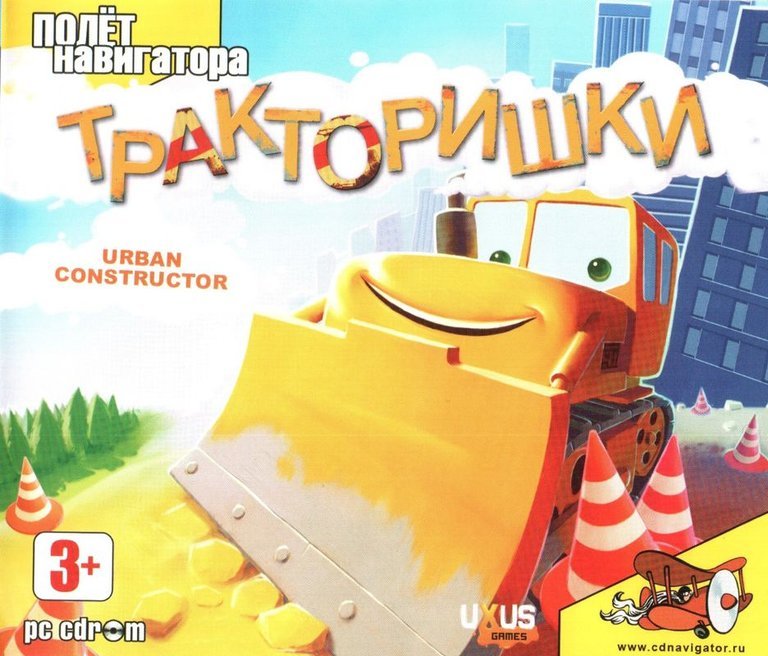
Urban Constructor is a 3D action-puzzle game where players control a tractor tasked with building a city by drawing rectangles and other geometric shapes to claim land. Set against dynamic environmental hazards like tornadoes and cloud storms, the game spans 50 levels, each requiring at least 45% of the terrain to be developed to progress. Utilizing a top-down arcade-style gameplay inspired by QIX, players can also encounter random power-ups to aid their construction efforts. Released initially for Windows in 2007 and later for PlayStation 2 in 2008, the game challenges players to balance strategic planning with quick reflexes.
Gameplay Videos
Urban Constructor Free Download
PlayStation 2
Urban Constructor Reviews & Reception
mobygames.com (40/100): A QIX variant with 3D graphics where you play a tractor that tries to build a city by drawing rectangles and other figures while opposed by tornadoes, cloud storms and other enemies.
Urban Constructor: Review
In the pantheon of video games that dared to blend genres and push the boundaries of conventional gameplay, Urban Constructor stands as a unique and often overlooked gem. Released in 2007 by Uxus Games, this top-down action-puzzle hybrid tasked players with constructing cities while navigating a series of increasingly challenging levels. Despite its niche appeal, Urban Constructor deserves a closer look for its innovative mechanics, engaging gameplay, and the sheer audacity of its concept. This review will delve into the game’s development history, narrative themes, gameplay mechanics, world-building, reception, and legacy, ultimately arguing that Urban Constructor is a hidden masterpiece that deserves more recognition.
Development History & Context
The Studio: Uxus Games
Uxus Games, the developer behind Urban Constructor, was a relatively unknown studio at the time of the game’s release. Based in Lithuania, Uxus Games was founded with the vision of creating innovative and engaging games that could stand out in the crowded market of the mid-2000s. The studio’s small team was driven by a passion for gaming and a desire to experiment with new ideas, which is evident in the unique mechanics and design of Urban Constructor.
The Creators’ Vision
The creators of Urban Constructor aimed to blend the strategic depth of city-building simulations with the fast-paced action of arcade games. The result was a game that required players to think both tactically and quickly, creating a unique and challenging experience. The game’s 3D graphics were a significant departure from the traditional 2D graphics of the QIX series, which the game is inspired by, and added a new layer of complexity to the gameplay.
Technological Constraints & Gaming Landscape
The mid-2000s was a time of rapid technological advancement in the gaming industry. The release of the PlayStation 2 and the increasing popularity of PC gaming had led to a surge in the development of 3D games. Urban Constructor was one of the few games that attempted to blend 3D graphics with the top-down perspective of classic arcade games. This technological challenge was met with a mix of success and failure, as the game’s graphics, while impressive for the time, sometimes struggled to keep up with the fast-paced action.
The gaming landscape of the mid-2000s was dominated by big-budget AAA titles and established franchises. In this environment, Urban Constructor was a bold and risky venture. The game’s unique blend of genres and innovative mechanics set it apart from the crowd, but it also made it a difficult sell to a mainstream audience.
Narrative & Thematic Deep Dive
Plot & Characters
Urban Constructor does not have a traditional narrative or a cast of characters in the conventional sense. Instead, the game’s story is told through its levels and the challenges they present. Players take on the role of a tractor operator tasked with building a city from scratch. The game’s levels are set in different construction worlds, each with its own set of objectives, enemies, and bonuses.
The absence of a traditional narrative allows the game to focus on its core mechanics and themes. The game’s levels are designed to test the player’s strategic and tactical skills, as well as their ability to adapt to changing circumstances. This focus on gameplay over story is a hallmark of the arcade genre, and Urban Constructor is no exception.
Dialogue & Themes
Given the lack of a traditional narrative, Urban Constructor relies on its gameplay and visuals to convey its themes. The game’s central theme is the struggle between order and chaos, as players attempt to impose their will on an ever-changing landscape. This theme is reflected in the game’s levels, which often feature unpredictable elements such as tornadoes, cloud storms, and other enemies that threaten to disrupt the player’s carefully laid plans.
The game’s dialogue is minimal, consisting mostly of on-screen prompts and instructions. This lack of dialogue allows the game to focus on its visuals and mechanics, which are the primary means of conveying its themes and story.
Gameplay Mechanics & Systems
Core Gameplay Loop
The core gameplay loop of Urban Constructor is deceptively simple. Players control a tractor that must draw rectangles and other figures on a grid to build a city. The goal of each level is to build up a certain percentage of the land, typically 45%, before time runs out. However, this simple premise is complicated by a variety of enemies and obstacles that the player must navigate.
The game’s levels are designed to test the player’s strategic and tactical skills. Players must carefully plan their movements and constructions, taking into account the placement of enemies and obstacles. The game’s fast-paced action requires quick reflexes and precise control, adding an additional layer of challenge.
Combat & Character Progression
Combat in Urban Constructor is not the traditional hack-and-slash affair found in many action games. Instead, players must use their tractor to avoid or outmaneuver enemies, such as tornadoes and cloud storms. The game’s enemies are designed to test the player’s strategic and tactical skills, as well as their ability to adapt to changing circumstances.
Character progression in Urban Constructor is minimal. Players do not gain new abilities or weapons as they progress through the game. Instead, the game’s challenge comes from the increasing difficulty of its levels and the unpredictability of its enemies. This focus on skill-based progression is a hallmark of the arcade genre, and Urban Constructor is no exception.
UI & Innovative/Flawed Systems
The user interface of Urban Constructor is clean and intuitive, with clear on-screen prompts and instructions. The game’s HUD displays the player’s progress, time remaining, and other relevant information, allowing players to quickly and easily understand the game’s mechanics and objectives.
One of the game’s most innovative systems is its use of random bonuses. These bonuses, which can appear at any time during a level, add an element of unpredictability to the gameplay. However, this system can also be flawed, as the bonuses can sometimes appear at inopportune moments, disrupting the player’s carefully laid plans.
World-Building, Art & Sound
Setting & Atmosphere
The world of Urban Constructor is a stark and industrial landscape, filled with construction sites, half-built structures, and the ever-present threat of natural disasters. The game’s levels are set in different construction worlds, each with its own unique aesthetic and challenges. This variety in the game’s levels helps to keep the gameplay fresh and engaging, as players must adapt to new environments and obstacles.
The game’s atmosphere is one of tension and urgency, as players race against the clock to complete their construction tasks. The game’s fast-paced action and unpredictable enemies add to this sense of urgency, creating a gameplay experience that is both challenging and exhilarating.
Visual Direction
The visual direction of Urban Constructor is a blend of retro and modern aesthetics. The game’s 3D graphics are reminiscent of the arcade games of the 1980s, but with a modern twist. The game’s use of color and lighting is particularly impressive, with vibrant hues and dynamic shadows that bring the game’s world to life.
The game’s art style is clean and minimalist, with a focus on functionality over flashiness. This minimalist approach allows the game’s mechanics and gameplay to take center stage, rather than being overshadowed by overly complex visuals.
Sound Design
The sound design of Urban Constructor is equally impressive, with a soundtrack that perfectly complements the game’s fast-paced action and industrial setting. The game’s use of sound effects is particularly noteworthy, with each action and event in the game accompanied by a distinctive and satisfying audio cue.
The game’s soundtrack is a blend of electronic and industrial music, with a heavy use of synthesizers and drum machines. This musical style perfectly complements the game’s visuals and gameplay, creating a cohesive and immersive experience.
Reception & Legacy
Critical & Commercial Reception
Upon its release, Urban Constructor received mixed reviews from critics and players alike. While the game’s innovative mechanics and unique blend of genres were praised, its steep learning curve and unforgiving difficulty were often cited as major flaws. The game’s lack of a traditional narrative and minimalist art style also did not appeal to all players, leading to a divided reception.
Commercially, Urban Constructor was a modest success. The game’s niche appeal and high difficulty level limited its audience, but it found a dedicated following among fans of arcade and puzzle games. The game’s low sales figures and mixed reviews ultimately led to its cancellation, but it has since gained a cult following among retro gaming enthusiasts.
Influence on Subsequent Games & Industry
Despite its modest success, Urban Constructor has had a significant influence on subsequent games and the industry as a whole. The game’s innovative blend of genres and unique mechanics have inspired a number of developers to experiment with similar concepts, leading to a wave of arcade-puzzle hybrids in the years following its release.
The game’s legacy can also be seen in the increasing popularity of retro-inspired games and the resurgence of interest in the arcade genre. Urban Constructor is often cited as an example of the potential for innovation and experimentation within the arcade genre, and its influence can be seen in a number of modern games that seek to push the boundaries of conventional gameplay.
Conclusion
Urban Constructor is a game that defies easy categorization. Its unique blend of genres, innovative mechanics, and unforgiving difficulty make it a challenging and rewarding experience for players willing to invest the time and effort to master it. Despite its mixed reception and modest commercial success, the game has left a lasting impact on the industry and continues to inspire developers to this day.
In the annals of video game history, Urban Constructor deserves a place of honor as a hidden masterpiece. Its bold experimentation and unwavering commitment to its vision make it a game that stands out from the crowd, and one that will continue to be remembered and appreciated by fans of innovative and challenging gameplay. Whether you’re a fan of arcade games, puzzle games, or simply appreciate a good challenge, Urban Constructor is a game that is well worth your time and attention.