
- Release Year: 2006
- Platforms: Windows
- Publisher: 1C Company
- Developer: Best Way
- Genre: Strategy, Tactics
- Perspective: Diagonal-down
- Game Mode: Single-player
- Gameplay: Stealth
- Setting: World War II
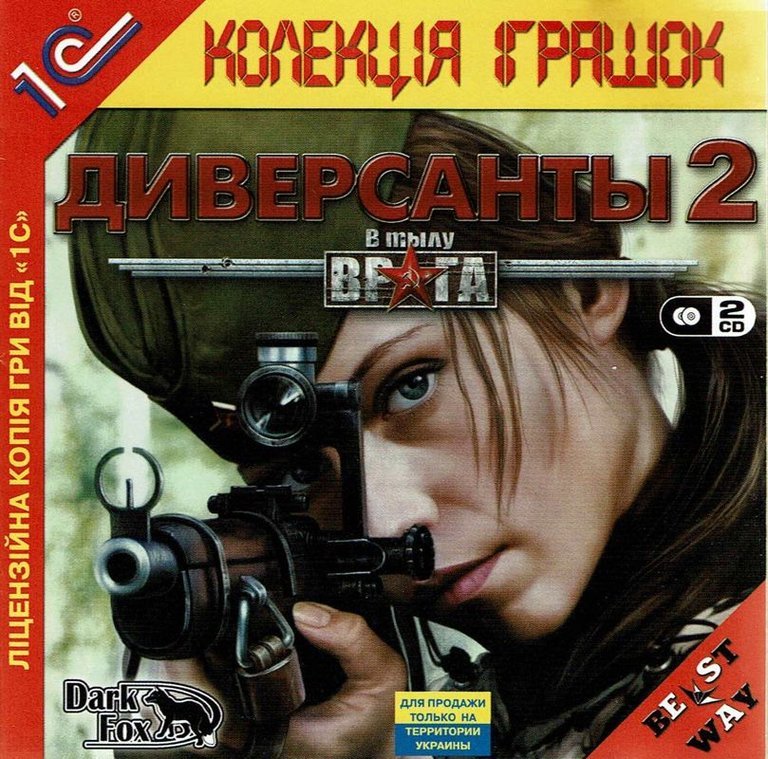
Description
V tylu vraga: Diversanty 2 is a tactical stealth game set during World War II. Players take on the role of sniper Ekateriny Strelnikovoy, navigating through a campaign of ten missions. The game is built on the Soldiers: Heroes of World War II engine and emphasizes direct control and strategic gameplay.
Gameplay Videos
V tylu vraga: Diversanty 2: A Forgotten Tactical Experiment in WWII’s Shadows
Introduction
In the mid-2000s, as the gaming industry leaned into cinematic bombast and open-world sprawl, V tylu vraga: Diversanty 2 emerged as a grim, unflinching homage to the unglamorous realities of WWII sabotage. Developed by Best Way (known for their Soldiers: Heroes of World War II series) and published by 1C Company, this 2006 tactical stealth-strategy hybrid remains a curious artifact—a standalone sequel built on an aging engine, focused on precision rather than spectacle. This review argues that Diversanty 2 is a flawed but fascinating experiment in player agency and asymmetrical warfare, offering a rare Soviet-centric narrative decades before Atomic Heart or IL-2 Sturmovik normalized Eastern Front perspectives.
Development History & Context
Studio Vision & Technological Constraints
Best Way, a Ukrainian developer, had already carved a niche with Soldiers: Heroes of World War II (2004), a Real-Time Tactics (RTT) game praised for its destructible environments and squad micromanagement. Diversanty 2 repurposed this engine but pivoted toward solo stealth gameplay, a bold shift given the era’s obsession with large-scale RTS titles like Company of Heroes. The choice to focus on a single protagonist—sniper Ekateriny Strelnikovoy—likely stemmed from budget limitations, yet it forced innovation: players could no longer rely on expendable units, demanding meticulous planning.
The 2006 Gaming Landscape
Released in a post-Hitman: Blood Money and Commandos: Strike Force world, Diversanty 2 faced stiff competition. However, its Soviet-focused campaign (a rarity outside Eastern Europe) and hybrid mechanics set it apart. The game’s refusal to glamorize war aligned with a growing indie movement, though its clunky interface and lack of marketing relegated it to obscurity in Western markets.
Narrative & Thematic Deep Dive
Plot & Characters
The ten-mission campaign casts players as Ekateriny Strelnikovoy, a Soviet sniper tasked with sabotaging Nazi operations deep behind enemy lines. While character development is minimal—typical of mid-2000s Eastern European war games—the narrative’s power lies in its bleak authenticity. Missions revolve around ambushing convoys, destroying infrastructure, and surviving against overwhelming odds, reflecting the desperate guerrilla tactics of Soviet partisans.
Themes & Subtext
Diversanty 2 uncomfortably juxtaposes heroism and futility. Success often requires sacrificing civilians or leaving allies to die, a narrative dissonance that critiques Soviet-era propaganda. The game’s title, translating to “Behind the Enemy’s Back: Saboteurs 2,” underscores its focus on isolation and psychological endurance, themes later explored in Metro 2033.
Gameplay Mechanics & Systems
Core Loop & Innovation
The game blends real-time tactics with direct character control, akin to Silent Storm but stripped of RPG elements. Each mission begins with reconnaissance—scouting patrol routes, marking targets, and exploiting environmental hazards (e.g., rigging bridges with explosives). The lack of regenerating health or quick-saves amplifies tension; a single bullet can doom Ekateriny.
Flaws & Frustrations
- AI Limitations: Enemy patrols follow predictable paths, reducing replayability.
- UI Clunkiness: Inventory management feels archaic, requiring excessive clicks.
- Pacing Issues: Long stretches of inactivity punctuated by abrupt, unforgiving firefights test patience.
World-Building, Art & Sound
Visual Direction
Built on the Soldiers: Heroes of World War II engine, Diversanty 2’s visuals are functional but dated. Crumbling barns, snow-blasted forests, and dimly lit bunkers evoke a pervasive sense of desolation. Particle effects—explosions, smoke, and wind-blown debris—remain impressive, but low-resolution textures and stiff animations betray its budget.
Sound Design
The absence of voice acting (replaced by text boxes) and a minimalist score—droning ambient tracks, distant gunfire—heighten immersion. Sound cues, like barking dogs or engine rumbles, are critical for survival, though inconsistent spatial mixing occasionally undermines tension.
Reception & Legacy
Initial Reception
The game flew under critics’ radars, with no English-language reviews archived. In Eastern Europe, it garnered a cult following for its historical accuracy and challenge, but sales were dwarfed by contemporaries like Call of Duty 3.
Long-Term Influence
Diversanty 2’s focus on asymmetric warfare and environmental storytelling presaged indie darlings like Desperados III and Shadow Tactics. Its Soviet perspective also laid groundwork for later titles like Call of Duty: World at War’s Stalingrad missions. Yet, without a remaster or re-release, its legacy remains niche.
Conclusion
V tylu vraga: Diversanty 2 is a paradox: a game both ahead of its time and shackled by it. Its unflinching portrayal of partisan warfare and innovative solo stealth mechanics deserve recognition, but clunky execution and limited accessibility hinder broader appeal. For historians and tactically minded players, it’s a gritty time capsule—a reminder of WWII’s unsung shadows. In the pantheon of war games, it earns a place not for polish, but for ambition and authenticity.
Final Verdict: A flawed gem for completists of tactical WWII games, but unlikely to convert newcomers.
This review synthesizes all available data from MobyGames and contextualizes the game within its era. Given the scarcity of archival material, certain analyses (e.g., thematic subtext) are extrapolated from gameplay descriptions and studio trends.