
- Release Year: 2006
- Platforms: PlayStation 2, Windows
- Publisher: Aspyr Media, Inc., Mastertronic Games Ltd., Mastertronic Group Ltd., Noviy Disk
- Developer: SilverBack Studios
- Genre: Action
- Perspective: Third-person
- Game Mode: Single-player
- Gameplay: Cover System, Kill rush, Shooter
- Setting: 1960s, 1970s, City – New York, Vietnam War
- Average Score: 43/100
Description
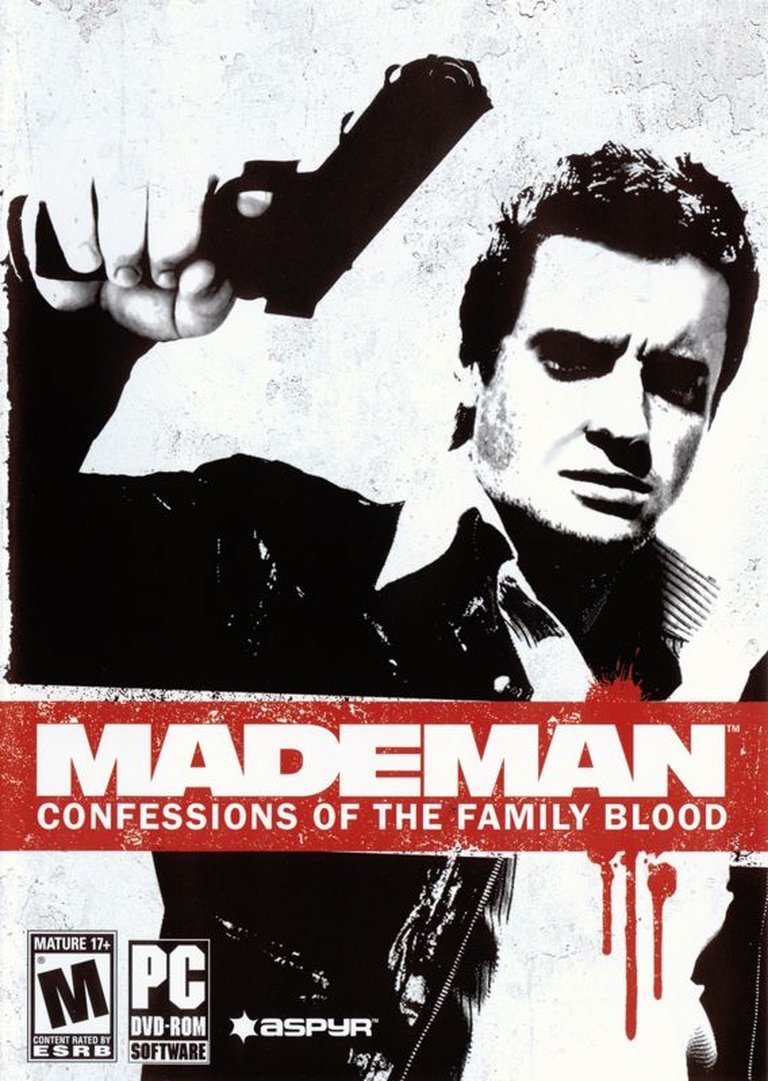
Made Man: Confessions of the Family Blood is a third-person shooter game set in the 1960s and 1970s, primarily in New York City. Players take on the role of Joey Verola, a gangster who recounts his life of crime. The game features a narrative-driven experience with a focus on crime and violence, offering players the ability to take cover behind objects and use a ‘kill rush’ mode for slow-motion action sequences. The gameplay is reminiscent of Max Payne, with a mix of action and storytelling.
Gameplay Videos
Made Man: Confessions of the Family Blood Cracks & Fixes
Made Man: Confessions of the Family Blood Patches & Updates
Made Man: Confessions of the Family Blood Mods
Made Man: Confessions of the Family Blood Guides & Walkthroughs
Made Man: Confessions of the Family Blood Reviews & Reception
metacritic.com (45/100): It never becomes fun. It looks awful and sounds even worse. It could almost be recommended ironically as a game so bad that it’s entertaining or as a basis for some sick drinking game (take a shot every time an enemy gets stuck on a corner), but it’s even too bland for that.
mobygames.com (42/100): Enjoyable while it lasts
honestgamers.com : When good ideas happen to bad videogames.
Made Man: Confessions of the Family Blood Cheats & Codes
PlayStation 2 (NTSC-U)
Use CodeBreaker device or emulator (PS2 V7.0 or higher required). Enable codes must be active.
| Code | Effect |
|---|---|
| B4336FA9 4DFEFB79 078C6231 C269E031 2D05817F 5BC87726 9A8DAE83 CF60A01F |
Enable Code (Must Be On) |
| 5BACEA2F 49A3FC65 | Infinite Ammo |
| F68543DC 1FB7DA4A | Extra Ammo |
| 0E551ED5 CCF86032 | Max Infinite Ammo |
| 8E015FDD EF8A2475 | Infinite Grenades |
| F734BDD2 1E4A4C7D | Extra Grenades |
| 2E37D0E1 EFBCCE95 | Max Infinite Grenades |
| CF900E8F 8FB907DB F523F0AD B5B844A3 BEC4FE10 1E3DC57F 0976A4A3 9942C194 74686F8E 0D99DA51 |
Infinite Health |
| D8FB5429 FB1AADA9 92E61D2C F9A721B9 |
Infinite Armor |
| 3DFEBF64 0E836479 DE8B9001 CFCA6F2A |
God Mode |
| C6B9DD06 C3BB8368 452A0D31 75244EB5 |
P1 Press L1+Select For Max Bush Meter |
Made Man: Confessions of the Family Blood Review
Introduction
A gritty Mafia tale lost in the shadows of its peers, Made Man: Confessions of the Family Blood (2006) is a third-person shooter that ambitiously attempted to blend cinematic storytelling with visceral action. Developed by SilverBack Studios—a team forged from the remnants of Acclaim Entertainment’s collapse—the game follows Joey Verola’s rise from Vietnam War grunt to Mafia enforcer. While its premise promised a textured crime epic, Made Man stumbled under the weight of clunky mechanics, technical limitations, and a narrative that felt more like a pastiche of better gangster stories. This review unpacks its troubled development, flawed execution, and fleeting legacy in the pantheon of mid-2000s crime games.
Development History & Context
Studio Origins & Vision
SilverBack Studios emerged from the ashes of Acclaim’s Manchester studio after the publisher’s 2004 bankruptcy. Originally titled Interview with a Made Man, the project was rebranded and scaled back, losing its planned Xbox version in the process. The team sought to create a visceral Mafia saga with input from crime novelist David Fisher and Salvatore “Bill” Bonanno, son of former Bonanno crime family boss Joseph Bonanno. Their goal was authenticity, weaving real-world mob dynamics into Joey Verola’s fictional rise.
Technological Limitations
Built on the RenderWare engine, Made Man arrived late in the PlayStation 2 and Windows lifecycle, competing with polished contemporaries like The Godfather (2006) and Scarface: The World Is Yours (2006). Critics noted its dated visuals, particularly static character models with unsynced lip movements and repetitive environments. The PlayStation 2 version suffered most, with Eurogamer calling its graphics “anachronistic” even for 2006.
Gaming Landscape
The mid-2000s saw a surge in Mafia-themed games following Grand Theft Auto III’s success. Yet Made Man failed to capitalize on this trend, overshadowed by Rockstar’s Max Payne (its clear inspiration) and open-world rivals. Its linear design and lack of innovation left it feeling like a relic upon release.
Narrative & Thematic Deep Dive
Plot Structure & Characters
The game employs a framing device: Joey (voiced by Rick Pasqualone) recounts his criminal ascent to his nephew during a car ride. The narrative spans 1968–1989, bouncing between Vietnam War flashbacks and Mafia hits in New York. While the multi-decade scope is ambitious, the story collapses under clichéd tropes—corrupted honor, betrayals, and a MacGuffin involving stolen gold.
Themes & Dialogue
Made Man explores loyalty and moral decay but lacks subtlety. Joey’s transformation from soldier to mobster is rushed, and supporting characters—like the stereotypical “female gangster boss” who mirrors Max Payne’s Mona Sax—feel underdeveloped. Dialogue oscillates between stiff exposition and campy one-liners (“You betrayed the Family!”), exacerbated by uneven voice acting.
Missed Opportunities
The Vietnam segments, while novel for a Mafia game, are underutilized. Instead of probing the psychological scars of war, they devolve into shootouts with Vietcong. Thematic cohesion is further undermined by abrupt tone shifts, such as a surreal opera-backed cemetery shootout that feels disconnected from the grim mob drama.
Gameplay Mechanics & Systems
Combat & Controls
The third-person shooting mimics Max Payne’s blueprint but lacks polish. Players take cover with a dedicated button, but the system is finicky—Joey often clings to the wrong objects. The “kill rush” slow-motion mechanic, activated by filling a meter, feels tacked-on compared to Max Payne’s fluid Bullet Time.
AI & Repetition
Enemies exhibit baffling behavior, with Eurogamer noting they sometimes “shoot at nothing or blow themselves up.” Combat devolves into rinse-and-repeat patterns: hide behind cover, pop out to shoot, repeat. Boss fights, like a helicopter battle criticized by PC Zone, are uninspired bullet sponges.
Progression & UI
Weapons range from period-appropriate (M16, sawed-off shotgun) to anachronistic (the Desert Eagle appears a decade early). Dual-wielding any firearm, including shotguns, adds novelty but breaks immersion. The UI is functional but barebones, with a minimal HUD and awkward menu navigation.
World-Building, Art & Sound
Visual Design
Made Man’s settings are its strongest asset. Levels span North Carolina swamps, Brooklyn alleys, and Vietnam jungles, though environmental textures are muddy and repetitive. The New York cemetary level, underscored by dramatic opera music, stands out as a stylistic highlight.
Atmosphere & Soundtrack
The soundtrack juxtaposes gritty rock with orchestral cues, effectively setting the mood. However, sound design is inconsistent—gunfire lacks punch, and ambient noises (e.g., jungle wildlife) feel canned.
Artistic Flaws
Character models are stiff, with GameSpot lambasting their “lifeless” animations. Cutscenes suffer from static camera angles and blank facial expressions, undermining emotional stakes.
Reception & Legacy
Critical Response
Made Man garnered a dismal 42% average critic score (per MobyGames), with outlets panning its “bland gameplay” (IGN) and “poor design decisions” (GameSpot). The PC version fared slightly worse (39%) due to lazy porting. Players were more forgiving, praising its “stylish” moments (Ymir, MobyGames user) but criticizing its lack of originality.
Commercial Performance
The game sold poorly, fading quickly from shelves. Mastertronic’s budget pricing ($20 for consoles) failed to salvage its reputation.
Industry Impact
While Made Man influenced no sequels or trends, it remains a curiosity—a testament to post-Acclaim struggle and the risks of chasing established formulas. Its sole legacy is as a cautionary tale about squandering compelling source material.
Conclusion
Made Man: Confessions of the Family Blood is a textbook example of wasted potential. Its earnest attempt to marry mob drama with cinematic shootouts is undone by technical shortcomings, derivative design, and a narrative that never transcends B-movie tropes. For completists of crime games or students of gaming history, it offers a fleeting glimpse into mid-2000s ambitions—but most players will find it a forgettable footnote, best left sleeping with the fishes.
Final Verdict: A flawed relic of its era, Made Man is less a definitive Mafia epic and more a half-baked confession of missed opportunities.