
- Release Year: 1995
- Platforms: Windows
- Genre: Puzzle
- Perspective: Top-down
- Game Mode: Single-player
- Gameplay: Board game
- Average Score: 77/100
Description
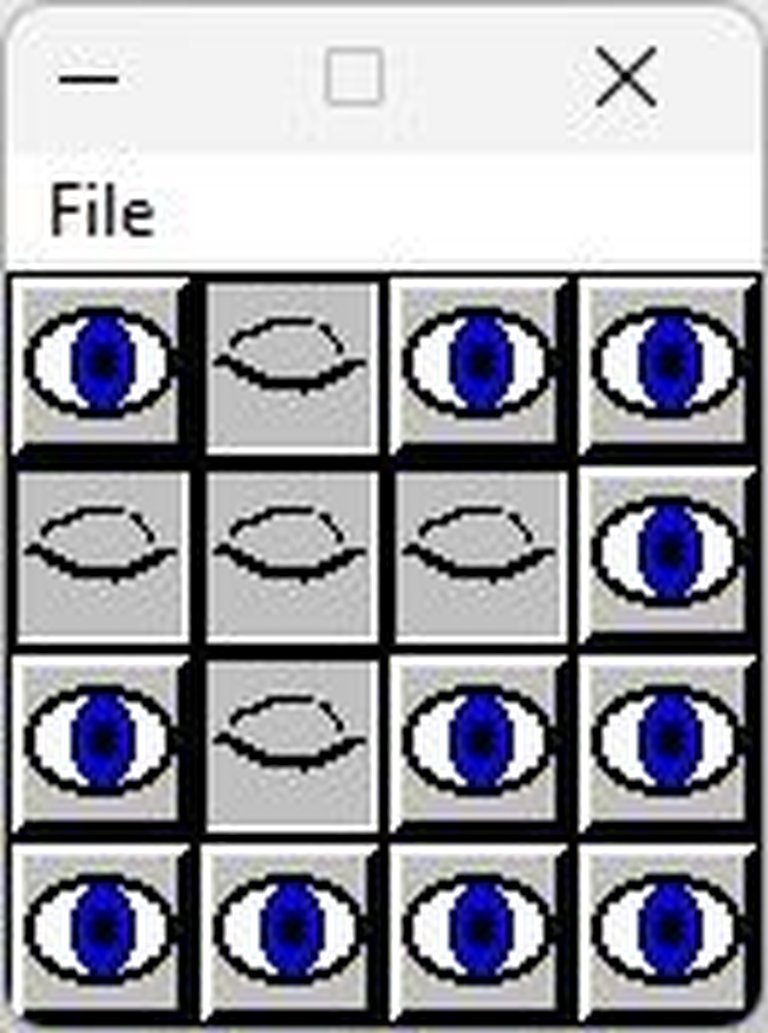
Capsize is a single-player puzzle game released in 1995 for Windows. Players navigate a grid of tiles, flipping selected tiles and their neighbors to achieve a fully flipped grid. The game’s simplicity in rules contrasts with its complexity in execution, making it a challenging brain teaser.
Where to Buy Capsize
PC
Capsize Guides & Walkthroughs
Capsize Reviews & Reception
metacritic.com (74/100): A surprisingly cool side-scrolling action game reminiscent of Turrican and similar games from around 20 years ago.
steambase.io (76/100): Capsized has achieved a Steambase Player Score of 76 / 100.
store.steampowered.com (81/100): Very Positive – 81% of the 583 user reviews for this game are positive.
honestgamers.com : Capsized sports a learning curve, but one that will absolutely reward you once you’ve gotten it down.
Capsize: Review
Introduction
In the mid-1990s, as the gaming industry transitioned into the CD-ROM era, a quiet gem emerged in the form of Capsize, a minimalist puzzle game that distilled the essence of brain-teasing logic into a deceptively simple package. Released in 1995 for Windows, Capsize tasked players with flipping tiles on a grid, challenging them to align every panel to the same side—a concept easy to grasp but fiendishly difficult to master. While overshadowed by flashier contemporaries, Capsize carved a niche as a pure, unadulterated puzzle experience. This review examines its legacy, mechanics, and enduring appeal, arguing that its elegance lies in its restraint—a testament to the timeless allure of cerebral gameplay.
Development History & Context
Capsize arrived during the golden age of shareware, a distribution model that democratized game development in the pre-steam era. Though details about its creators are scarce (the studio remains unidentified), the game reflects the DIY ethos of mid-’90s indie developers. At a time when technological constraints limited graphical ambition, puzzle games like Lights Out and Chip’s Challenge thrived by prioritizing mechanics over spectacle. Capsize fit squarely into this landscape, leveraging the simplicity of mouse-driven interactions to create a universally accessible yet deeply challenging experience.
The game’s release coincided with the rise of Windows 95, which popularized PC gaming beyond hardcore enthusiasts. Yet Capsize eschewed trends, offering no narrative frills or multiplayer modes. Its design philosophy mirrored the era’s fascination with abstract logic puzzles, a precursor to the mobile puzzle boom of the 2000s.
(Note: A 2011 action-platformer titled Capsized by Alientrap—often confused due to the name similarity—shares no relation to this 1995 puzzle title.)
Narrative & Thematic Deep Dive
Capsize is an exercise in abstraction. It has no characters, dialogue, or story—only grids, tiles, and the player’s relentless pursuit of order. Thematically, it embodies the human desire to impose symmetry on chaos. Each level is a battlefield of binary states (“flipped” vs. “unflipped”), demanding a blend of pattern recognition and strategic foresight.
The absence of narrative becomes its strength. Without distractions, the player confronts the raw tension of problem-solving, mirroring the meditative focus of Sudoku or chess. The game’s “story” is the player’s own journey from confusion to mastery, a silent triumph of intellect over entropy.
Gameplay Mechanics & Systems
At its core, Capsize is a tile-flipping puzzle:
1. Grid Setup: Players define the grid size (2×2, 3×3, etc.), with complexity scaling exponentially.
2. Tile Interaction: Clicking a tile flips it and its four orthogonal neighbors (up, down, left, right).
3. Objective: Flip all tiles to the same side within the fewest moves.
The brilliance lies in its emergent complexity. Small grids (2×2) are solvable through trial and error, but larger configurations demand algebraic reasoning. Each click triggers cascading consequences, akin to manipulating a Rubik’s Cube. There’s no character progression or power-ups—only the player’s growing intuition.
Flaws are minimal but notable:
– Lack of undo functionality penalizes experimentation.
– No save system forces players to restart grids upon failure.
Yet these limitations reinforce the game’s taut, uncompromising design.
World-Building, Art & Sound
Capsize’s aesthetic is utilitarian, befitting its abstract nature:
– Visuals: Top-down perspective with flat, monochromatic tiles. The UI is stripped to essentials—no menus beyond grid selection.
– Sound Design: Sparse audio feedback—clicks for tile flips, a chime for victory—amplifies the solitude of puzzle-solving.
This minimalism ensures zero distraction, focusing the player on the puzzle’s inherent rhythm. The game’s “world” is the grid itself, a blank canvas for mental gymnastics.
Reception & Legacy
Documentation of Capsize’s reception is scarce, a common fate for shareware titles of its era. It lacked the marketing muscle of commercial giants, but its simplicity earned it a cult following among puzzle enthusiasts. While it never achieved the fame of Minesweeper or Tetris, its DNA is evident in modern puzzle games like Baba Is You and LYNE, which similarly prioritize logic over spectacle.
Its legacy is subtle but enduring—a reminder that great games need not rely on narrative or graphics. Capsize survives as a relic of gaming’s minimalist past, a timeless challenge for purists.
Conclusion
Capsize is a masterclass in elegant design. Its premise—flipping tiles on a grid—belies a labyrinth of mathematical depth, offering endless hours of silent, sweat-inducing contemplation. While its lack of frills may deter casual players, it remains a benchmark for puzzle purity, a game that respects the player’s intellect without hand-holding. In an age of bloated open worlds and cinematic narratives, Capsize stands as a monument to simplicity—a game that asks only, “Can you see the pattern?”
For historians and puzzle aficionados, it’s a vital artifact. For everyone else, it’s a humbling reminder: sometimes, the greatest challenges come in the smallest grids.