
- Release Year: 2001
- Platforms: Windows
- Publisher: Activision Value Publishing, Inc.
- Developer: Techland Sp. z o.o.
- Genre: Simulation, Strategy, Tactics
- Perspective: Isometric
- Game Mode: Single-player
- Gameplay: Base building, Crafting, Resource Management, Survival
- Setting: Wilderness
- Average Score: 57/100
Description
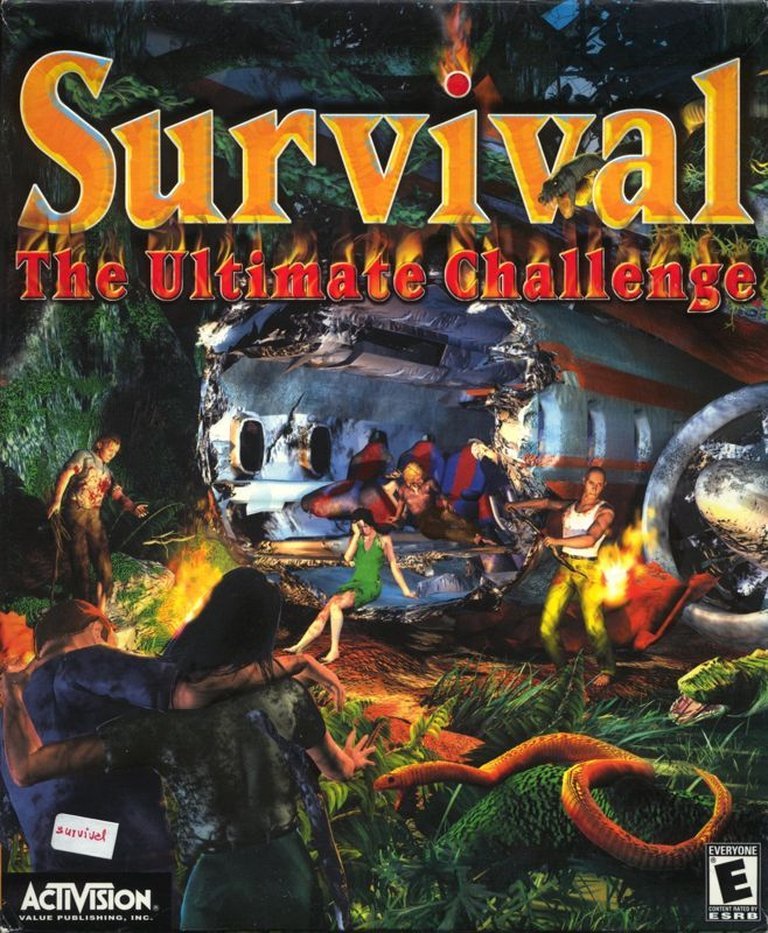
Survival: The Ultimate Challenge is a real-time strategy simulation game released in 2001 for Windows. The game tasks players with managing a group of stranded survivors in a remote, desolate location following a transportation accident. Players must oversee every aspect of the survivors’ lives, from basic needs like eating and sleeping to more complex tasks like collecting supplies, crafting tools, and building shelters. The goal is to keep the survivors alive and find a way to rescue them, whether by signaling for help or sending a few strong individuals to seek assistance.
Survival: The Ultimate Challenge Free Download
Survival: The Ultimate Challenge Cracks & Fixes
Survival: The Ultimate Challenge Patches & Updates
Survival: The Ultimate Challenge Mods
Survival: The Ultimate Challenge Reviews & Reception
mobygames.com (48/100): Average score: 48%
gamepressure.com (76/100): Survival: The Ultimate Challenge delivers an intense real-time strategy experience that places you in direct command of stranded survivors.
retro-replay.com : Survival: The Ultimate Challenge delivers an intense real-time strategy experience that places you in direct command of stranded survivors.
mobygames.com (48/100): Average score: 48%
Survival: The Ultimate Challenge: Review
Introduction
In the early 2000s, as the gaming industry oscillated between bloated AAA projects and experimental indie titles, Survival: The Ultimate Challenge emerged as a rough-hewn pioneer of the survival simulation genre. Developed by Polish studio Techland—now celebrated for Dying Light and Dead Island—this 2001 title dared to ask: What if micromanaging every breath of a stranded survivor was the ultimate gaming challenge? While critics dismissed it as a janky, visually crude experiment, its DNA can be traced to modern survival epics like The Forest and Valheim. This review argues that Survival: The Ultimate Challenge is a flawed but foundational work—a game whose ambition outstripped its execution, yet whose ideas reshaped how developers approached emergent storytelling and resource scarcity.
Development History & Context
A Studio Forged in Fire
Techland, founded in 1991, was still finding its footing in 2001. Before Call of Juarez and Dying Light, the studio leaned into budget-friendly projects like Survival, leveraging Poland’s lower production costs to experiment with niche genres. The team, inspired by reality TV shows like Survivor and the survival mechanics of Castaway: Beyond the World, aimed to create a “digital wilderness laboratory” where players faced consequences for every decision.
Technological Constraints
Built on Techland’s rudimentary Chrome Engine 1, Survival struggled with early-2000s hardware limitations. The game’s isometric perspective was a pragmatic choice, avoiding the performance pitfalls of full 3D rendering. However, this led to visual compromises: characters blurred into pixelated smudges, and environments lacked detail—a point brutally critiqued by Russian outlet Absolute Games, which likened distinguishing survivors from trees to “a Rorschach test.”
The 2001 Gaming Landscape
In an era dominated by Age of Empires II and The Sims, Survival’s blend of real-time strategy and life simulation was daring but out of sync with mainstream tastes. Activision Value Publishing, known for budget titles, marketed it as a “thinking player’s game,” yet its niche appeal and technical roughness relegated it to obscurity.
Narrative & Thematic Deep Dive
A Paper-Thin Premise
Survival lacks a traditional narrative. Each level begins with a randomized disaster—a plane crash, shipwreck, or bus breakdown—stranding a group of procedurally generated survivors in biomes ranging from deserts to tundras. Characters have rudimentary traits (e.g., “strong,” “botanist”), but their personalities never evolve beyond utilitarian roles.
Emergent Storytelling
The game’s narrative power lies in its emergent drama. A hunter might collapse from exhaustion after foraging too long; a medic could sacrifice themselves to fend off a leopard. These unscripted moments—reminiscent of RimWorld’s chaos—create stakes, even if the writing lacks depth.
Themes of Human Fragility
Beneath its clunky exterior, Survival grapples with existential themes: the fragility of civilization, the tension between individualism and collectivism, and the hubris of believing we can control nature. When survivors freeze to death because you prioritized firewood over shelter, the game becomes a brutal meditation on mortality.
Gameplay Mechanics & Systems
The Micromanagement Hellscape
Survival forces players to orchestrate every action: eating, sleeping, gathering, crafting, and building. The UI, a cluttered mosaic of icons, demands constant attention. Hunger, thirst, fatigue, and morale meters deplete rapidly, turning survival into a frantic juggling act.
- Resource Management: Scavenging wreckage for supplies is tense but repetitive. Crafting tools from leaves and sticks feels satisfyingly primal, though the system lacks depth.
- Combat (or Lack Thereof): Encounters with wildlife are笨拙ly implemented. Survivors swing axes at wolves with all the finesse of a sleep-deprived toddler.
- Rescue Mechanics: Building signal fires or sending search parties introduces strategic trade-offs—risk splitting the group or consolidate resources?
Innovation vs. Frustration
The game’s permadeath system and randomized levels were ahead of their time, inspiring roguelike elements in later titles. However, poor AI—critics noted survivors would starve unless manually directed—sapped momentum.
World-Building, Art & Sound
Aesthetic Austerity
Survival’s isometric visuals are functional but ugly. Textures are muddy, character models lack detail, and animations are stiff. Yet, there’s a stark beauty in its desolation: blizzards cloak the screen in white static, while jungle canopies cast jagged shadows.
Sound Design: Ambiance Over Polish
The soundtrack, a mix of atmospheric drones and sparse piano motifs, amplifies the isolation. Wildlife sounds—growls, rustling leaves—are generic but effective in raising tension.
Reception & Legacy
Critical Backlash
With a 48% average critics’ score, Survival was lambasted for its “lazy artistry” (7Wolf Magazine) and “stone-age AI” (Absolute Games). Few mainstream outlets reviewed it, sealing its commercial fate.
Cult Redemption
Player reviews tell a different story. Retro fans praise its unforgiving realism and emergent storytelling, with some modding communities even patching its flaws. Techland’s later success retroactively burnished Survival’s reputation as a “proof of concept” for survival mechanics.
Industry Influence
While not a direct inspiration, Survival’s focus on granular survival systems presaged Don’t Starve, This War of Mine, and Green Hell. Its failure also taught developers valuable lessons about balancing complexity with accessibility.
Conclusion
Survival: The Ultimate Challenge is not a good game—but it is an important one. Its janky systems, abrasive difficulty, and visual poverty make it a tough sell in 2025. Yet, like an archaeological artifact, it reveals the genre’s nascent potential. For historians and masochistic completionists, it’s a fascinating relic. For everyone else? Watch a YouTube documentary and play Subnautica instead.
Final Verdict: A flawed but visionary experiment—3/5 stars for historical significance, 1/5 for actual enjoyment.