
- Release Year: 2000
- Platforms: Windows
- Publisher: Activision Value Publishing, Inc., Head Games Publishing, Inc.
- Developer: Stark Raving Fun
- Genre: Sports
- Perspective: 3rd-person (Other), Behind view
- Game Mode: Co-op, Single-player
- Gameplay: Home Run Derby, Pitching Variations, Statistics Tracking, Team Creation, Tournaments
Description
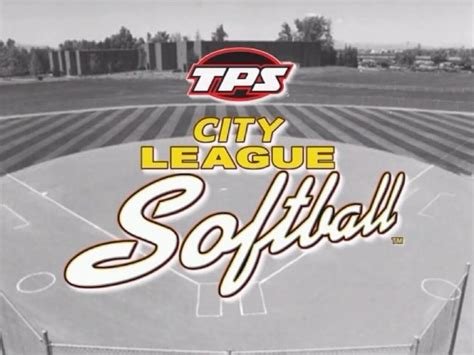
City League Softball is a 3D softball sports simulation game released in 2000, featuring licensed content from Louisville Slugger and TPS. Players can engage in single games, tournaments, and Home Run Derbies, with options to play as men, women, or co-recreational teams. The game offers customizable team creation, multiple difficulty settings, and full statistics tracking, providing a comprehensive softball experience.
Gameplay Videos
City League Softball Patches & Updates
City League Softball Mods
City League Softball: Review
Introduction
In the crowded arena of late-’90s sports simulations, City League Softball (2000) emerges as an intriguing footnote—a game that aspired to capture the grassroots charm of amateur softball while wrestling with the technological limitations of its era. Developed by Stark Raving Fun and published by Head Games Publishing and Activision Value, this licensed 3D sports title offered customizable teams, multiple gameplay modes, and a surprising focus on inclusivity with co-ed teams—a rarity for the time. Yet, its legacy remains shrouded in obscurity, with no critical reviews preserved and minimal player engagement. This review unpacks City League Softball’s ambitions, flaws, and quiet place in gaming history, arguing that it represents a curious but forgettable experiment in niche sports simulation.
Development History & Context
Studio & Vision
Stark Raving Fun, a developer with a portfolio including Skateboard Park Tycoon and Cabela’s Big Game Hunter: Ultimate Challenge, positioned City League Softball as an accessible, community-driven sports title. Licensed by Louisville Slugger and TPS, the game leaned into authenticity, featuring real-world equipment brands to enhance immersion. Executive Producer Ken Patterson assembled a team of 29 contributors, including engineers Christopher Ebbert and Mei Mei Lai, to tackle the challenges of early-2000s 3D game design.
Technological Constraints
Released in 2000, the game arrived during a transitional period for PC sports titles. While console franchises like MLB: The Show were gaining momentum, PC sports sims struggled with clunky 3D rendering and limited physics engines. City League Softball’s full 3D graphics—a selling point—likely strained period-appropriate hardware, with rigid animations and simplistic textures betraying the era’s technical limits.
Gaming Landscape
The game entered a market dominated by arcade-style sports titles (NBA Jam) and hardcore simulations (Madden). Its focus on amateur softball—not professional baseball—set it apart, but it competed with contemporaries like Sammy Sosa Softball Slam (2000) and Dusty Diamond’s All-Star Softball (1989). Activision Value’s backing hinted at budget-tier ambitions, positioning it as a casual alternative to AAA releases.
Narrative & Thematic Deep Dive
As a sports simulation, City League Softball lacks a traditional narrative. Instead, its themes revolve around community competition and accessibility:
– Inclusivity: The inclusion of men’s, women’s, and co-recreational teams was progressive for 2000, reflecting softball’s real-world diversity.
– Customization: Players could create teams with adjustable body types, skin tones, and uniforms, emphasizing personal expression—a precursor to modern character creators.
– Underdog Spirit: The tournament mode’s “win-or-go-home” structure mirrored the high stakes of amateur leagues, while the Home Run Derby celebrated individual triumph.
Dialogue and storytelling are minimal, though the game’s focus on statistical tracking (“City” to “National” difficulty tiers) subtly reinforced a narrative of progression from local hobbyists to seasoned athletes.
Gameplay Mechanics & Systems
Core Loop
The game offered three modes:
1. Single Games: Quick-play exhibitions with adjustable rules.
2. Tournaments: Single-elimination brackets demanding strategic roster management.
3. Home Run Derby: A arcade-style power-hitting contest.
Key Mechanics
– Pitching: A modest arsenal of fastballs, curveballs, and sliders, though lacking the depth of MLB-tier simulations.
– Batting: Timing-based swings with variable power, reliant on pitch anticipation.
– Customization: Eighteen pre-made teams or user-created squads with editable aesthetics.
Flaws & Innovations
– Innovative: Co-op drop-in play allowed a second player to join mid-game—a novel feature for the time.
– Flawed: Repetitive AI behavior and simplistic fielding mechanics undermined long-term engagement. The UI’s “direct control” scheme felt unpolished compared to console contemporaries.
World-Building, Art & Sound
Visual Design
The game’s 3D environments aimed for a gritty, urban feel, with dirt infields and chain-link fences evoking public park diamonds. Character models were rudimentary, with stiff animations, but uniform customization added flair.
Atmosphere
Audio director Dave Sylvestre delivered functional sound design: the crack of Louisville Slugger bats and crowd chatter created a modest sense of immersion. However, the lack of a dynamic soundtrack or commentary limited emotional depth.
Artistic Legacy
While not groundbreaking, the art team’s focus on relatable amateur settings—rather than professional stadiums—gave the game a distinct identity.
Reception & Legacy
Initial Reception
No formal critic reviews exist, and player feedback is absent from archives like MobyGames and Metacritic. The game’s MobyScore remains “n/a,” with only one registered player collection—a testament to its obscurity.
Long-Term Impact
– Commercial Failure: Buried by Activision’s larger franchises, City League Softball faded quickly.
– Preservation: Today, it survives as abandonware, a relic for retro enthusiasts.
– Influence: Its co-ed teams and customization presaged later sports titles, though direct inspiration is unproven.
Conclusion
City League Softball is neither a masterpiece nor a catastrophe—it’s a time capsule of early-2000s ambition and limitation. Its commitment to accessibility and community spirit deserves recognition, but clunky mechanics and a lack of polish doomed it to obscurity. For historians, it offers a glimpse into a forgotten strand of sports gaming; for modern players, it’s a curiosity best left un-revisited. In the grand archive of video games, City League Softball occupies a humble shelf: earnest, flawed, and quietly emblematic of its era.