
- Release Year: 2009
- Platforms: Windows
- Publisher: astragon Software GmbH, Big Fish Games, Inc
- Developer: Blue Lizard Games, Inc.
- Genre: Adventure
- Perspective: First-person
- Game Mode: Single-player
- Gameplay: Hidden object, Puzzle elements
- Average Score: 67/100
Description
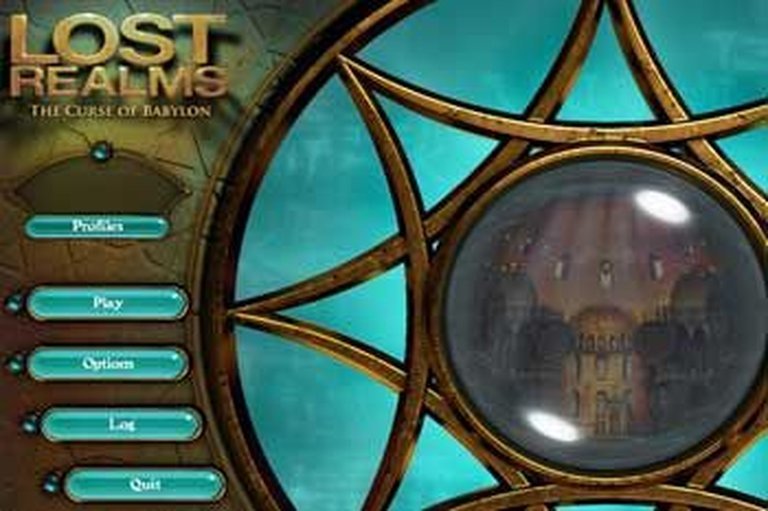
In ‘Lost Realms: The Curse of Babylon’, protagonist Alexia travels to Istanbul after her friend Ogan reveals he is afflicted by an ancient family curse. Together, they explore the historic city and the secrets of Hagia Sophia to uncover the truth behind the curse. This hidden object game combines adventure elements with puzzles and mini-games, offering both a timed and relaxed mode for players to enjoy.
Gameplay Videos
Lost Realms: The Curse of Babylon Guides & Walkthroughs
Lost Realms: The Curse of Babylon Reviews & Reception
mobygames.com (80/100): A hidden object game with adventure gameplay features, offering Timed and Relaxed modes.
gadgetspeak.com : A Hidden Object Adventure offering which can be played in Relaxed or Timed mode.
vgtimes.com (55/100): A first-person adventure with puzzle elements, rated 5.5 across various categories.
gamezebo.com : A beautiful, well-paced game with plenty of intriguing twists on the genre.
Lost Realms: The Curse of Babylon: Review
Introduction
In 2009, amidst a golden age for hidden object games, Lost Realms: The Curse of Babylon emerged as a polished sequel to Lost Realms: Legacy of the Sun Princess. Developed by Blue Lizard Games and published by Big Fish Games, it blended classic seek-and-find mechanics with adventure-game puzzle-solving, anchored by a globetrotting narrative steeped in ancient curses and historical intrigue. While its plot assumes familiarity with its predecessor, the game’s refined design, atmospheric world-building, and inventive systems solidify its place as a cult classic within the genre. This review dissects its triumphs and limitations, exploring how it bridged the gap between casual accessibility and puzzle-driven depth.
Development History & Context
Studio Vision & Gaming Landscape
Blue Lizard Games, a studio with credits like Spa Mania and Lost Realms: Legacy of the Sun Princess, aimed to expand the hidden object formula by integrating point-and-click adventure elements—a trend gaining momentum in the late 2000s. Built using the Playground SDK, The Curse of Babylon targeted PC audiences hungry for narrative-driven casual games, leveraging Big Fish Games’ distribution model to reach fans of titles like Mystery Case Files.
Technological Constraints & Innovations
The game’s 2009 release necessitated optimization for modest hardware (800 MHz CPU, 512 MB RAM), yet its 1st-person perspective and detailed 2D art pushed the boundaries of hidden object presentation. The inclusion of Timed vs. Relaxed modes catered to both competitive and leisurely players, while its multi-language localization (German, Spanish, etc.) broadened its appeal.
Narrative & Thematic Deep Dive
Plot & Characters
The story follows Alexia, a seasoned adventurer, as she aids her friend Ogan, a Turk whose family is plagued by a curse tied to the Hagia Sophia. The narrative unfolds through static panels and text between chapters, weaving a tale of ancient Babylonian magic, familial duty, and archaeological mystery. While newcomers may feel disoriented by references to prior events, the core emotional hook—Ogan’s desperation—drives the urgency.
Themes & Dialogue
The game explores themes of hereditary guilt and cultural preservation, juxtaposing modern Istanbul with ancient ruins. Dialogue is functional but lacks nuance, serving primarily to guide players toward the next puzzle. Notably, foreign terms (e.g., “shofar,” a horn) are translated via mouse-hover—a subtle educational touch that enriches the immersion.
Gameplay Mechanics & Systems
Core Loop & Tools
The gameplay oscillates between hidden object scenes and inventory-based puzzles:
– Hidden Object Scenes: Players comb meticulously detailed environments for listed items, with orange-text entries requiring interaction (e.g., cutting a curtain) to reveal.
– Tools: Three permanent tools aid exploration:
– Magnifying Glass: Zooms in on small objects.
– Pocket Knife: Cuts fabrics and ropes.
– Baseball Bat: Smashes containers.
Puzzle Design & Mini-Games
Each chapter concludes with a puzzle, ranging from peg solitaire to slider challenges. The Bazaar games—a shell game, memory match, and tile-aligning abacus—stand out as inventive ways to replenish hints. While some puzzles feel derivative (e.g., spot-the-differences), their integration into the narrative (e.g., reassembling a mosaic) elevates them beyond busywork.
UI & Progression
The interface is intuitive, with a bottom-of-screen inventory and a hint system capped at six uses. However, item visibility remains a pain point: some objects blend too seamlessly into the scenery, forcing reliance on hints or the magnifier.
World-Building, Art & Sound
Visual Design
The game’s hand-drawn environments—from the Hagia Sophia’s vaulted ceilings to Babylon’s Hanging Gardens—are lush and evocative. Cultural authenticity shines in details like Turkish bazaar stalls and Persian cuneiform tablets, though artistic liberties prioritize fantasy over historical accuracy.
Atmosphere & Soundtrack
Gabriel Montúfar’s score blends Middle Eastern motifs with suspenseful strings, enhancing the exploratory mood. Sound effects, like the crack of the baseball bat or the rustle of cloth, are crisp but repetitive.
Reception & Legacy
Critical & Commercial Response
At launch, the game earned an 80% score from GameZebo, praised for its “beautiful, well-paced” design. Critics noted its iterative improvements over Legacy of the Sun Princess, particularly in puzzle variety and tool mechanics. However, its niche appeal and reliance on prior story knowledge limited mainstream traction.
Industry Influence
The Curse of Babylon exemplified the late 2000s shift toward hybrid hidden object/adventure games, inspiring successors like Lost Lands and Grim Tales. Its Bazaar hint system presaged modern live-service “energy” mechanics, albeit in a pre-microtransaction era.
Conclusion
Lost Realms: The Curse of Babylon remains a benchmark for hidden object adventures, marrying genre staples with inventive puzzles and a richly realized setting. While its narrative assumes franchise familiarity and its visuals show their age, its mechanical polish and commitment to player agency—whether through timed challenges or leisurely exploration—cement its legacy. For genre enthusiasts, it’s a time capsule of an era when casual games dared to ask more of their audience.
Final Verdict: A flawed but foundational title that rewards patience with atmospheric depth and clever design.