
- Release Year: 2011
- Platforms: Android, iPad, iPhone, Nintendo 3DS, Windows, Xbox 360
- Publisher: First Star Software, Inc., HeroCraft Ltd, Kalypso Media GmbH
- Developer: Aruba Studios GmbH, Catnip Games GMBH & CO.KG, First Star Software, Inc., Gamufaktur, simple plan production
- Genre: Action
- Perspective: Side view
- Game Mode: Single-player
- Gameplay: Arcade, Maze, Puzzle
- Setting: Cave, Underground
- Average Score: 77/100
Description
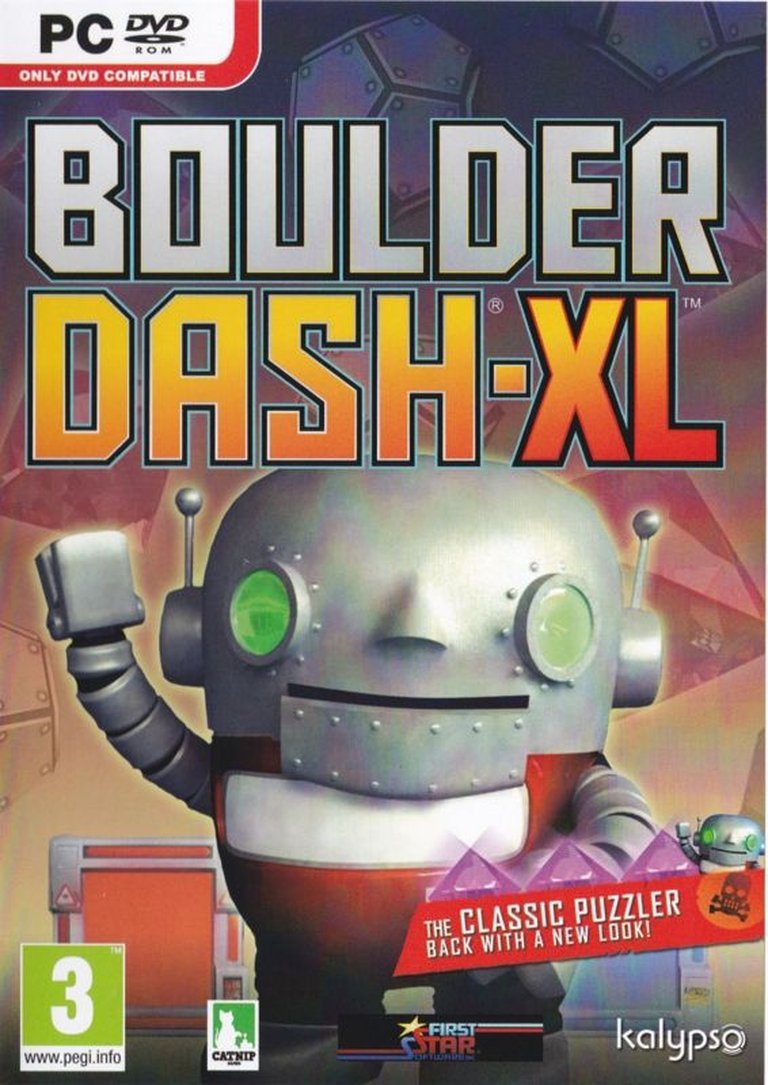
Boulder Dash-XL is a modern single-player revival of the classic Boulder Dash series. Players navigate mazes, collect diamonds, and avoid falling rocks in various modes, including Arcade, Zen, Puzzle, Retro, and Score Attack. The game offers a choice between characters Rockford or Crystal and supports multiple input devices, providing a blend of classic gameplay with contemporary enhancements.
Gameplay Videos
Boulder Dash-XL Free Download
Boulder Dash-XL Mods
Boulder Dash-XL Reviews & Reception
metacritic.com (71/100): A triumphant return to form for the series.
thisismyjoystick.com : A triumphant return to form for the series.
gamingnexus.com (83/100): Rockford is back and ready to collect more diamonds than ever.
game2gamer.com : A triumphant return to form for the series.
Boulder Dash-XL: A Modern Revival of a Classic Gem
Introduction
In 1984, Boulder Dash redefined puzzle-action gaming with its deceptively simple premise: dig, collect gems, and avoid crushing boulders. Nearly three decades later, Boulder Dash-XL (2011) resurrects this legacy, marrying nostalgia with modern design. Developed by Catnip Games and published by Kalypso Media, the game is both a love letter to its predecessor and an ambitious expansion of its core mechanics. This review argues that while Boulder Dash-XL stumbles in presentation, its razor-sharp gameplay and wealth of content solidify its place as a worthy successor to one of gaming’s most enduring franchises.
Development History & Context
The Studios Behind the Revival
Boulder Dash-XL emerged from a collaborative effort between First Star Software (holders of the IP since 1984) and Catnip Games, a German studio known for revitalizing retro properties. Additional ports for Nintendo 3DS and iOS were handled by Ludosity and HeroCraft, respectively. The project aimed to balance modernization with reverence—a challenge in an era dominated by high-definition visuals and complex narratives.
Technological Constraints & Vision
The developers faced a unique hurdle: updating a game synonymous with 8-bit aesthetics without alienating purists. Catnip’s solution was to retain the original’s grid-based mechanics while introducing 3D-rendered environments and lighting effects. However, technical limitations on Xbox 360 and mobile platforms necessitated streamlined UI and simplistic textures, a compromise that drew mixed reactions.
The 2011 Gaming Landscape
Released during the indie boom, Boulder Dash-XL entered a market hungry for bite-sized, high-score-driven experiences. Competing with titles like Pac-Man Championship Edition DX, it leaned into its retro roots, offering five distinct modes to cater to both casual players and score-chasing veterans.
Narrative & Thematic Deep Dive
The Absent Story
Unlike modern puzzle games, Boulder Dash-XL forgoes narrative pretense. Players control Rockford or Crystal—robotic miners replacing the original’s human protagonist—tasked with collecting diamonds across abstract caves. The lack of plot is a deliberate throwback, focusing attention on the purity of its mechanics.
Themes of Persistence & Precision
The game’s difficulty curve embodies themes of patience and adaptability. Each cave is a microcosm of cause-and-effect: dislodging a single boulder can trigger chain reactions, rewarding foresight over reflexes.
Gameplay Mechanics & Systems
Core Loop & Modes
- Arcade Mode: 100 levels demanding diamond collection under tight time limits.
- Zen Mode: A stress-free variant of Arcade, sans timers.
- Puzzle Mode: 25 meticulously designed challenges emphasizing logic.
- Retro Mode: 25 levels reimagining the 1984 original with polygonal graphics.
- Score Attack: Speedrun-focused stages with leaderboard support.
Controls & Physics
The game’s brilliance lies in its emergent physics. Boulders roll realistically, gems collapse terrain, and enemies like Fireflies and Butterflies behave unpredictably. While Xbox 360 controls are responsive, mobile ports suffer from imprecise touch inputs, per JayIsGames and AppSpy reviews.
Innovations & Flaws
The telescopic grapple (allowing remote gem collection) and time-freeze mechanic are smart additions. However, the scoring system—prioritizing speed over exploration—can feel restrictive, a critique noted by GameSpot.
World-Building, Art & Sound
Visual Design
Boulder Dash-XL adopts a cartoonish aesthetic, with vibrant ice, tech, and Inca-themed worlds. While textures are simplistic, lighting effects add depth to subterranean environments. The Retro Mode’s chunky 3D sprites polarized players; Eurogamer praised its “ugly duckling charm,” while Nintendo Life deemed it “poorly implemented.”
Sound Design
Oliver Schmellenkamp’s soundtrack oscillates between upbeat synth tracks and nostalgic 8-bit chiptunes. Sound effects—crumbling dirt, gem chimes, and robotic chirps—are serviceable but lack dynamism.
Reception & Legacy
Critical Response
With a 74% average critic score (MobyGames) and 71/100 on Metacritic, reviews highlighted its addictive gameplay but criticized its presentation. Gaming Nexus lauded its “shocking amount of content,” while IGN called its visuals “uninspired.” The mobile ports fared worse, criticized for clunky controls.
Commercial Performance
Though not a blockbuster, its budget pricing ($10 on XBLA) and cross-platform releases ensured steady sales. The 2012 iOS version capitalized on mobile puzzle fans, while the 3DS iteration struggled due to competition (Nintendo Life).
Industry Influence
Boulder Dash-XL reaffirmed the viability of retro revivals, paving the way for titles like Spelunky and Downwell. Its emphasis on leaderboards and bite-sized levels presaged the rise of “score attack” games in the 2010s.
Conclusion
Boulder Dash-XL is a paradoxical gem: flawed yet enduring, simple yet demanding. While its visuals and sound design falter, its rock-solid (pun intended) gameplay and inventive modes honor the original’s spirit. For puzzle aficionados, it remains a masterclass in kinetic problem-solving—a testament to how timeless mechanics can outshine technical polish. In the pantheon of retro revivals, Boulder Dash-XL earns its place as a respectful, if imperfect, tribute.
Final Verdict: 7.5/10 – A diamond in the rough, best enjoyed by purists and patience-driven players.