
- Release Year: 2020
- Platforms: Windows
- Publisher: Ferulox Studios
- Developer: Ferulox Studios
- Genre: Action
- Perspective: Side view
- Game Mode: Co-op, Single-player
- Gameplay: Platform, Shooter
- Setting: Contemporary, Futuristic, Sci-fi
- Average Score: 40/100
Description
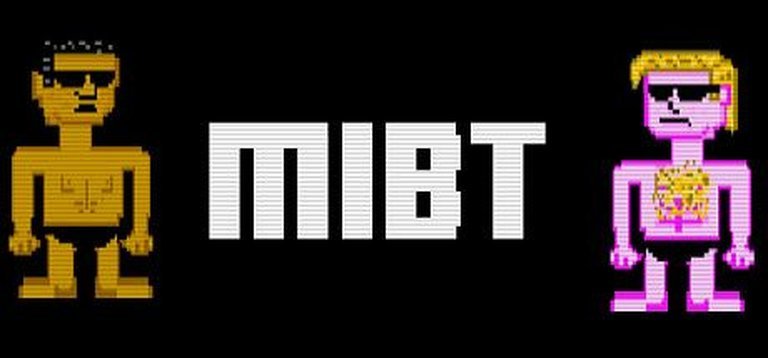
MIBT is an action platformer set in a Men In Black-inspired universe where players control a special agent tasked with shooting respawning aliens. The objective is to collect 20 ‘X’ symbols dropped by defeated aliens to complete each stage, while managing limited ammunition and avoiding damage that strips the agent down to their underwear. With 30 levels, the game introduces new enemy types and environmental mechanics like trampolines and ice platforms, and supports cooperative play for up to two players.
Where to Buy MIBT
PC
MIBT Guides & Walkthroughs
MIBT: Review
When Nostalgia Meets Missed Potential in the Arcade Aisle
Introduction
In the crowded landscape of indie retro revivals, MIBT (2020) arrives with a simple pitch: a love letter to arcade-era platforming shooters, draped in the neon-soaked aesthetic of Men in Black. Developed by the obscure Ferulox Studios and priced at a budget-conscious $3.99 on Steam, the game promised brisk co-op action and alien-blasting simplicity. Yet, beneath its pixelated veneer lies a cautionary tale of ambition outpacing execution—a game that embodies the pitfalls of formulaic nostalgia-bait while hinting at unfulfilled creative sparks. This review dissects MIBT’s journey from concept to cult curiosity, questioning whether its flaws stem from technical limitations or a fundamental misunderstanding of the genre it emulates.
Development History & Context
The Studio and Vision
Ferulox Studios, credited with just one release (MIBT), operated as a micro-team of nine developers, including contributors like Aka PadukoneFirdaus (code) and Farrokh Ramos (art). Using GameMaker Studio, the team aimed to resurrect the spirit of 16-bit arcade shooters, specifically name-dropping Men in Black as tonal inspiration. Notably absent from mainstream discourse, Ferulox lacked the marketing muscle of contemporaries like Shovel Knight or Cuphead, relying instead on Steam’s algorithm and word-of-mouth among retro enthusiasts.
Technological and Creative Constraints
Released in August 2020 amid a booming indie scene, MIBT’s fixed-screen, flip-screen perspective—a callback to early Contra or Metal Slug design—immediately dated it against fluid, modern Metroidvanias. The choice to avoid procedural generation or roguelike elements (ubiquitous in 2020 indie hits) locked it into a rigid, repetitive structure. Limited resources likely dictated reused assets (e.g., Craftpix stock art for environments) and a thirty-level campaign built on repeating mechanics rather than evolving complexity.
The Gaming Landscape
MIBT debuted alongside heavyweight contenders like Hades and Cyberpunk 2077 (delayed but dominating headlines). Its $3.99 price point screamed “impulse buy,” yet it failed to capitalize on the co-op renaissance heralded by Streets of Rage 4. In a market saturated with polished retro homages, MIBT’s lack of innovation—no meta-progression, muted online features—rendered it a footnote.
Narrative & Thematic Deep Dive
Plot and Setting: A Thin Veneer
MIBT’s narrative is wafer-thin: players control “special agents” exterminating waves of respawning aliens across abstract urban and industrial zones. Absent are cutscenes, dialogue, or world-building text. The Men in Black influence manifests solely in aesthetics—black-suited protagonists, alien grunts, and X-Files-esque “X” pickups—but without the wit, satire, or conspiracy lore that defines the franchise.
Themes: Missed Satire
The game’s potential for riffing on government secrecy or existential dread (core to MIBT’s inspiration) goes unexplored. Instead, aliens exist solely as target practice, and the lone narrative device—losing your suit until clad in “black underwear” after taking damage—reads as juvenile humor rather than commentary on vulnerability or identity. Thematically, MIBT is a hollow shell, prioritizing mechanics over meaning.
Gameplay Mechanics & Systems
Core Loop: Repetition Without Reward
Gameplay revolves around twin-stick shooting: blast aliens, collect 20 “X” symbols per level, and avoid depleting ammo or health. Enemies respawn infinitely until the objective is met, emphasizing survival over strategy. Controls (keyboard/gamepad) are functional but imprecise, with hitboxes feeling inconsistent—particularly with projectile-heavy foes.
Progression and Innovation: Stagnant Design
– Combat: Weapons lack variety (a single laser gun with occasional pickups), and enemies cycle through three types: melee rushers, turret-like shooters, and floating drones. Later levels introduce ice physics and trampolines but fail to reinvent interactions.
– Health System: The “suit degradation” gimmick—visualized by losing clothing layers—offers no tactical depth, merely serving as a health bar with quirky visuals.
– Co-Op: Local two-player support is functional but exacerbates screen clutter, with no online option or difficulty scaling.
UI and Technical Flaws
The interface is utilitarian but plagued by quirks: ammo counters blend into busy backgrounds, and respawns occasionally trap players in enemy spawn points. Performance dips in later levels suggest poor optimization, even on modest hardware.
World-Building, Art & Sound
Visuals: A Clash of Assets
MIBT’s pixel art oscillates between charmingly retro and jarringly mismatched. Backgrounds by Farrokh Ramos and Omesh Patel feature detailed cityscapes and neon-lit labs, but enemy designs (credited to Craftpix) are generic, clashing with the titular MIB flair. The “underwear” punchline undermines any tonal consistency, leaning into absurdity without commitment.
Atmosphere: Empty Nostalgia
Sound design, led by Andrea Baroni and Cyberleaf Studio, relies on repetitive chiptune loops that evoke 90s arcades but lack memorable motifs. Absent are ambient tracks or dynamic audio shifts, making levels blur together.
Reception & Legacy
Launch and Critical Response
MIBT garnered minimal attention at release, reflected in its “Unranked” status on MobyGames and a single user rating (2/5 stars). Critics lamented its repetitive design, with one Steam review bluntly stating: “Feels like a Game Jam project abandoned halfway.” Its commercial performance remains unrecorded, suggesting sales below Steam’s visibility threshold.
Post-Launch Evolution
No patches or DLC ever materialized. Ferulox Studios dissolved quietly post-release, leaving MIBT as a digital relic.
Industry Impact
While MIBT influenced no major trends, it exemplifies indie dev pitfalls: over-reliance on nostalgia, underestimating player expectations, and technical overreach. It stands as a contrast to contemporaries like BroForce or Valfaris, which balanced retro charm with modern sensibilities.
Conclusion
Verdict: A Cautionary Artefact
MIBT is less a game than a time capsule of unrealized potential. Its core loop—competent but monotonous—might satisfy undemanding co-op seekers for an evening, yet it lacks the depth, polish, or creativity to endure. For game historians, it serves as a case study in how even modest projects require cohesive vision and iterative design. Ferulox’s passion is evident in its earnest mimicry, but passion alone cannot transcend technical limitations or conceptual thinness.
Final Score: 2/5
A forgettable curio—best left to completionists and archaeologists of indie gaming’s fringes. In the pantheon of retro revivals, MIBT is a footnote, not a benchmark.