
- Release Year: 2010
- Platforms: Macintosh, Windows
- Publisher: astragon Software GmbH, Big Fish Games, Inc, Focus Multimedia Ltd., Mindscape SA
- Developer: Media Art, Inc.
- Genre: Adventure
- Perspective: 1st-person
- Game Mode: Single-player
- Gameplay: Hidden object, Puzzle elements
- Average Score: 62/100
Description
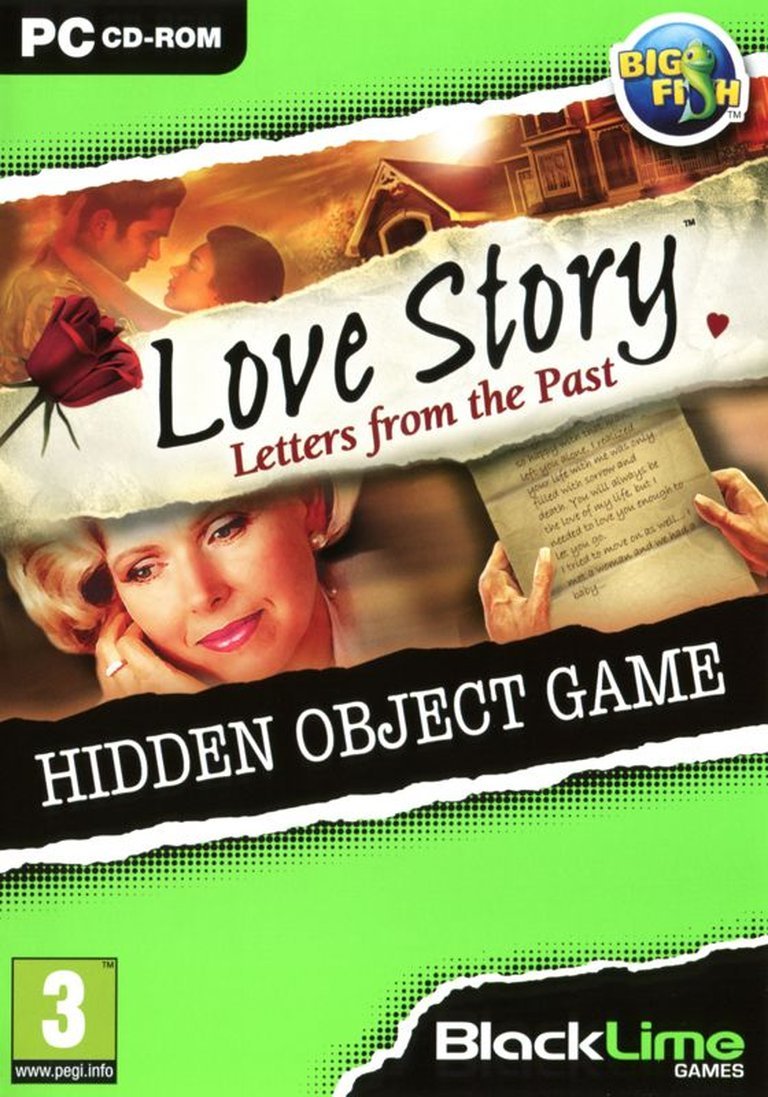
Love Story: Letters from the Past is a hidden object adventure game where players follow Mary, an elderly widow who discovers letters from her presumed-dead first husband after returning from her second husband’s funeral. When the letters scatter through her house, she must search for them while alternating between her perspective and flashbacks of her husband’s escape from a Cambodian prisoner camp. Gameplay revolves around finding hidden objects, solving inventory puzzles, and completing optional mini-games to uncover the truth behind her first love’s disappearance.
Gameplay Videos
Where to Buy Love Story: Letters from the Past
PC
Love Story: Letters from the Past Cracks & Fixes
Love Story: Letters from the Past Guides & Walkthroughs
Love Story: Letters from the Past Reviews & Reception
steambase.io (88/100): Love Story: Letters from the Past has earned a Player Score of 88 / 100.
mobygames.com (50/100): Critics 50% (1)
gamezebo.com (50/100): If you’re a hidden object fan with a sentimental streak then Love Story: Letters from the Past just might hit the spot.
Love Story: Letters from the Past: A Melancholic Journey Through Memory and Loss
Introduction
In the crowded landscape of hidden object games (HOGs), Love Story: Letters from the Past (2010) stands out not for its mechanics but for its earnest, if occasionally saccharine, exploration of love and grief. Developed by Media Art, Inc. and published by Big Fish Games, this title arrived during the zenith of the casual HOG boom, leveraging a narrative-driven approach to distinguish itself. While critics dismissed it as formulaic (GameZebo awarded it a middling 50%), players praised its emotional core, reflected in its “Very Positive” Steam rating years later. This review argues that Letters from the Past is a flawed yet poignant artifact—a game that transcends its genre’s limitations through storytelling, even as it stumbles in execution.
Development History & Context
Media Art, Inc., a studio known for mid-2000s casual titles like Nat Geo Adventure: Lost City of Z, sought to blend traditional HOG gameplay with a cinematic narrative. The era’s technological constraints—limited 3D rendering capabilities and a focus on low-spec PCs—shaped the game’s 2D, hand-painted visuals. Released in 2010, the game emerged alongside peers like Mystery Case Files, but its focus on intimate drama, rather than supernatural mystery, marked a tonal departure.
The creators’ vision was clear: to marry the object-hunting loop with a decades-spanning romance. However, budgetary and engine limitations (the game used the Playground engine, co-developed by industry veterans like Tim Mensch) necessitated a reliance on static scenes and recycled assets. This resulted in a product that felt achingly sincere but technically unambitious, a reflection of the era’s “quantity over quality” casual game market.
Narrative & Thematic Deep Dive
The story follows Mary, an elderly widow who discovers a trove of letters from her first husband, John, a soldier declared missing in Cambodia decades earlier. The narrative oscillates between Mary’s present-day search for closure and John’s wartime struggles, revealed through epistolary fragments and flashbacks.
Characters and Dialogue
Mary’s grief is palpable, though her characterization leans on well-worn tropes of the “tragic romantic.” John’s letters, meanwhile, oscillate between tender reminiscences and harrowing POW camp vignettes, though his voice often feels anachronistically sentimental. Secondary characters like Beth, Mary’s compassionate nurse, add little depth, serving primarily as narrative catalysts.
Themes
The game’s strongest thematic work lies in its exploration of memory as a fragmented artifact. Letters scatter like leaves, forcing Mary (and the player) to reconstruct the past piecemeal. However, the storytelling falters in its third act, resorting to melodramatic twists—John’s fate, Beth’s connection to the couple—that undermine its emotional authenticity.
Gameplay Mechanics & Systems
At its core, Letters from the Past is a standard HOG with light adventure elements.
Core Loop
Players scour cluttered scenes for items (e.g., “tart pans,” “feather dusters”) to unlock tools, retrieve letters, and progress the story. The inventory system is utilitarian, with items like garden forks and screwdrivers used to solve simple environmental puzzles (e.g., prying open a mailbox).
Innovations and Flaws
- Dual Timelines: Switching between Mary’s domestic spaces and John’s Cambodian prisons adds variety, though the latter’s settings feel underexplored.
- Mini-Games: From navigating a spotlight maze to repeating musical sequences, these diversions are forgettable and easily skipped.
- Hint System: The rechargeable locket hint mechanic is forgiving but slow, often necessitating idle waiting.
The game’s most glaring flaw is its padded design. Forced scavenger hunts for unrelated items (e.g., finding “ten related pairs” of objects in John’s cell) disrupt narrative momentum, feeling more like filler than meaningful interaction.
World-Building, Art & Sound
Visual Direction
The art team, led by Sergey Karpenko, delivers lush, painterly backdrops reminiscent of 2000s point-and-click adventures. Mary’s home brims with cozy, lived-in details—a floral wallpaper here, a dust-streaked mantel there—while John’s wartime flashbacks rely on drab greens and browns to convey oppression. However, asset reuse (e.g., identical drawers in multiple rooms) betrays the game’s budget limitations.
Sound Design
Anatoliy Shukh and Konstantin Galinsky’s score alternates between melancholic piano motifs and tense strings during John’s sequences. While serviceable, the music rarely elevates the drama, and sound effects (creaking floorboards, rustling paper) are functional but unremarkable.
Reception & Legacy
Upon release, Letters from the Past garnered tepid reviews. GameZebo criticized its “so-so production values” and “contrived” plot, while Steam users later praised its “heartfelt story.” Commercially, it found a niche audience, spawning sequels like Love Story: The Beach Cottage (2012).
Its legacy is minor but notable. The game exemplified the HOG genre’s shift toward narrative-driven experiences, paving the way for titles like Gone Home and Firewatch that would later marry exploration with emotional storytelling. Yet, its lack of mechanical innovation ensured it remained a footnote rather than a trendsetter.
Conclusion
Love Story: Letters from the Past is a bittersweet contradiction: a game whose narrative ambition outstrips its gameplay, yet whose earnestness lingers long after the credits roll. While its mechanics are firmly rooted in the HOG genre’s tropes, its exploration of love, loss, and the fragility of memory offers a poignant, if uneven, experience. For genre enthusiasts, it’s a charming relic; for others, a testament to the stories hidden beneath casual gaming’s crowded surface. In the annals of video game history, it remains a humble yet heartfelt letter—one worth reading, even if its ink has faded.
Final Verdict: A flawed but emotionally resonant entry in the HOG canon, best appreciated by players seeking narrative depth over mechanical innovation.