
- Release Year: 2022
- Platforms: Windows
- Publisher: Ozaak, inc.
- Developer: Ozaak, inc.
- Genre: Role-playing (RPG), Strategy, Tactics
- Perspective: Diagonal-down
- Game Mode: Single-player
- Gameplay: Crafting, Equipment creation, Tactical RPG, Turn-based, Unit management
- Setting: Fantasy
- Average Score: 66/100
Description
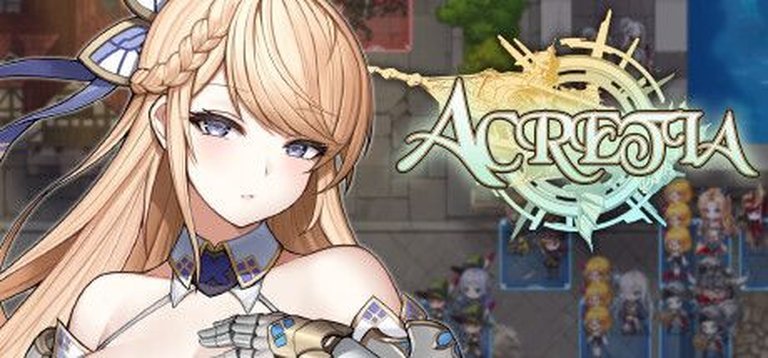
Acretia – Guardians of Lian is a story-driven tactical RPG set in the fantasy world of Mednoa, where humanity mounts a desperate counterattack against demonic invaders a century after their sudden invasion. Players follow soldier Elan as they rebuild a fractured invasion force after a devastating ambush, engaging in turn-based battles that combine hero-centric skills, unit management, and environmental factors like terrain and weather. Between skirmishes, the game features strategic stronghold management, including crafting, equipment customization, and resource allocation, all presented through vivid 2D anime-style visuals.
Gameplay Videos
Acretia – Guardians of Lian Guides & Walkthroughs
Acretia – Guardians of Lian Reviews & Reception
steambase.io (67/100): Acretia – Guardians of Lian review data is updated in real-time as more players share their feedback on Steam.
niklasnotes.com (66/100): The story is often criticized for being underdeveloped or lacking depth, impacting player engagement.
Acretia – Guardians of Lian: A Deep Cut Through the Chains of Ambition
Introduction
Acretia – Guardians of Lian arrives amidst a renaissance of tactical RPGs, yet it struggles to carve a distinct identity beyond its anime-infused veneer. Developed by South Korean indie studio Ozaak, inc., this 2022 turn-based strategy game blends grandiose world-building with systemic ambition but staggers under the weight of its own grind-heavy design and narrative underdevelopment. This review dissects its paradoxical legacy: a visually arresting but mechanically fatiguing experience that mirrors the very chains of hatred it seeks to sever—a title shackled by unrealized potential.
Development History & Context
A Small Studio’s Daunting Vision
Ozaak, inc., a modest 12-person team led by multi-hyphenate creator WonJin Lee (who served as director, writer, designer, and programmer), dared to compete in a genre dominated by titans like Fire Emblem and Final Fantasy Tactics. Released on October 14, 2022, exclusively for Windows via Steam Early Access, Acretia emerged during a boom for indie tactical RPGs (Triangle Strategy, Wargroove), yet targeted a niche audience with its anime aesthetic and lore-heavy premise. Built on the Unity engine, the game’s development faced expected constraints: limited QA bandwidth, iterative balancing struggles, and a fragmented focus across Lee’s roles—issues palpable in its uneven polish.
The Early Access Conundrum
Launching into Early Access allowed Ozaak to fund ongoing development but risked player fatigue. The studio’s sparse post-launch communication (noted in 67% of negative Steam reviews) exacerbated frustrations, leaving fans questioning its roadmap. This context frames Acretia as a product of passion hamstrung by indie realities—a cautionary tale of scope versus scale.
Narrative & Thematic Deep Dive
A World Torn Asunder
The premise thrusts players into Mednoa, a continent birthed from a catastrophic merger of two worlds, now ravaged by a century-long demon invasion. You command Elan, a soldier leading a splintered counteroffensive after a disastrous assault on the demon capital. The lore teases existential themes: cycles of hatred, unity forged from destruction, and the cost of war.
Execution: Style Over Substance
Despite its mythic scaffolding, Acretia’s storytelling falters. WonJin Lee’s script leans on tropes—stoic heroes, demon lords draped in generic malice—without subverting them. Dialogue oscillates between functional exposition and clumsy attempts at depth (e.g., thinly veiled metaphors about “chains” of conflict). Character arcs, particularly the recruitable heroes, hinge on favorability mechanics (boosted via gift-giving), yet their backstories lack emotional resonance. The narrative’s most intriguing element—the merging of worlds—is relegated to backdrop, a squandered opportunity for thematic exploration.
Thematic Dissonance
Acretia aspires to mirror real-world cycles of vengeance but undermines itself with tonal inconsistency. Bright, chibi-style character models clash with grim battlefields, while “cute” tag-driven marketing (per Steam user tags) jars against its apocalyptic stakes. The result is a narrative at war with its own identity.
Gameplay Mechanics & Systems
The Tactical Core: Promise vs. Repetition
Battles unfold on grid-based maps where players deploy units led by heroes and supported by class-based soldiers. Mechanics nod to genre staples:
– Terrain & Weather: Elevation grants attack bonuses; rain reduces fire damage.
– Hero Skills: Unique abilities (e.g., AoE buffs, crowd control) add strategic layers.
– Day/Night Cycles: Night reduces visibility, encouraging cautious advances.
Yet, these systems suffer from predictable balancing. Foes rarely adapt, reducing late-game encounters to attrition slogs. The absence of permadeath (a series staple for tension) further dampens stakes.
The Grind That Binds
Acretia’s most criticized flaw is its compulsive grind. Soldiers require leveling to unlock class changes (e.g., Archer → Sniper), demanding repetitive skirmishes for marginal stat gains. Crafting gear—while streamlined with 100% success rates—relies on disproportionate material farming. Steam reviews highlight 10–20-hour playthroughs ballooning into 30+ hours due to mandatory resource loops, a design choice at odds with modern pacing expectations.
Stronghold Management: Underbaked Sanctuary
Between battles, the airship stronghold serves as a hub for crafting, smelting, and gifting heroes. While conceptually sound (akin to XCOM’s Avenger), its execution feels skeletal. Menus are cluttered, and interactions lack depth—equipping gear offers stat boosts but no visual customization, undermining player investment.
UI/UX: A Tactical Misstep
Players universally panned the interface: tooltips are sparse, keyboard controls are poorly mapped, and unit stats burrow into sub-menus. These issues, compounded by a lack of post-launch patches, fracture immersion and amplify frustration.
World-Building, Art & Sound
Anime Aesthetics: Beauty in Stasis
Acretia’s strongest asset is its anime/manga art direction. Hero designs by Hosung Kim burst with vibrant, detailed illustrations, and SD (super-deformed) battle sprites charm with fluid animations. Environments, painted by Sojeong Park, juxtapose lush forests and desolate ruins, evoking a world scarred by conflict.
Yet, this beauty is static. Backgrounds lack interactivity, and enemy variety is sparse—a stark contrast to the genre’s best.
Sound Design: Functional but Unmemorable
The soundtrack, while competently orchestrated, leans on generic fantasy motifs. Battle themes lack dynamism, fading into ambient noise. Voice acting is absent outside of brief grunts, leaving dialogue’s emotional weight to the player’s imagination.
Reception & Legacy
A Divisive Debut
At launch, Acretia garnered a “Mixed” Steam rating (67/100 from 105 reviews). Praise centered on its visuals and tactical foundation, while criticism targeted its grind and narrative superficiality. Early Access adoption was modest (SteamDB estimates ~5,000 owners), with niche appeal among anime TRPG enthusiasts.
The Road Ahead
As of 2025, Ozaak’s silence has stranded Acretia in purgatory. While updates promised hero customization and QoL fixes, their absence has eroded goodwill. The game’s legacy is one of caution—a reminder that even compelling aesthetics buckle under mechanical exhaustion. Its influence is negligible, though its missteps offer lessons for indies navigating Early Access.
Conclusion
Acretia – Guardians of Lian is a paradox: a game visually ripe for cult adoration yet mechanically starved of refinement. Its anime allure and tactical骨架 hint at greatness, but grind-heavy progression, a half-baked narrative, and developer radio silence condemn it to mediocrity. For genre Completionists, it’s a curiosity; for most, a 87% wait-for-a-deep-sale experience. In video game history, it will linger not as a guardian of innovation but as a guardian of unrealized dreams—a chain yet to be broken. 6.5/10.