
- Release Year: 2006
- Platforms: Windows
- Publisher: Toro-Publishing
- Developer: Owl Studio
- Genre: Action
- Perspective: 3rd-person (Other)
- Game Mode: Single-player
- Gameplay: Arcade, Paddle, Pong
- Setting: Arcade
- Average Score: 86/100
Description
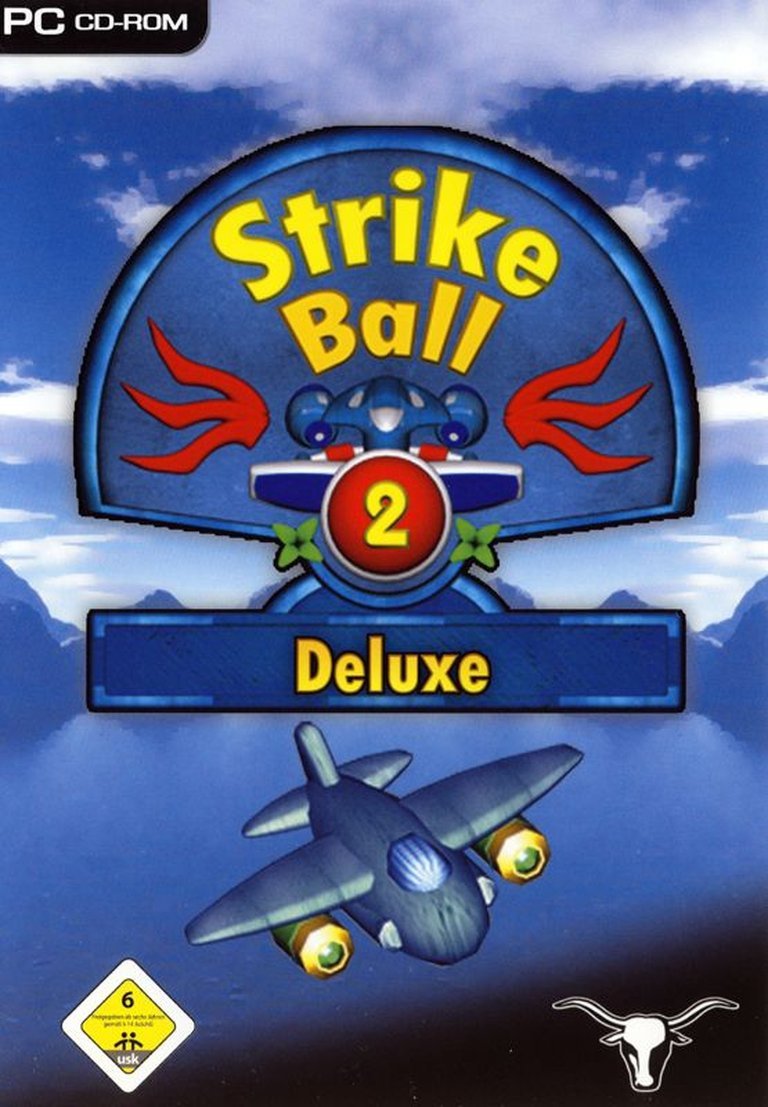
Strike Ball 2 Deluxe is a dynamic 3D adaptation of the classic Breakout formula, where players aim to destroy multi-layered brick structures using a paddle and bouncing ball. Set in rotatable 3D environments, levels resemble imaginative scenes like castles or train stations, with boss fights against creatures like a three-headed dragon. Power-ups add variety, offering effects like paddle resizing, multiball, weapons with limited ammo, and even aerial support from a B-52 Bomber. The Deluxe edition includes 100 additional levels and new upgrades, blending arcade action with strategic depth.
Gameplay Videos
Strike Ball 2 Deluxe Reviews & Reception
retro-replay.com : Strike Ball 2 Deluxe takes the classic Breakout formula and elevates it into a fully 3D arena where precision and timing are absolutely critical.
Strike Ball 2 Deluxe: Review
Introduction
In the pantheon of arcade classics, few formulas are as enduringly addictive as Breakout’s brick-smashing simplicity. Strike Ball 2 Deluxe (2006), developed by Owl Studio and published by Toro-Publishing, reimagines this legacy not as a mere homage but as a kinetic, three-dimensional spectacle. At its core, it remains faithful to the paddle-and-ball DNA of its predecessors while injecting modern flair through rotatable 3D environments, chaotic power-ups, and diorama-like level design. This review argues that Strike Ball 2 Deluxe bridges nostalgic satisfaction with inventive ambition, even if it occasionally stumbles under the weight of its own excess.
Development History & Context
The Vision of Owl Studio
Owl Studio, a modest team led by Sergey Smirnov (programming/design), Nikolay Smirnov (level design), and producer Denis Sedovich, aimed to redefine the Breakout subgenre for the mid-2000s digital distribution boom. Released on December 12, 2006, for Windows, the game arrived when casual PC gaming was surging via platforms like RealArcade and GameFools. The studio leveraged accessible technology—DirectX 9.0c and low system requirements (Pentium III, 128MB RAM)—to prioritize fluid performance over graphical fidelity.
Technological Constraints & Innovation
Limited by 2006 hardware norms, Owl Studio sidestepped realism in favor of stylized 3D, using “invisible bricks” to create multi-tiered structures that collapsed dynamically. This approach transformed static brick walls into interactive playgrounds resembling castles, aquariums, and even living dragons. The Deluxe Edition (adding 100 levels and the B-52 Bomber power-up) targeted players hungry for content in an era dominated by disposable bite-sized games.
The Gaming Landscape
Strike Ball 2 Deluxe entered a crowded field of Breakout clones (Magic Ball 2, BreakQuest), yet distinguished itself through sheer audacity. While contemporaries like Super Monkey Ball Deluxe (2005) embraced 3D platforming, Owl Studio’s focus on destructive physics and environmental storytelling within a paddle game was radical—for better or worse.
Narrative & Thematic Deep Dive
Implied Storytelling Through Design
Strike Ball 2 Deluxe lacks explicit narrative or dialogue. Instead, its emergent storytelling unfolds through level themes. Players dismantle a three-headed dragon brick-by-brick, devastate a volcanic island, or methodically erase a train station’s infrastructure. Each stage feels like a miniature world with a silent history—a “diorama of destruction,” as Retro Replay’s review notes.
Boss Fights as Thematic Peaks
The game’s thematic triumph lies in boss encounters. Destroying invisible supports under a dragon’s head sends it plummeting toward the paddle, evoking a cinematic climax without cutscenes. These moments morph abstract brick-breaking into mythic confrontations, suggesting Owl Studio’s ambition to transcend genre limitations.
Power-Ups as Narrative Devices
Aerial supply drops (via planes or B-52 bombers) imply an unseen military campaign, framing the player as a demolition specialist. Power-ups like “chemical rockets” or “fireballs” weaponize the paddle, transforming sterile arcade mechanics into a guerrilla war against geometry.
Gameplay Mechanics & Systems
Core Loop & Controls
The goal is straightforward: eradicate all bricks using a paddle-controlled ball. The Deluxe Edition’s 200 levels escalate in complexity, introducing:
– Multi-layered Collapse: Destroying foundational bricks sends upper layers crashing down, creating chain reactions.
– Rotatable 3D Perspective: Players tilt the camera horizontally/vertically to navigate obstacles and exploit angles—a revelation for precision play.
– Mouse controls dominate, favoring intuitive aiming over keyboard rigidity.
Power-Ups: Chaos Management
The game’s 26+ power-ups range from benevolent to sabotaging:
– Game-Changers: Multiball, magnetic paddles, “Power Ball” (invincible penetration).
– High-Risk Tools: Rockets (limited to 3 shots), chemical explosives, and paddle shrinkers.
– B-52 Bomber (Deluxe Exclusive): Carpet-bombs stages, epitomizing the game’s “controlled chaos” ethos.
Weapon ammo limits prevent cheese tactics, forcing players to strategize: Do I save rockets for the dragon’s final head?
Flaws & Innovations
- Breadth Over Balance: Some power-ups (e.g., slow ball) feel punitive, disrupting momentum.
- Camera Clunkiness: Rotational controls occasionally obscure the ball’s trajectory (per Out of Eight’s critique).
- UI Clarity: Clean HUD showcases active power-ups and ammo, ensuring focus remains on destruction.
World-Building, Art & Sound
Visual Design: Dioramas of Destruction
Stages are micro-environments sculpted from bricks—both visible and invisible—to resemble castles, stations, and mythical beasts. Lighting and particle effects (flaming balls, explosions) inject vibrancy, while subtle shadows aid depth perception during camera adjustments. Retro Replay praises the “sculpted appearance,” noting how filler bricks blend seamlessly into backgrounds.
Audio: The SandS’ Pulsating Score
Composed by The SandS, the soundtrack blends upbeat electronica with tension-building percussion. Sound effects—cracking bricks, bomber roars, power-up chimes—are punchy yet unobtrusive, amplifying satisfaction without overwhelming the senses.
Atmosphere & Immersion
The game’s charm lies in its playful absurdity. One moment you’re clearing a serene aquarium; the next, you’re bombarding a steampunk airship. This tonal flexibility keeps the experience fresh across 200 levels.
Reception & Legacy
Critical Response
Strike Ball 2 Deluxe earned a 72% average from critics (via MobyGames):
– GameXtazy (80%): Praised “cleverly designed levels” and “smooth” controls.
– Out of Eight (75%): Called it “polished” but “too conventional” versus BreakQuest.
– VictoryGames.pl (60%): Criticized its lack of innovation yet acknowledged “good fun” for genre fans.
Player reviews (average 4/5) highlighted addictive loops but lamented repetitive late-game levels.
Commercial Impact & Evolution
While not a blockbuster, its commercial viability spawned Strike Ball 3 (2009). The game’s legacy lies in proving that Breakout could thrive in 3D, influencing later titles like Table Ball: Deluxe Edition (2022).
Industry Influence
Owl Studio’s experiments with physics-based destruction and environmental storytelling inspired indie devs to rethink arcade simplicity. The “collapsing layer” mechanic, in particular, became a staple in brick-breakers seeking spatial depth.
Conclusion
Strike Ball 2 Deluxe is a paradox: both a love letter to Breakout’s purity and a frenetic deconstruction of its limits. Its 3D dioramas, ludicrous power-ups, and emergent “storytelling” through destruction showcase Owl Studio’s ambition, even if camera quirks and imbalanced mechanics occasionally undermine the vision. For arcade purists, it remains a cult classic—a bridge between Arkanoid’s past and the physics-driven future of indie darlings like BreakQuest. While not revolutionary, it delivers a riotous, content-rich package that earns its place in the pantheon of paddle games. Final Verdict: A Deluxe dose of chaos that honors its roots while swinging for the fences.