
- Release Year: 2024
- Platforms: Nintendo Switch, PlayStation 4, PlayStation 5, Windows, Xbox One, Xbox Series
- Publisher: JanduSoft S.L.
- Developer: JanduSoft S.L.
- Genre: Action
- Perspective: Side view
- Game Mode: Single-player
- Gameplay: Platform, Shooter
- Average Score: 65/100
Description
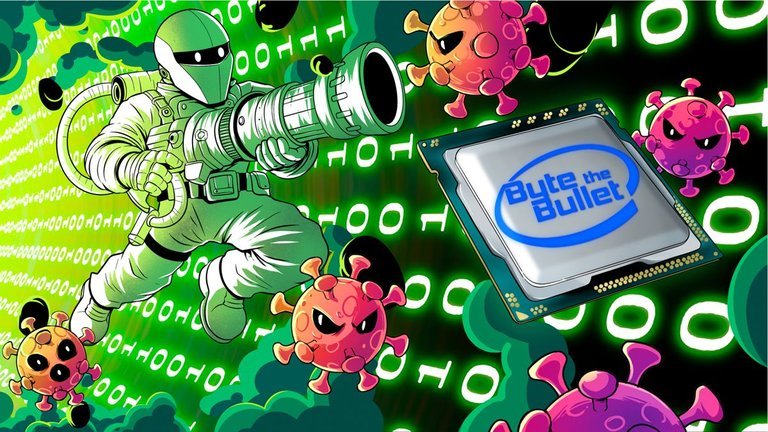
Byte the Bullet is a 2D action platformer released in 2024, where players control an antivirus program navigating through various computer systems infected by a malevolent virus. The game features a non-linear adventure across different PC components, each presenting unique challenges and retro-inspired levels. Players must restore game attributes and eradicate the virus to progress, offering a blend of nostalgia and modern gameplay mechanics.
Gameplay Videos
Where to Buy Byte the Bullet
PC
Byte the Bullet Guides & Walkthroughs
Byte the Bullet Reviews & Reception
waytoomany.games (65/100): Byte The Bullet is a game with a neat premise but shoddy-at-best execution. For every interesting idea, such as the premise, retro levels, or level completion fanfare, there was something else either hindering it or just making me feel fed up with the game as a whole, such as the wonky platforming, unfunny references, or unfair level of difficulty.
Byte the Bullet: Review
Introduction
In an era dominated by AAA blockbusters and hyper-realistic graphics, Byte the Bullet arrives as a defiant love letter to the pixelated past. Developed by solo creator Esteban Marin under Lion Ant Games and published by JanduSoft, this 2024 action-platformer marries retro aesthetics with a bizarre premise: players embody an antivirus program fighting corruption inside a diseased computer. While its ambition to resurrect the spirit of 8-bit classics like Rockman and Super Mario Land 2 is admirable, the game’s execution oscillates between nostalgic brilliance and frustrating jank. Byte the Bullet is a game of contradictions—a charming ode to gaming’s golden age hamstrung by uneven design and tonal dissonance.
Development History & Context
Born from the mind of Esteban Marin, Byte the Bullet is a passion project steeped in reverence for the 1980s and 1990s gaming zeitgeist. Marin’s vision was to create a “playable time capsule,” blending minimalist pixel art with mechanical callbacks to platforming legends like Contra and Prince of Persia. The game’s development faced inherent challenges: as a solo endeavor, Marin juggled coding, art, and design while navigating modern players’ expectations for polish.
Released in September 2024, the game entered a crowded market of retro-inspired indies. Titles like Shovel Knight and Cyber Shadow had already perfected the balance of nostalgia and modernity, raising the bar for what audiences tolerated in “authentic” retro experiences. Byte the Bullet’s decision to emulate not just aesthetics but also the era’s punishing difficulty—intentionally making early levels visually grating and mechanically unforgiving—was a risky gambit.
Narrative & Thematic Deep Dive
The plot is deceptively simple: a virus has infected a computer, corrupting its systems and stripping away essential functions like color and save capabilities. As the titular antivirus, players traverse non-linear worlds representing hardware components—the Hard Disk tests memory, the Video Card demands visual acuity—to restore order.
Thematically, Byte the Bullet explores decay and renewal, mirroring Marin’s mission to resurrect aging game design philosophies. However, its narrative depth is undercut by relentless referential humor. NPCs spout groan-worthy one-liners (“The princess is in another castle!”), and secret levels shamelessly parody Doom and Alley Cat. While these easter eggs delight initially, they devolve into nostalgic pandering, prioritizing meme-driven winks over meaningful storytelling. The game’s tonal identity feels fractured: it oscillates between sincere homage and ironic detachment, never fully committing to either.
Gameplay Mechanics & Systems
At its core, Byte the Bullet is a run-and-gun platformer with Metroidvania-lite progression. Key mechanics include:
– Overheating Weapons: Holding the fire button expands your shot spread but reduces accuracy—a clever risk-reward system.
– Jump-Pack Mobility: A cooldown-limited dash/jump hybrid encourages strategic movement but feels imprecise during precision platforming.
– System Restoration: Completing levels unlocks perks like expanded color palettes or checkpoint saves, functionally “debugging” the game world.
These ideas shine in theory but falter in practice. Early levels are deliberately oppressive: monochromatic visuals, unfair enemy placements, and floaty controls test patience more than skill. Progression alleviates these issues—reclaiming the GPU unlocks vibrant visuals, while CPU fixes smooth framerate hitches—but players must endure hours of frustration to reach this payoff.
The game’s standout feature is its optional “ROM levels,” carbon copies of classic game stages (e.g., Super Mario Bros.’ 1-1) reworked for the protagonist’s abilities. Yet these sections highlight a paradox: Byte the Bullet is most enjoyable when it’s aping better-designed games.
World-Building, Art & Sound
Byte the Bullet’s world is a surreal homage to computing’s infancy. Each system—a flickering GPU, a laggy RAM module—is rendered in austere pixel art that evolves as players restore functionality. The initial grayscale hellscape gradually bursts into neon-drenched chaos, mirroring the game’s narrative arc.
Sound design is a mixed bag. David Fesliyan’s chiptune soundtrack channels Contra-era adrenaline, but tracks loop repetitively. Meanwhile, Juhani Junkala’s sound effects—blips for jumps, metallic clangs for gunfire—feel authentically retro, though weapon feedback lacks punch. The intentional “broken” audio in early levels (distorted melodies, muffled effects) is creative but grating over time.
Reception & Legacy
Critics greeted Byte the Bullet with cautious warmth. Reviewers praised its creativity (Nindie Spotlight: 8.2/10) but lambasted its uneven execution (WayTooManyGames: 6.5/10). Steam users, however, embraced its quirks, awarding a 93% positive rating. The divide reflects its niche appeal: retro purists tolerate its flaws for the sake of nostalgia, while mainstream players recoil at its archaic design.
Legacy-wise, Byte the Bullet will likely be remembered as a cult oddity—a game that dared to replicate the past’s rough edges rather than sanitize them. Its influence may linger in indie circles as a case study in balancing homage with modernity, though its commercial impact remains modest.
Conclusion
Byte the Bullet is a paradox: a game that venerates the past while accidentally exemplifying why some design trends stayed there. Its inventive premise and heartfelt nostalgia are undermined by frustrating mechanics and tonal inconsistency. Yet for all its flaws, there’s sincerity in its pixelated chaos—a labor of love that resonates with those willing to endure its jank.
Is it a must-play? For casual gamers, no. But for historians and retro enthusiasts, Byte the Bullet offers a fascinating, if flawed, artifact—a digital palimpsest where gaming’s past and present collide with equal parts reverence and messiness. 3.5/5 stars.