
- Release Year: 1997
- Platforms: Windows
- Publisher: Ubi Soft Entertainment Software
- Developer: Ubi Soft Paris Studios
- Genre: Action
- Perspective: 3rd-person
- Game Mode: Single-player
- Gameplay: Platform
- Average Score: 81/100
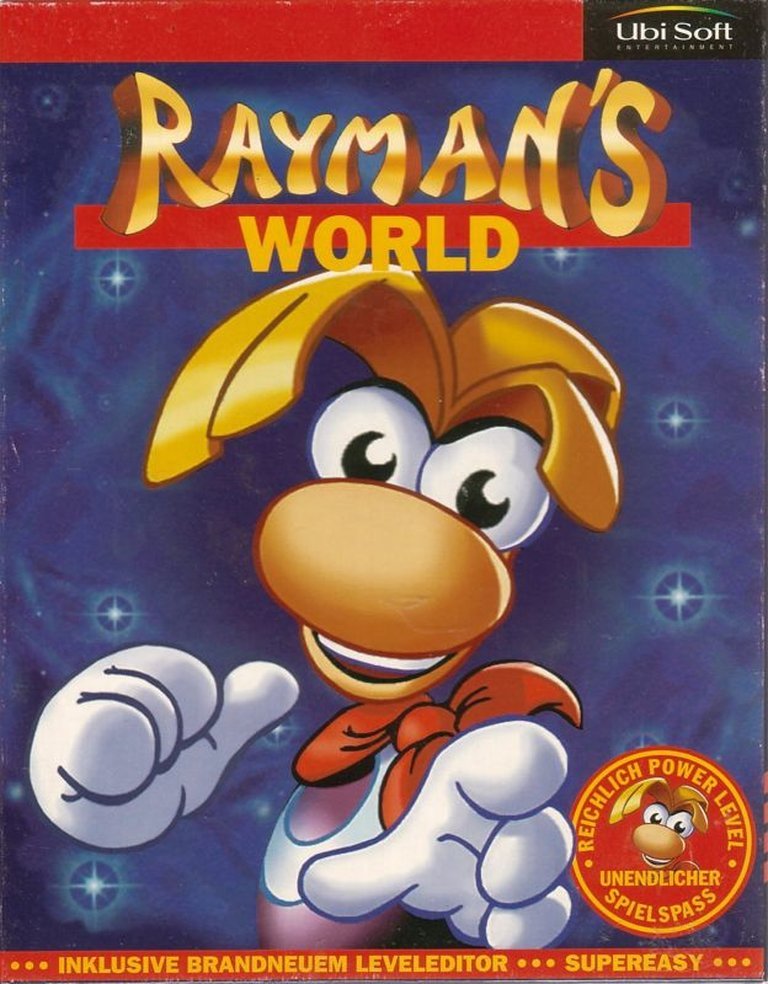
Description
Rayman Designer is an expansion to the original Rayman, featuring a level editor and 24 new levels not found in the original game. Released in 1997 for Windows, it allows players to create their own levels and enjoy a fresh set of challenges within the whimsical and humorous world of Rayman. The game combines platforming action with creative design tools, offering both entertainment and a platform for user-generated content.
Gameplay Videos
Rayman Designer Free Download
Rayman Designer Mods
Rayman Designer Reviews & Reception
mobygames.com (73/100): A triumphant return to form for the series.
dosgames.com (90/100): This demo version provides you with some of the levels from the full game.
Rayman Designer Cheats & Codes
Rayman Designer (PC)
Enter codes during gameplay (press TAB followed by code string, some require BACKSPACE)
| Code | Effect |
|---|---|
| [TAB]lives20[BACKSPACE] | 20 Lives |
| [TAB]lives05[BACKSPACE] | 5 Lives |
| [TAB]lives50[BACKSPACE] | 50 Lives |
| [TAB]goldens | All Fist Power-Ups |
| [TAB]finishing | Finish Current Level |
| [TAB]points | Full Energy |
| [TAB]map[BACKSPACE] | Show Map Number |
| [TAB]moveray[BACKSPACE] | Use Arrow Keys for Free Movement |
Rayman Designer (PC) – Map Selection
Enter at map selection screen after selecting a world
| Code | Effect |
|---|---|
| [TAB]openall[BACKSPACE] | Open All Maps |
Rayman Designer: A Forgotten Canvas in Platforming History
Introduction
In the pantheon of iconic platformers, Rayman Designer (1997) occupies a curious niche. Released as a standalone expansion to Ubisoft’s landmark Rayman (1995), it offered players a rare gift for its time: the tools to craft their own levels. While overshadowed by the main series’ bombastic sequels, Rayman Designer represents a bold experiment in player creativity, albeit one shackled by the technological limitations of its era. This review argues that Rayman Designer is a fascinating but flawed artifact—a testament to the potential of user-generated content that struggled to transcend its rigid framework.
Development History & Context
Developed by Ubisoft Paris Studios under the guidance of Rayman creator Michel Ancel, Rayman Designer emerged during a transitional period in gaming. The late ’90s saw the industry pivoting toward 3D worlds (e.g., Super Mario 64, Tomb Raider), yet Ubisoft doubled down on 2D platforming, refining the hand-drawn artistry that defined the original game.
The expansion was built atop Rayman Gold’s engine, which itself was an enhanced re-release of the 1995 title. However, Rayman Designer’s level editor faced significant constraints:
– Technical hurdles: The editor ran as a Windows application, but the game itself launched in DOS via shortcuts—a clunky workflow even for 1997.
– Hardware limitations: With CD-ROM storage and modest PC specs, the toolset was simplistic by modern standards, lacking real-time previews or advanced scripting.
– Audience gap: At a time when level editors were rare outside PC gaming, the learning curve alienated casual players.
Despite these challenges, Rayman Designer reflected Ubisoft’s early commitment to modular creativity, planting seeds for later innovations like Far Cry’s map editor.
Narrative & Thematic Deep Dive
Rayman Designer lacks a traditional narrative, instead inheriting the surreal charm of its predecessor. The 24 new levels, set across familiar biomes like the Dream Forest and Candy Château, amplify the series’ whimsical tone.
- Absurdist world-building: Players encounter sentient musical instruments, floating lollipops, and enemies like the predatory Saxophone Piranhas—hallmarks of Rayman’s irreverent humor.
- Themes of creation: The editor implicitly positions players as collaborators with Ubisoft’s artists, inviting them to contribute to the Glade of Dreams’ ever-expanding lore.
- Silent storytelling: Like the original Rayman, environmental details (e.g., crumbling ruins, candy-coated bosses) convey a childlike wonder tinged with subtle menace.
While devoid of dialogue or cutscenes, the game’s atmosphere remains cohesive, a testament to its art team’s vision.
Gameplay Mechanics & Systems
Core Gameplay Loop
The expansion’s dual pillars are level creation and challenge:
1. Editor mechanics:
– A grid-based interface for placing platforms, enemies, and obstacles.
– Limited object categories (e.g., spikes, swinging vines, Tings for collection).
– No terrain deformation or custom sprites, restricting creative freedom.
- Pre-built levels:
- 24 new stages, emphasizing precision platforming and hidden collectibles.
- Brutal difficulty spikes (e.g., instant-death pits, relentless enemy patterns) mirror the original game’s punishing design.
Flaws and Innovations
- UI friction: Switching between the Windows editor and DOS gameplay disrupted immersion.
- Reward system: Unlocking all levels required rescuing every Electoon, a tedious grind.
- Legacy: Though rudimentary, the editor inspired fan-made content, foreshadowing today’s modding communities.
World-Building, Art & Sound
Visual Direction
- Hand-drawn artistry: Rayman Designer’s vibrant sprites and parallax backgrounds remain timeless. The Blue Mountains’ icy cliffs and Picture City’s ink-splashed factories showcase the team’s meticulous attention to detail.
- Animation fluidity: Rayman’s limbless gymnastics—spinning on his hair, punching with telescopic fists—are as expressive as ever.
Sound Design
- Rémi Gazel’s score: Jazz-infused tracks (e.g., the frenetic Band Land theme) heighten the game’s manic energy.
- Minimalist SFX: Squishy enemy noises and twinkling Ting collectibles create an ASMR-like satisfaction.
Reception & Legacy
Critical Reaction
At launch, Rayman Designer earned mixed reviews (73% average on MobyGames):
– Praise: German magazine PC Player (100/100) lauded its “genius” editor, while Power Unlimited (80/100) called it a “bonus for platform diehards.”
– Criticism: PC Joker (62/100) derided its “frustrating” difficulty, and Reset (60/100) noted the editor’s steep learning curve.
Long-Term Impact
- Cult following: Despite poor sales, the game became a collector’s item, bundled in Rayman Forever (1998).
- Industry influence: Its DIY ethos presaged later experiments like LittleBigPlanet and Super Mario Maker.
Ci Sadly, Ubisoft never iterated on the concept, leaving Rayman Designer a curious footnote.
Conclusion
Rayman Designer is a paradox: a creative tool shackled by its time, yet brimming with nostalgic charm. While its editor feels archaic today, the expansion captures the spirit of a bygone era when publishers took risks on niche projects. For historians and Rayman completists, it’s a vital artifact—one that reminds us how far player-driven content has come.
Final verdict: Rayman Designer is neither essential nor obsolete. It is, instead, a fascinating half-step toward gaming’s user-generated future—a dream unfulfilled, but never forgotten.