
- Release Year: 2017
- Platforms: Linux, Macintosh, Nintendo Switch, PlayStation 4, Windows
- Publisher: Klabater SA
- Developer: Revolt and Rebel
- Genre: Action
- Perspective: Side view
- Game Mode: Co-op, Single-player
- Gameplay: Platformer
- Setting: Fantasy
- Average Score: 48/100
Description
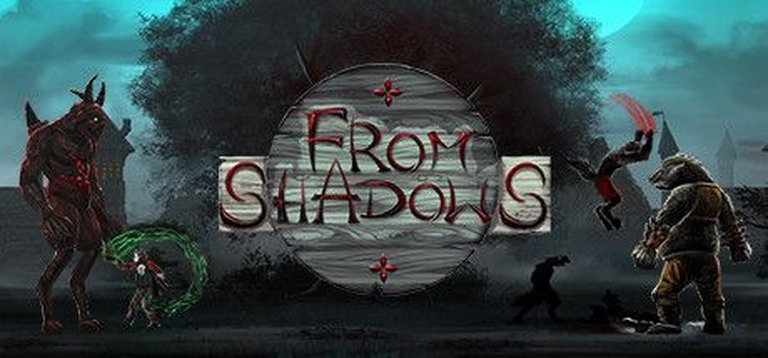
From Shadows is a dark fantasy action-platformer set in a gothic world overrun by black magic and demonic forces. Players assume the roles of a werewolf and a vampire, two unlikely heroes tasked with battling through 21 sprawling levels filled with hellish enemies and towering bosses. Featuring split-screen cooperative gameplay, hand-drawn visuals, and a blend of fast-paced combat and platforming mechanics, the game allows players to unleash unique skills and compete via global leaderboards in their quest to defeat the ultimate evil.
Where to Buy From Shadows
PC
From Shadows Patches & Updates
From Shadows Guides & Walkthroughs
From Shadows Reviews & Reception
steambase.io (66/100): From Shadows has earned a Player Score of 66 / 100.
store.steampowered.com (64/100): 64% of the 59 user reviews for this game are positive.
mobygames.com (16/100): Average score: 16% (based on 1 ratings)
From Shadows: A Study in Missed Opportunities and Forgotten Game Design
Introduction
In the crowded pantheon of indie action-platformers, From Shadows (2017) stands as a cautionary relic—a game that dared to fuse Gothic horror with beat-’em-up mechanics but crumbled under the weight of its own ambition. Developed by the obscure Polish studio Revolt and Rebel and published by Klabater SA, this side-scrolling co-op title promised a “dark fantasy action game” starring a werewolf and vampire battling demonic hordes. Yet, upon release, it was met with derision from critics and indifference from players, swiftly fading into obscurity. This review interrogates From Shadows‘ flawed execution, situating it within the post-Shovel Knight indie boom of the mid-2010s—a period rich with pixel-art gems but equally rife with forgettable cash-ins. Here lies a game that embodies both the potential and pitfalls of small-team development: ambitious in scope but undone by technical incompetence and creative indifference.
Development History & Context
Revolt and Rebel, a studio with no other credited projects, positioned From Shadows as a love letter to classic side-scrollers like Castlevania and Double Dragon. Built in Unity—a prudent choice for budget-conscious indie teams in 2017—the game targeted PC and console audiences hungry for local co-op experiences. At the time, platformers like Cuphead were redefining hand-drawn animation in games, while Broforce celebrated chaotic multiplayer mayhem. Yet From Shadows emerged into a market already saturated with these higher-quality titles.
The developers’ vision, per Steam listings, emphasized “menacing gothic atmosphere” and “fast-paced platforming,” with split-screen co-op as a key selling point. However, constrained by modest resources and likely inexperience, the team struggled to implement these ideas cohesively. The rushed August 2017 launch window—a dumping ground for lesser titles—suggested minimal publisher confidence. Klabater SA, known for niche ports and mid-tier indies, provided little marketing support, exacerbating the game’s visibility issues. Notably, From Shadows lacked even a MobyGames-approved description post-launch, hinting at its abandonment by its creators.
Technologically, the game’s Unity foundations proved ill-suited for its ambitions. While competently optimized (running on hardware as modest as Intel HD 4400 GPUs), the engine’s physics and animation tools were clumsily deployed, resulting in the “floaty” controls and glitchy collision detection lamented by critics. The decision to include split-screen on PC—a rarity in 2017—was praiseworthy but hamstrung by poor UI scaling and input lag.
Narrative & Thematic Deep Dive
From Shadows’ narrative is skeletal: players control a werewolf and vampire duo, “born of anger and blood,” guided by the sage Cornelius to defeat an “Ultimate Evil” corrupting the world. The game’s 21 levels unfold as a linear march through generic locales—forests, crypts, and hellscapes—with minimal story beats or dialogue.
Thematically, it gestures toward a clash between humanity and monstrosity, suggesting that the protagonists’ monstrous forms are the only hope against greater darkness. This premise echoes Darkstalkers or Vampire: The Masquerade, where monstrous antiheroes confront existential threats. Yet From Shadows lacks the nuance to explore this idea. The werewolf and vampire are interchangeable meat-puppets with no personality, defined solely by their combat abilities. Cornelius, the quest-giver, exists purely as a disembodied tutorial voice.
Enemy designs lean on tired Gothic clichés: lumbering demons, bat swarms, and fire-spewing imps ripped from public-domain asset packs. The absence of lore or environmental storytelling leaves the world feeling sterile—a stark contrast to contemporaries like Hollow Knight, where every pixel oozed narrative intentionality.
Gameplay Mechanics & Systems
At its core, From Shadows is a collision of half-baked ideas. The combat system—touted as a blend of “platformers and beat-’em-ups”—boasts 12 upgradeable skills and 24 enemy types, but in practice, devolves into mindless button-mashing.
Core Combat & Progression
- Characters: The werewolf specializes in slow, heavy strikes with area damage, while the vampire attacks faster with lifesteal. Yet these differences rarely matter, as most enemies succumb to spamming a single attack.
- Skills: Upgrade trees (e.g., “Blood Frenzy” for vampiric AoE, “Savage Bite” for werewolf stuns) lack meaningful impact. Unlockable abilities feel indistinguishable, exacerbating the grind across repetitive levels.
- Enemy Design: Foes behave erratically, often glitching into walls or attacking through animations. The “24 enemy types” cited in marketing are mostly palette swaps with negligible tactical variety.
Platforming & Co-op
- Level Design: Stages are linear corridors with perfunctory platforming—floating platforms, spike pits—lacking the precision of genre greats like Celeste. The “day & night cycle” barely affects gameplay beyond cosmetic lighting shifts.
- Co-op: Local split-screen (a rare feature for PC) is undermined by clunky controls and a shared camera that struggles to track both players. Online co-op is absent, a baffling omission in 2017.
Technical Failings
Reviewers universally panned the UI as “unintuitive,” with cluttered menus and poorly explained systems. The achievement system, while robust (32 Steam achievements), feels tacked-on, rewarding grind over skill.
World-Building, Art & Sound
Revolt and Rebel aspired to a “hand-drawn Gothic aesthetic” but delivered a visual disaster. Character sprites—blocky, lacking fluid animation—clash with muddy, low-resolution backgrounds. The vampire’s design apes Castlevania’s Alucard but lacks detail, resembling a Flash animation reject. Environments suffer from repetitive tilesets and incoherent lighting, diluting the intended “menacing atmosphere.”
Sound design fares no better. The score, a loop of generic orchestral dirges, fails to build tension. Sound effects—growls, sword slashes—are ripped from stock libraries, devoid of impact. Notably, Steam reviewers lambasted the vampire’s “comically exaggerated” voice lines, which undercut any attempted gravitas.
The sole artistic bright spot is the day/night cycle, which dynamically shifts color palettes. Yet even this feels wasted, as gameplay remains unchanged regardless of time.
Reception & Legacy
From Shadows debuted to critical annihilation. The Nintendo Switch version holds a 16% aggregate score on MobyGames, with eShopper Reviews dismissing it as “ugly, plays poorly, [and] lacks any sort of unique personality.” Player reviews echoed this: Steam ratings settled at “Mixed” (64% positive), but deep analysis reveals most positives came from pity or morbid curiosity. Common complaints included:
– Gameplay: “Clunky controls,” “repetitive combat,” “broken hitboxes”
– Technical Issues: “Frequent crashes,” “input lag in co-op”
– Aesthetics: “Art looks like a Unity prototype,” “music induces headaches”
Commercial performance remains opaque, but peak concurrent Steam players (per SteamDB) never exceeded 50—a disastrous figure. The game’s reputation has not improved with time; it survives only as a $0.55 bargain-bin curio during Steam sales.
Its legacy is one of instructive failure. From Shadows exemplifies the risks of indie overreach: under-resourced teams mimicking popular genres without understanding their appeal. Its co-op framework may have indirectly influenced later indie darlings like Salt and Sanctuary, but any such connection is speculative at best.
Conclusion
From Shadows is less a game than a museum exhibit—a fossilized reminder of how not to design an action-platformer. Its failures are holistic: uninspired aesthetics, broken mechanics, and a soulless narrative amalgamate into an experience that feels actively hostile to player enjoyment. While Revolt and Rebel’s ambition to revive couch co-op and Gothic horror tropes was commendable, their execution betrayed a fundamental misunderstanding of both genres.
Historically, the game merits attention only as a case study in indie misuse of Unity and the perils of unfocused design. It joins the ranks of Ride to Hell: Retribution and Day One: Garry’s Incident as a cultural shorthand for disaster. From Shadows is not merely bad—it is forgettable, a fate worse than infamy for any creative work. Eight years after its release, its sole triumph is surviving as a punchline.
Final Verdict: A hollow, irredeemable misfire. From Shadows deserves its obscurity.