
- Release Year: 2015
- Platforms: Windows
- Publisher: Back to Basics Gaming
- Developer: Back to Basics Gaming
- Genre: Role-playing, RPG
- Perspective: Top-down
- Game Mode: Single-player
- Gameplay: Turn-based combat
- Setting: Fantasy
- Average Score: 74/100
Description
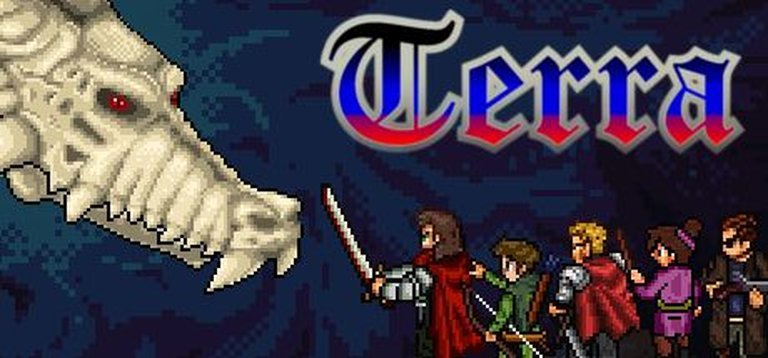
In ‘Terra’, players are thrust into a fantasy world born from the dreams of two slumbering titans, Arun and Shara, whose forms became the continents of the same name. The titans’ divine dreams birthed twelve godlike beings and mortal races like Elves, Humans, and Amani, who later waged wars fueled by divine rivalries. Now, the surviving mortal races must unite against the Argons—a metallic invasion from the Underworld—to save their world from annihilation. The game features a turn-based RPG system with a top-down perspective, exploring themes of unity and survival in a richly imagined setting.
Where to Buy Terra
PC
Terra Free Download
Terra Reviews & Reception
opinionatedgamers.com : Terra has much of Fauna’s gameplay DNA, but instead of focusing on animals, Terra looks at geography and landmarks.
metacritic.com (74/100): Terra Memoria blends JRPG turn-based gameplay with farming simulation elements, featuring a visually stunning pixel art style mixed with 3D backgrounds.
Terra: Review
Introduction
In the constellation of MMORPGs that have shaped the online gaming landscape, TERA: The Exiled Realm of Arborea (2011) — colloquially known as Terra — stands as a bold experiment in real-time combat and mythic world-building. Emerging from the Korean studio Bluehole (now Krafton) amidst legal turbulence and technical ambition, TERA carved a niche as a visually sumptuous, action-forward MMO that dared to defy tab-targeting conventions. Its legacy remains contentious: a meteoric rise to 28 million players globally, followed by a quiet sunset for its PC version in 2022. This review posits that TERA, despite flawed systems and narrative unevenness, fundamentally reshaped combat design in MMOs and birthed a cosmogony as audacious as its gameplay.
Development History & Context
TERA’s origins are steeped in industry drama. Conceived by Bluehole Studio — staffed by ex-Lineage III developers embroiled in a trade-secret lawsuit with NCsoft — the game was built on repurposed code intended for Lineage III. This fraught genesis birthed a title unshackled from tradition, leveraging Unreal Engine 3 to craft a sprawling, seamless world rendered with painterly detail. Released in South Korea in 2011 and western markets in 2012, TERA debuted as a subscription-based MMO during an era dominated by World of Warcraft’s hegemony.
The 2013 pivot to free-to-play (TERA: Rising) proved transformative. Shedding paywalls without segmenting content, TERA adopted a “freemium” model bolstered by cosmetic microtransactions and “Elite” status perks. This shift catalyzed its global appeal, culminating in 25 million players by 2017 and console ports in 2018. Yet, Bluehole’s relentless output — expansions like Fate of Arun (2014) and The Exiled Saga (2019) — strained development coherence, foreshadowing the PC version’s 2022 shuttering (consoles endure).
Narrative & Thematic Deep Dive
TERA’s lore is a fever dream of titanic proportions. Two slumbering deities, Arun (order) and Shara (chaos), birth continents from their dormant forms, while their dreams spawn warring gods and mortal races: High Elves, Castanic demon-kin, hulking Amani, and the enigmatic Elin (anthropomorphic children with unsettlingly sexualized designs in Korean releases). The mortal races unite under the Valkyon Federation to repel the Argons, biomechanical invaders terraforming the world into a metallic wasteland.
The narrative oscillates between grandiose and disjointed. Early zones (Island of Dawn, Southern Arun) unfold as factional struggles against cultists and corrupted wildlife, while later expansions (Northern Shara, Baldera) deepen the Argon threat. Themes of divine abandonment, environmental desecration, and colonial hubris resonate — the High Elves’ draining of Allemantheia’s surroundings mirrors real-world resource exploitation. Yet, storytelling falters in pacing and tonal inconsistency. The abrupt shift to darker arcs (e.g., Reapers’ grim origin) clashes with whimsical elements like Popori tail-wagging animations. Characters like Elleon, the stoic prefect, evoke pathos, but most NPCs serve as quest dispensers in a world where lore is often relegated to codex entries.
Gameplay Mechanics & Systems
TERA’s revolutionary “True Action Combat” remains its magnum opus. Ditching tab-targeting for a hybrid third-person action RPG system, battles demand precise aiming (crosshair reticle), active dodging, and skill-chain combos. Classes bifurcate into kinetic archetypes:
- Lancers: Jousting lance-wielders who tank via timed blocks and aggro management.
- Berserkers: Slow, colossal axes requiring charged swings yet offering devastating AoE.
- Sorcerers: Glass cannons hurling elemental orbs with risk/reward spell delays.
- Reapers (Elin-only): Dual-scythe assassins with acrobatic mobility, added post-launch.
Combat’s brilliance lies in BAMs (Big Ass Monsters), towering bosses requiring coordinated positioning and interrupt mechanics. A skilled party dancing around a 30-foot Cyclops remains TERA’s zenith. Yet, imbalance plagued the meta — Gunners and Brawlers trivialized content with DPS-tank hybrids, while Mystics languished as underpowered healers.
The Elin/Gunner paradox epitomizes TERA’s tonal dissonance: diminutive, childlike characters wielding artillery-sized “Arcannons,” their combat animations juxtaposing lethal efficiency with absurdity. Non-combat systems fared worse: crafting (Production Points) felt obligatory, housing lacked depth, and PvP (Nexus Wars) cribbed Rift’s formula without novelty.
World-Building, Art & Sound
TERA’s world is a synesthetic marvel. Southern Arun’s Mistmoor rainforests teem with bioluminescent flora, while Northern Shara’s terraformed wastes evoke Shadow of the Colossus-esque desolation. The art direction marries anime aesthetics (Elin’s oversized eyes) with Baroque architecture (Velika’s crystalline spires), though controversial armor designs — Castanic females in “Chainmail Bikinis” — drew criticism for gratuitous sexualization.
The soundtrack, helmed by Inon Zur (Fallout series) and Cris Velasco (God of War), swells with operatic leitmotifs for each race, though field tracks over-rely on serene woodwinds. Environmental audio shines: howling winds in Essenia’s tundras, metallic echoes in Argon citadels, and Popori villages buzzing with ambient critter chatter.
Reception & Legacy
TERA garnered mixed-to-positive reviews (Metacritic: 77/100 PC), lauded for combat innovation but criticized for grindy quests and undercooked systems. Post-F2P, its population soared — yet retention wavered as Korean-MMO tropes (daily chores, RNG gear upgrades) alienated casual players. Legally, Bluehole’s victory against NCsoft in 2012 cemented its independence but cast a pall over its IP origins.
TERA’s legacy endures in three realms:
1. Combat Evolution: It presaged action-MMOs like Black Desert and New World.
2. Aesthetic Template: Its fusion of anime and Western fantasy influenced Genshin Impact’s art.
3. Cultural Contradictions: The Elin debate foreshadowed conversations about lolicon in gaming.
While the PC version’s demise signaled corporate fatigue, private servers and the active console community attest to its enduring appeal.
Conclusion
TERA is a study in contrasts: a game of staggering beauty and mechanical ingenuity hamstrung by tonal whiplash and dated MMO tropes. Its combat system remains a watershed moment in the genre, and its lore — though fragmented — conjures a mythos worthy of classical epics. For all its flaws, TERA dared to reimagine how MMOs feel, trading passive play for visceral engagement. It earns its place not as a flawless gem, but as a comet that blazed across the MMO firmament — brief, brilliant, and impossible to ignore.
Final Verdict: A flawed yet foundational pillar of action-MMO design, TERA belongs in the pantheon of influential online worlds — an exiled realm worth remembering.