
- Release Year: 2012
- Platforms: Linux, Macintosh, Windows
- Publisher: Artifex Mundi sp. z o.o., Big Fish Games, Inc
- Developer: House of Fables sp.j., The, World-LooM Games sp. z o.o.
- Genre: Puzzle
- Perspective: 1st-person
- Game Mode: Single-player
- Gameplay: Hidden object, Inventory-based puzzles, Point and select, Puzzle solving
- Setting: Fantasy
- Average Score: 80/100
Description
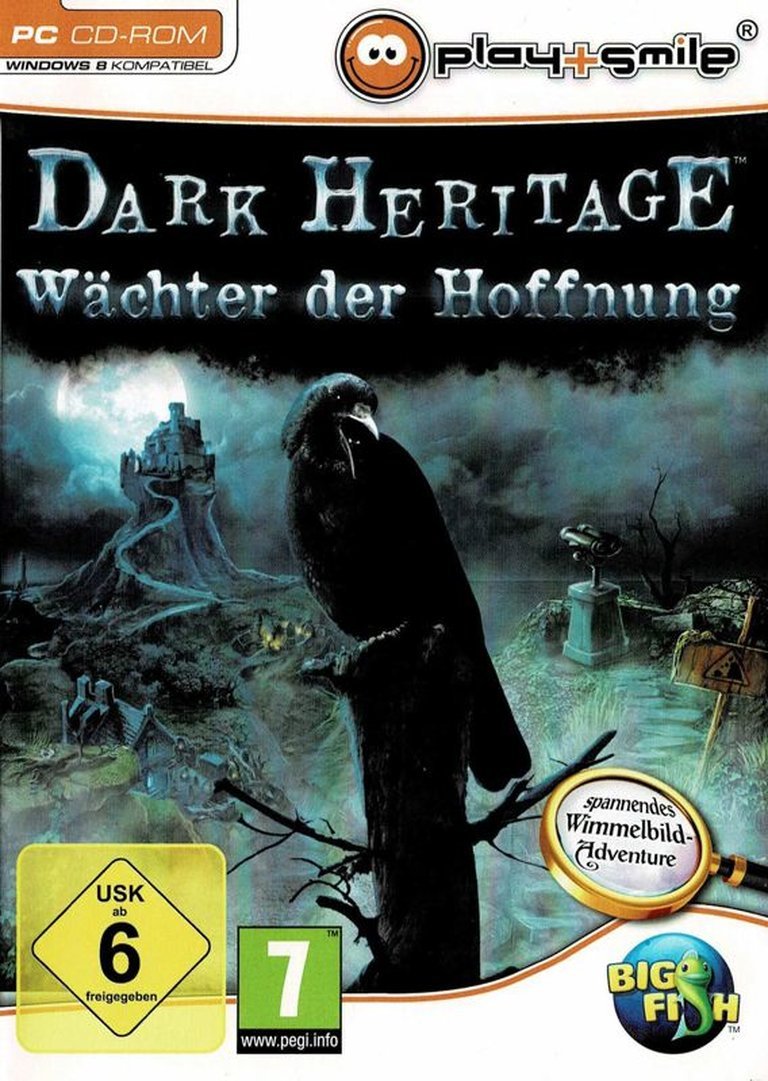
Dark Heritage: Guardians of Hope is a hidden object adventure game where players are summoned to the mysterious Castle Rock island to investigate the disappearance of a philosopher’s stone and its guardians. As shadowy forces threaten annihilation, players solve puzzles, search environments for hidden objects, and unravel clues in a race to recover the artifact. The game features fixed-screen exploration, a hint system, and collectible scrolls revealing the island’s dark history.
Gameplay Videos
Where to Buy Dark Heritage: Guardians of Hope
PC
Dark Heritage: Guardians of Hope Cracks & Fixes
Dark Heritage: Guardians of Hope Guides & Walkthroughs
Dark Heritage: Guardians of Hope: Review
In the sprawling landscape of hidden object games, few titles stand out as uniquely as Dark Heritage: Guardians of Hope. Developed by World-LooM Games and published by Artifex Mundi, this game is a hidden gem that combines intricate puzzles, a rich narrative, and a haunting atmosphere. Released in July 2012, Dark Heritage: Guardians of Hope has carved out a niche for itself in the casual gaming community, offering an experience that is both challenging and engaging. This review will delve into the game’s development history, narrative depth, gameplay mechanics, world-building, and its enduring legacy.
Development History & Context
Studio and Creators’ Vision
World-LooM Games, a Polish developer known for its innovative approach to casual gaming, took the helm for Dark Heritage: Guardians of Hope. The studio’s vision was to create a game that blended the best elements of hidden object puzzles with a compelling narrative and a touch of the supernatural. The game’s director, Adam Robaszyński-Janiec, and lead artist, Paulina Sajniak, worked tirelessly to bring this vision to life, ensuring that every aspect of the game, from its visual style to its intricate puzzles, aligned with their creative goals.
Technological Constraints and Gaming Landscape
Released in an era when hidden object games were gaining popularity, Dark Heritage: Guardians of Hope faced stiff competition from other titles in the genre. However, World-LooM Games leveraged the Spark Casual Engine to create a game that stood out. The engine allowed for the integration of live-action cutscenes, adding a layer of realism that was relatively rare in the genre at the time. This technological choice was a bold move, setting the game apart from its contemporaries and providing players with a unique visual experience.
Narrative & Thematic Deep Dive
Plot and Characters
The narrative of Dark Heritage: Guardians of Hope is centered around the protagonist, a former student of Professor Gordon Child, who is summoned to the mysterious island of Cannon Rock. The island, home to the ancient Order of the Rose, is shrouded in mystery and danger. The protagonist’s mission is to uncover the secrets of the philosopher’s stone, a powerful artifact sought by both benevolent and malevolent forces.
The game’s characters are well-developed, each with their own unique backstories and motivations. Professor Child, the mentor figure, is a pivotal character whose disappearance sets the plot in motion. The protagonist, though largely silent, is relatable and resourceful, making her an effective avatar for the player. The antagonist, a shadowy figure known as the Chosen One, adds a layer of intrigue and tension to the story.
Dialogue and Themes
The dialogue in Dark Heritage: Guardians of Hope is concise yet impactful, effectively conveying the game’s themes of mystery, betrayal, and redemption. The themes are woven into the narrative seamlessly, with the protagonist’s journey serving as a metaphor for self-discovery and the struggle between good and evil. The game’s exploration of occult themes, particularly the Order of the Rose and the philosopher’s stone, adds depth to the story, making it more than just a simple hidden object game.
Gameplay Mechanics & Systems
Core Gameplay Loops
The core gameplay of Dark Heritage: Guardians of Hope revolves around hidden object scenes and puzzles. Players are tasked with finding hidden objects within various environments, each object serving a purpose in the game’s progression. The puzzles range from simple to complex, requiring players to use their wit and observation skills to solve them. The game’s journal, which tracks codes and clues, is an essential tool for players, helping them keep track of important information.
Combat and Character Progression
Unlike traditional adventure games, Dark Heritage: Guardians of Hope does not feature combat. Instead, the game focuses on puzzle-solving and exploration. Character progression is minimal, with the protagonist’s abilities remaining largely static throughout the game. However, the sense of accomplishment that comes from solving puzzles and uncovering secrets serves as a form of progression, keeping players engaged and motivated.
User Interface
The user interface of Dark Heritage: Guardians of Hope is intuitive and user-friendly. The point-and-click controls are responsive, allowing players to interact with the game world seamlessly. The inventory system is well-designed, with items clearly labeled and easily accessible. The hint system, though useful, must be used sparingly, adding a layer of challenge to the game.
Innovative and Flawed Systems
One of the game’s innovative features is the integration of live-action cutscenes. These cutscenes, while adding a layer of realism, can sometimes feel out of place, detracting from the game’s overall cohesion. Additionally, the game’s reliance on hidden object puzzles can become repetitive, with some players finding the gameplay loop to be too formulaic.
World-Building, Art & Sound
Setting and Atmosphere
The setting of Dark Heritage: Guardians of Hope is the island of Cannon Rock, a desolate and mysterious location steeped in history and intrigue. The island’s atmosphere is dark and foreboding, with a sense of impending danger lurking around every corner. The game’s use of color, particularly the muted tones and shadows, enhances this atmosphere, creating a sense of unease and tension.
Visual Direction
The visual direction of Dark Heritage: Guardians of Hope is a blend of hand-drawn backgrounds and live-action cutscenes. The hand-drawn backgrounds are detailed and immersive, providing a rich and engaging environment for players to explore. The live-action cutscenes, while innovative, can sometimes feel disjointed, detracting from the game’s overall visual cohesion.
Sound Design
The sound design of Dark Heritage: Guardians of Hope is top-notch, with a haunting soundtrack that complements the game’s dark and mysterious atmosphere. The voice acting is professional, with each character’s dialogue delivered with conviction and emotion. The sound effects are well-integrated, adding to the game’s immersive experience.
Reception & Legacy
Critical and Commercial Reception
Upon its release, Dark Heritage: Guardians of Hope received mixed reviews. Critics praised the game’s innovative use of live-action cutscenes and its rich narrative, but some found the gameplay to be too formulaic and repetitive. Commercially, the game was a modest success, selling well within the casual gaming community. The Collector’s Edition, which included additional content and a strategy guide, was particularly well-received.
Evolution of Reputation
Over the years, Dark Heritage: Guardians of Hope has gained a cult following among fans of hidden object games. Its unique blend of storytelling and puzzle-solving has earned it a place in the hearts of many players, who appreciate its depth and complexity. The game’s legacy continues to be felt in the genre, with many developers citing it as an influence on their own work.
Influence on Subsequent Games and the Industry
Dark Heritage: Guardians of Hope has had a significant impact on the hidden object genre, inspiring other developers to experiment with live-action cutscenes and rich narratives. The game’s success has paved the way for other titles in the genre, demonstrating that hidden object games can be more than just simple puzzles. The game’s influence can be seen in subsequent titles, such as Mind Snares: Alice’s Journey and Eventide: Slavic Fable, which share similar themes and gameplay mechanics.
Conclusion
Dark Heritage: Guardians of Hope is a hidden object game that stands out for its rich narrative, innovative use of live-action cutscenes, and immersive world-building. While it may not be perfect, with some repetitive gameplay loops and disjointed visuals, it remains a testament to the potential of the genre. The game’s legacy continues to be felt, with its influence evident in subsequent titles and its enduring popularity among fans. For those seeking a challenging and engaging hidden object experience, Dark Heritage: Guardians of Hope is a must-play. Its place in video game history is secure, and its impact on the industry is undeniable.