
- Release Year: 2010
- Platforms: Android, Windows
- Publisher: DotEmu SAS
- Developer: Coktel Vision
- Genre: Adventure, Compilation, Puzzle
- Perspective: Side view
- Game Mode: Single-player
- Gameplay: Point and select
- Setting: Fantasy
Description
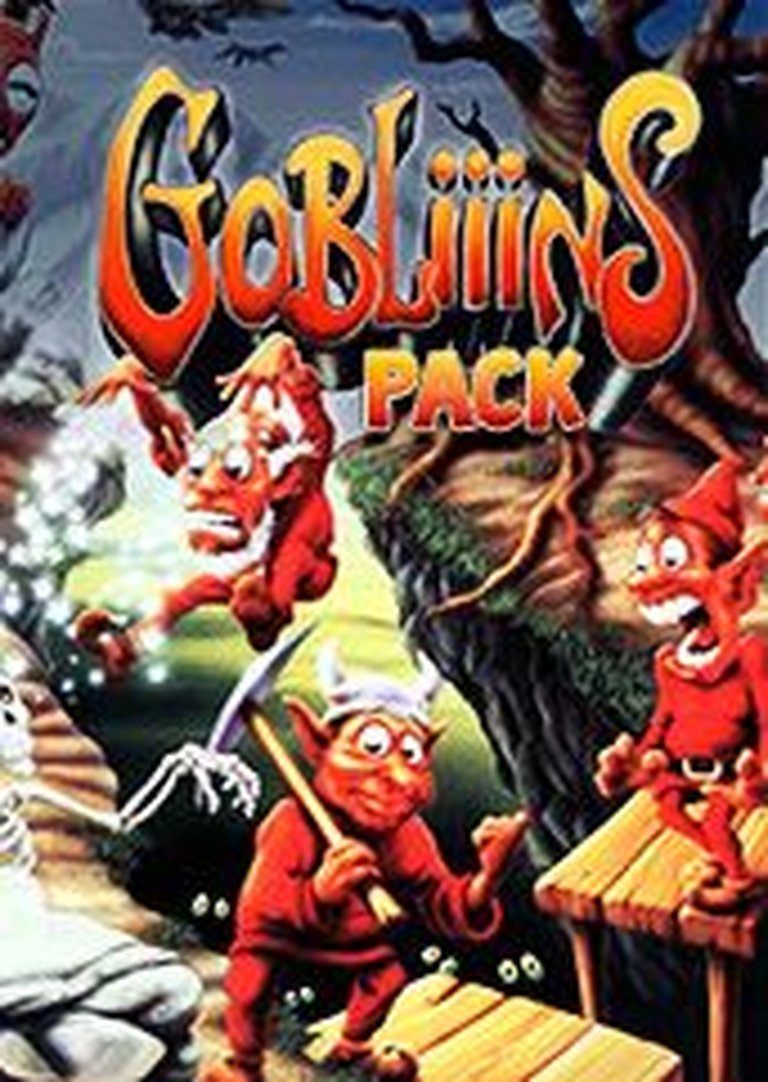
Gobliiins Pack is a digital compilation trilogy featuring three whimsical puzzle-adventure games: Gobliiins (1991), Gobliins 2 (1992), and Goblins Quest 3 (1993). Set in a humorous fantasy world, players control quirky goblins, each with unique abilities, to solve intricate puzzles across screen-based levels. The series blends point-and-click adventure mechanics with creative problem-solving, requiring players to switch between characters and experiment with interactions to progress. Known for its charming art style and playful tone, the trilogy offers a nostalgic challenge for fans of classic puzzle games.
Where to Buy Gobliiins Pack
PC
Gobliiins Pack Cheats & Codes
Gobliiins – PC
Enter the passwords to jump to the indicated stage.
| Code | Effect |
|---|---|
| VQVQFDE | Level 02 |
| ICIGCAA | Level 03 |
| ECPQPCC | Level 04 |
| FTWKFEN | Level 05 |
| HQWFTFW | Level 06 |
| DWNDGBW | Level 07 |
| JCJCJHM | Level 08 |
| ICVGCGT | Level 09 |
| LQPCUJV | Level 10 |
| HNWVGKB | Level 11 |
| FTQKVLE | Level 12 |
| DCPLQMH | Level 13 |
| EWDGPNL | Level 14 |
| TCNGTOV | Level 15 |
| TCVQRPM | Level 16 |
| IQDNKQO | Level 17 |
| CDEPURJ | Level 18 |
| NGOGKSP | Level 19 |
| NNGWTTO | Level 20 |
| LGWFGUS | Level 21 |
| TQNGFVC | Level 22 |
Gobliiins – Amiga
Enter the passwords to jump to the indicated stage.
| Code | Effect |
|---|---|
| VQVQFDE | Level 02 |
| ICIGCAA | Level 03 |
| ECPQPCC | Level 04 |
| FTWKFEN | Level 05 |
| HQWFTFW | Level 06 |
| DWNDGBW | Level 07 |
| JCJCJHM | Level 08 |
| ICVGCGT | Level 09 |
| LQPCUJV | Level 10 |
| HNWVGKB | Level 11 |
| FTQKVLE | Level 12 |
| DCPLQMH | Level 13 |
| EWDGPNL | Level 14 |
| TCNGTOV | Level 15 |
| TCVQRPM | Level 16 |
| IQDNKQO | Level 17 |
| KKKPURE | Level 18 |
| NGOGKSP | Level 19 |
| NNGWTTO | Level 20 |
| LGWFGUS | Level 21 |
| TQNGFVC | Level 22 |
Gobliiins Pack: A Fractured Fairy Tale Through Time – An Exhaustive Retrospective
Introduction: Of Mad Kings and Mischievous Goblins
Few franchises encapsulate the madcap spirit of early ’90s avant-garde adventure gaming like Gobliiins, a series where logic takes a backseat to surreal slapstick, and failure is as hilarious as success. The Gobliiins Pack (2010), a digital compilation bundling the original Gobliiins (1991), Gobliins 2: The Prince Buffoon (1992), and Goblins Quest 3 (1993) (rebranded by Sierra to ride the “Quest” dynasty wave), resurrects a trilogy that defied conventions with its chaotic charisma. As a historian sifting through gaming’s oddities, this collection isn’t merely a nostalgia trip—it’s a time capsule of Coktel Vision’s anarchic design philosophy, a trilogy that gleefully weaponized absurdity against the era’s puzzle-adventure orthodoxy. This review posits that while the Pack faithfully preserves a cult classic’s legacy, its edges remain jagged, a testament to both its ingenuity and the medium’s growing pains.
Development History & Context: Rebellion in Pixel Form
Studio Visionaries and Technological Shackles
Born from Coktel Vision—a French studio helmed by Muriel Tramis (a pioneer known for socio-politically charged narratives like Freedom: Rebels in the Darkness) and artist Pierre Gilhodes—the Gobliiins series was a deliberate pivot toward accessible comedy. Unlike Tramis’ heavier work, Gobliiins embraced the absurd, with Gilhodes’ art evoking a deranged storybook (later echoed in Woodruff and the Schnibble of Azimuth). Developed during the twilight of 16-bit systems (Amiga, Atari ST, DOS), the games wrestled with extreme memory constraints. Each screen was a self-contained diorama, a necessity born from floppy disk limitations. This led to the series’ signature “one-screen puzzle” design—a virtue made from necessity.
The Sierra Paradox
By 1993, Sierra On-Line’s acquisition reshaped Goblins Quest 3’s identity, slapping a “Quest” label to align with King’s Quest and Space Quest. This ironic, given Sierra’s trademark linearity clashed with Coktel’s experimental spirit. While Sierra’s influence brought VGA visuals and CD-ROM voice acting (replacing the beloved “goblinish” gibberish with cringe-worthy dubs), it couldn’t tame the series’ anarchic soul. The 2010 Pack, published by DotEmu, strips these later accretions, favoring ScummVM-powered floppy versions—a purist’s choice, but one that highlights how fidelity to original tech can alienate modern audiences.
Narrative & Thematic Deep Dive: Absurdism as Art Form
Gobliiins (1991): Treasonous Puppetry
The inaugural odyssey follows three goblins—Asgard/Bobo (the brawny puncher), Ignatius/Hooter (the calamitous magician), and Oups/Dwayne (the item-hoarding technician)—on a quest to cure their king’s insanity. The narrative unravels as a Faustian farce: the wizard Niak manipulates the trio into collecting cursed artifacts, culminating in a voodoo-doll showdown. Thematic depth emerges not from plot complexity but from tragicomic futility, echoing Sartre via slapstick. Each of the 22 screens is a vignette—a collapsing bridge, a drunken warlord—united by a critique of blind obedience.
Gobliins 2 (1992): Buffoonery as Bureaucracy
Abandoning the health meter, Gobliins 2 sharpens its satire, pairing Fingus (neurasthenic intellectual) and Winkle (dim brute) to rescue the kidnapped Prince Buffoon from the sorcerer Amoniak. The dynamic evolves into a bureaucratic nightmare: solving puzzles requires tax payments, arbitrary trials, and red-tape navigation. Tramis’ subtext—critiquing institutional absurdity—pokes through, but the game’s genius lies in how co-dependent mechanics mirror its odd-couple duo. Fingus’ intelligence falters without Winkle’s strength, a metaphor for collaborative folly.
Goblins Quest 3 (1993): A Journalist’s Werewolf Blues
The Sierra-ified finale stars Blount, a goblin journalist embroiled in royal intrigue between King Bodd and Queen Xina. Bitten by a wolf, Blount grapples with lycanthropy while uncovering his identity as the lost prince from Gobliins 2. Themes of self-discovery clash against Sierra’s penchant for verb-driven plotting, resulting in tonal whiplash—a noir-tinged mystery drowning in fetch quests. Still, Tramis sneaks in meta-commentary: Blount’s newspaper headlines mock the very genre tropes the game reluctantly embraces.
Gameplay Mechanics & Systems: Controlled Chaos
Core Loop: Trial by (Laughter) Error
The trilogy’s DNA lies in multi-character puzzle-solving, where success often hinges on intentional failures:
– Gobliiins: A shared health bar punishes missteps—poke a sleeping dragon? Lose a life. Yet, the game delights in wrong answers (Ignatius’ magic backfires spectacularly).
– Gobliins 2: Co-op commands synchronize actions (e.g., timing Winkle’s hammer swing with Fingus’ lever pull).
– Goblins Quest 3: Solo control shifts focus to inventory puzzles but bogs down with clunky scrolling and unskippable failure animations (critics panned a 10-second sequence of Blount falling every missed jump).
UI/UX: Clunky Charm
The point-and-click interface is functional but dated. Early versions lacked save systems (Gobliiins used per-level passwords), forcing repetition. The Pack’s ScummVM port adds QoL tweaks, but quirks remain—dragging items feels sluggish, and puzzle logic often veers into moon logic territory (e.g., Goblins 3’s infamous “turn a bird into bread” sequence).
World-Building, Art & Sound: A Deranged Canvas
Visual Identity: Gilhodes’ Grotesque Elegance
Pierre Gilhodes’ art is the series’ triumph—a grungy, densely packed style blending Maurice Sendak with Monty Python. Each screen teems with visual gags: sentient toilets, gleefully morbid traps (Gobliiins’ guillotine mousetrap), and exaggerated animations (Oups’ panicked flailing). The shift to VGA in Goblins 3 adds vibrancy but loses the floppy versions’ eerie, low-res charm.
Soundscapes: Gibberish vs. Grandiosity
Original releases used untranslated “goblinish” mumbles, enhancing the absurdity. CD versions replaced this with hammy voice acting, widely panned by fans. Music, composed by Frédéric Motte, oscillates between carnivalesque accents (Gobliiins 2’s tavern jig) and forgettable filler. The Pack wisely defaults to floppy audio, preserving the series’ surreal aura.
Reception & Legacy: From Cult Obscurity to Relic
1990s Critics: Praise and Perplexity
Critics lauded the trilogy’s creativity but skewered its difficulty:
– Gobliiins scored 70% in Powerplay, with Computer Gaming World noting, “Puzzle lovers are guaranteed bizarre delight.”
– Gobliins 2 earned acclaim (80% avg.), praised for ditching the health system.
– Goblins Quest 3 split critics—CU Amiga lambasted its “tedious” design (53%), while PC Gamer crowned it 1994’s “Best Puzzle Game.”
Industry Ripples
The series’ multi-character design influenced The Lost Vikings and Trine. Its offbeat humor presaged Day of the Tentacle and Sam & Max. Yet, later entries (Gobliiins 4 in 2009, Gobliiins 5 in 2023) stumbled, lacking the originals’ spark.
The Pack’s Mixed Resurrection
The 2010 compilation made the trilogy accessible but unrefined. GOG.com reviews (4.4/5) celebrate its nostalgia value but warn of archaic friction. It stands as a museum piece—valuable, but demanding patience.
Conclusion: A King’s Madness Preserved
The Gobliiins Pack is a paradoxical artifact: a lovingly preserved relic that refuses to sand down its rough edges. Its puzzles—equal parts brilliant and baffling—remain a litmus test for tolerance towards ’90s adventure game idiosyncrasy. For historians, it’s indispensable, capturing Coktel Vision’s flair for anarchic storytelling. For modern players, it’s akin to deciphering a surrealist painting—exasperating, enlightening, and utterly unique. In the pantheon of genre greats, Gobliiins is neither king nor jester, but a court magician whose tricks still astonish, even when they fizzle.
Final Verdict:
A flawed yet essential artifact for adventure gaming archaeologists. Newcomers should tread lightly; acolytes will find their madness rewarded. ★★★☆☆ (3/5 – “Worthwhile, warts and all”).