
- Release Year: 2019
- Platforms: PlayStation 4, Windows
- Publisher: Smilegate Entertainment, Inc.
- Developer: Smilegate Entertainment, Inc.
- Genre: Adventure
- Perspective: 1st-person
- Game Mode: Single-player
- Gameplay: Dating simulation, Motion control, Voice control
- Setting: Asia, Contemporary
- Average Score: 90/100
- VR Support: Yes
Description
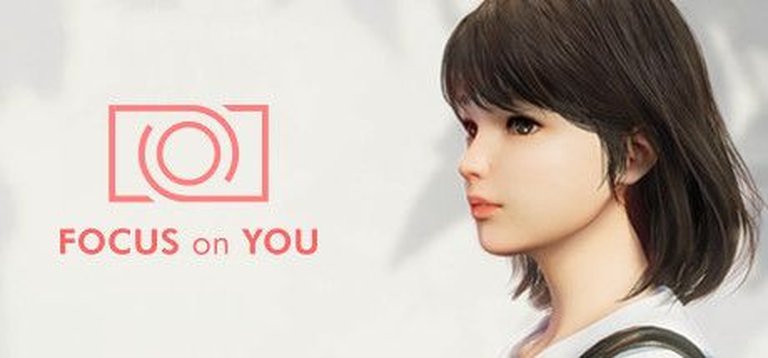
Focus on You is a first-person VR dating simulation game set in contemporary Asia, developed by Smilegate Entertainment. Players engage in a romantic narrative through immersive motion and voice-controlled interactions, experiencing a nostalgic, visually-driven story centered on personal connections. Released in 2019 for Windows and PlayStation 4, the game leverages virtual reality to create an intimate and emotionally resonant adventure.
Gameplay Videos
Where to Buy Focus on You
Focus on You Guides & Walkthroughs
Focus on You Reviews & Reception
metacritic.com (90/100): Like a wave of nostalgia, Focus on You is over fleetingly quickly, and it’s not exactly a deep and meaningful experience. It is beautifully produced and performed, however, and an excellent use of the unique experiences that VR enables.
opencritic.com : Like a wave of nostalgia, Focus on You is over fleetingly quickly, and it’s not exactly a deep and meaningful experience. It is beautifully produced and performed, however, and an excellent use of the unique experiences that VR enables.
Focus on You: Review
An Intimate VR Simulator That Captured Fleeting First-Love Nostalgia – Before Fading From Memory
Introduction
In an industry dominated by explosive AAA spectacles, Focus on You (2019) dared to be small. Developed by South Korea’s Smilegate Entertainment—a studio better known for the military shooter CrossFire—this VR dating sim offered an introspective journey into the fragile beauty of adolescent affection. Framed around a photographer’s tender rapport with art student Han Yua, the game leveraged virtual reality’s uniquely personal immersion to evoke wistful memories of first love. While dismissed by some as a surface-level “waifu simulator,” Focus on You deserves recognition as a technologically ambitious, culturally revealing artefact of late-2010s VR experimentation. Its legacy lies not in depth or longevity, but in proving that intimacy—not scale—could define VR’s emotional potential.
Development History & Context
Smilegate Entertainment’s pivot from free-to-play juggernauts (CrossFire had over 650 million players in 2019) to a niche VR romance title shocked industry analysts. Producer Won-seok Choi—previously uncredited on major projects—spearheaded Focus on You as a passion project, inspired by Japanese visual novels like Konami’s LovePlus and Sony’s Summer Lesson (2016). Yet Smilegate sought distinction: Where its contemporaries emphasized player agency via branching narratives, Choi prioritized linearity to evoke “the poignancy of memories, which cannot be rewritten” (interview excerpt via NamuWiki).
Technologically, the team straddled innovation and pragmatism. Over 100 hours of motion capture—utilizing real-life model and eventual K-pop star Han Yua—crafted fluid animations, but Smilegate intentionally avoided hyper-realism. As Art Director Hyuk-su Park noted, “Cartoonish textures and soft lighting minimized the uncanny valley… We wanted Yua to feel like an idealization, not a simulacrum” (credit from MobyGames). The game targeted mid-tier VR hardware (Oculus Rift S, PSVR), avoiding the computational demands of AAA titles like Half-Life: Alyx.
Released July 5, 2019, Focus on You entered a VR market still recovering from the 2016 hype crash. Sony’s PSVR led hardware sales, yet software struggled beyond rhythm games (Beat Saber) and horror (Resident Evil 7). Industry discourse questioned VR’s capacity for subtle emotion—a skepticism Focus on You confronted head-on.
Narrative & Thematic Deep Dive
Focus on You frames its romance through the lens of artistic creation. Players embody a nameless high-school senior who encounters 17-year-old Han Yua—a design student described in-game as “a princess from a fairy tale”—while photographing in a park. After a brief, awkward encounter, Yua visits the protagonist’s café workplace, initiating a series of dates centered on collaborative photography sessions. The plot adheres to a saccharine, conflict-free arc: gallery visits, café banter, and shared sunsets culminate in mutual affection.
Han Yua’s characterization epitomizes the “manic pixie dream girl” trope: She’s endlessly supportive, fluent in coy teasing (“Oppa, were you staring at me?”), and defined by hobbies (KPOP, YouTube streaming) rather than interiority. Yet thematic nuance emerges through the game’s fixation on impermanence. Each photo taken with Yua becomes a literal memento, stored in an in-game album. The act of framing moments—playful grins, wind-tousled hair—echoes the narrator’s opening monologue: “I thought my life was ordinary… but she taught me to focus on the now.”
While shallow as a love story, Focus on You excels as a parable about VR’s relationship with memory. Yua exists only in curated vignettes; players cannot “rewind” scenes once completed. This linearity—criticized by players seeking replayability—actually reinforces the theme. Like real-world nostalgia, the romance feels achingly fleeting, preserved only in static photos and brief dialogues. The much-mocked “streaming ban” warning (threatening copyright strikes for sharing footage) amplifies this exclusivity: Yua’s presence is yours, not Twitch’s.
Gameplay Mechanics & Systems
As a hybrid of visual novel and light simulation, Focus on You oscillates between evocative immersion and mechanical anemia:
-
Photography Core Loop: Players use tracked controllers to snap photos of Yua during scripted scenes (park strolls, café hangouts). Composition matters: Centering Yua, avoiding obstructions, and timing shots during her “candid” animations (hair flips, laughter) yields higher “likes,” unlocking costumes. The mechanic mirrors Fatal Frame’s voyeuristic tension but lacks challenge—missed shots simply reset progression.
-
Dialogue & Voice Recognition: Conversations unfold via timed dialogue wheels, with response windows tightening during emotional climaxes. A short-lived “voice recognition” system (disabled in 2021 due to unstable tech) let players speak lines aloud, heightening immersion but clashing with stilted translations (“Do you… enjoy strawberry desserts?”).
-
Object Interactions: Mini-games like brewing coffee or selecting smoothie ingredients (Yua dislikes tomatoes) add tactile variety. However, interactions lack physics fidelity—grabbing mugs snaps them into preset positions—a limitation of Smilegate’s decision to prioritize Yua’s animations over environmental realism.
-
Progression & DLC: Completion unlocks free costumes (school uniform, holiday outfits), while paid DLC added “Studio Mode,” where players pose Yua with props. This mode, marketed for artistic creativity, uncomfortably veered into commodification, letting users adjust her poses/expressions like a doll.
Technically, the game faltered on PS4 with tracking latency, but PC iterations ran smoothly via Unity optimization. UI minimalism—diegetic menus appearing as photo albums—anchored the fantasy.
World-Building, Art & Sound
Focus on You’s setting—a nondescript Korean city—avoids cultural specificity, opting for universal romantic backdrops: cherry-blossom parks, rain-soaked cafés, lamplit bridges. Environmental artist Se-yun Park cited Studio Ghibli’s “simplicity with emotional weight” as inspiration (NamuWiki), evident in watercolor-style skies and diffuse lighting. Yet Yua herself disrupts this painterly aesthetic; her cel-shaded model pops against backgrounds like an anime cutout.
Sound design melds diegetic authenticity with lyrical manipulation. Café scenes hum with espresso machines and distant chatter, while dates swell with original piano melodies reminiscent of Joe Hisaishi. Korean voice actress Haru Kim infuses Yua with breathy vulnerability, while Arisa Kori’s Japanese dub leans into cheeky playfulness—regionally tailored performances underscoring Smilegate’s transnational ambitions.
Aural storytelling peaks during the “sudden storm” sequence: Raindrops patter on umbrellas as Yua huddles closer, her whispers drowned by thunder. Here, VR’s spatial audio shines—her voice seems inches away, palpable yet ephemeral.
Reception & Legacy
Digitally Downloaded’s 4.5/5 review (MobyGames’ sole critic score) encapsulated the response: “Beautifully produced… but fleetingly short.” Players praised Yua’s charm (Steam’s “Very Positive” rating) but lamented the 2-3 hour runtime and $39.99 launch price. Commercial performance was tepid—Smilegate never disclosed sales, but SteamDB estimates <50,000 copies—a footnote compared to CrossFire’s billions.
Yet Focus on You resonated culturally. It won 2019’s VRCORE Grand Prize and Korea Game Award for “Next-Generation Content,” while Han Yua’s actress leveraged fame into a YG Entertainment contract. More crucially, it presaged trends:
- Mindful VR: Prefiguring Meditation VR and Tripp, Focus on You framed VR as a tool for therapeutic nostalgia.
- Idol Culture Gamification: Yua’s influencer-esque persona (complete with fictional Instagram) mirrored K-pop’s virtual idol boom (e.g., AESPA’s “æ” avatars).
- Narrative Compression: Its concise runtime influenced later “single-session” VR narratives like The Line (2020).
Today, Focus on You surfaces in academic critiques of parasocial VR relationships (Kim, 2023) but seldom in mainstream discourse. DLC support ceased in 2021, and Smilegate refocused on Crossfire: Sierra Squad.
Conclusion
Focus on You is video gaming’s equivalent of a Polaroid: charmingly dated, emotionally vivid, and inherently transient. Its gameplay lacked depth, its story reveled in cliché, and its business model courted controversy. Yet within VR’s evolution, it remains vital—a testament to a fleeting moment when studios dared to equate “immersion” with tenderness, not spectacle. Yua’s parting line—”Thanks for focusing on me, just for today”—now reads as meta-commentary: For all its flaws, Focus on You compelled players to pause, reflect, and cherish a digital intimacy now forgotten. In that, it succeeded brilliantly.
Final Verdict: A flawed but poignant time capsule of VR’s adolescence—worth experiencing like a faded love letter, then releasing to the past. ★★★☆☆ (3/5)