
- Release Year: 2017
- Platforms: iPhone, Nintendo Switch, PlayStation 3, PlayStation 4, PlayStation 5, PS Vita, Windows Apps, Windows, Xbox One, Xbox Series
- Publisher: The Hyper Carries!
- Developer: The Hyper Carries!
- Genre: Action
- Perspective: Top-down
- Game Mode: Single-player
- Gameplay: Shooter
- Average Score: 82/100
Description
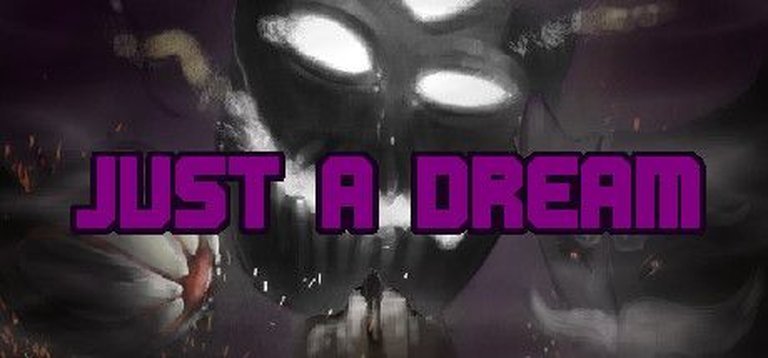
Just A Dream is a fast-paced top-down action game where players navigate through a nightmarish world filled with their deepest fears. The objective is to escape this dream realm by battling through levels populated with monstrous manifestations of anxiety, fear, and despair. Players can collect unique weapons and magical abilities to aid in their journey back to reality.
Just A Dream Patches & Updates
Just A Dream Guides & Walkthroughs
Just A Dream Reviews & Reception
steambase.io (82/100): Very Positive
store.steampowered.com (82/100): Very Positive
Just A Dream: A Fractured Odyssey Through the Subconscious
Introduction
Just A Dream (2017) is a game that defies easy categorization—a frenetic top-down shooter draped in the aesthetic of a surreal nightmare, a free-to-play indie experiment that weaponizes existential dread. Developed by the enigmatic collective The Hyper Carries!, this cult gem blends arcade-inspired chaos with psychological introspection, challenging players to confront their deepest fears through bullet-hell gameplay. While it lacks the polish of AAA titles, its unflinching commitment to its theme—and its willingness to grapple with anxiety as both narrative and mechanic—cements its legacy as a fascinating time capsule of late-2010s indie innovation.
Development History & Context
The Hyper Carries! and the Indie Surge
Emerging during the indie gold rush of the mid-2010s, Just A Dream was conceived by a small, scrappy team operating under the The Hyper Carries! banner—a studio name as ironic as it is earnest. Built using GameMaker Studio, the game leveraged the engine’s accessibility to craft a minimalist yet mechanically dense experience. Released on October 31, 2017, its Halloween launch was a deliberate nod to its haunted themes.
Technological Constraints as Creative Fuel
With system requirements demanding just a 1GHz processor and 1GB of RAM, Just A Dream prioritized accessibility over graphical fidelity. This limitation birthed its retro-inspired pixel art, a stylistic choice that amplified its surreal tone. The decision to lock the game at 60 FPS ensured consistency across even low-end hardware, a pragmatic move for a free-to-play title targeting a broad audience.
The 2017 Landscape
Arriving alongside titans like Hollow Knight and Cuphead, Just A Dream carved its niche by marrying roguelike randomization with psychological horror—a precursor to later titles like Loop Hero (2021). Its lack of monetization (a rarity in the free-to-play space) positioned it as a labor of love rather than a revenue vehicle.
Narrative & Thematic Deep Dive
A Descent into the Id
The premise is stark: You are trapped in a recursive nightmare, battling manifestations of Anxiety, Fear, and Despair across four procedurally generated biomes. There’s no traditional plot—only existential implication. The final bosses aren’t monsters but emotional states, rendered as towering, grotesque pixel-art abominations.
Minimalist Storytelling
Dialogue is sparse, relegated to taunts from boss characters (“You can’t outrun me” whispers Fear during a chase sequence). The narrative weight instead lies in environmental storytelling: fragmented landscapes filled with broken mirrors, shadowy corridors, and dissonant audio cues. It’s a narrative of absence, forcing players to project their own anxieties onto its blank canvas.
Themes of Mental Health
Just A Dream’s brilliance lies in its thematic cohesion. Weapons like the “Salt Shotgun” and “Assault King” parody hypermasculine power fantasies, while abilities such as “Panic Dash” and “Rationalize” reframe combat as a metaphor for coping mechanisms. The game’s finale—a confrontation with Despair, whose attacks slow time to a crawl—mirrors the paralyzing weight of depression.
Gameplay Mechanics & Systems
The Core Loop: Chaos as Meditation
The game’s top-down shooter foundation is deceptively simple: move, shoot, survive. Yet its “36 unique abilities” and “thousands of combinations” elevate it into a strategic playground. A run might pair a ricocheting “Anxiety Bullets” perk with a “Grounding Grenade” AoE attack, creating emergent synergies that reward experimentation.
Roguelike Randomization
Levels shift with each playthrough, though the four biomes (a crumbling city, a forest of jagged thorns, a labyrinthine hospital, and a void-like final arena) retain their thematic identity. Critics noted that while the procedural generation avoids repetition, it occasionally creates unbalanced room layouts—a flaw mitigated by the game’s brevity (30–45 minutes per run).
Boss Fights: Thematic Masterstrokes
Each biome culminates in a boss battle steeped in metaphor:
– Anxiety: A frenetic, screen-filling entity that spawns perpetual minions.
– Fear: A cloaked figure that phases in and out of invisibility.
– Despair: A slow, glacier-like behemoth that saps movement speed.
These fights are the game’s highlight, demanding mastery of both reflexes and loadouts.
Progression & Cosmetics
Unlockable abilities (e.g., “Nightmare Vision” for revealing hidden paths) provide long-term incentives, while cosmetics like “Dreamer’s Cape” cater to completionists. The lack of microtransactions keeps progression satisfyingly pure.
World-Building, Art & Sound
Pixelated Dread
The art style juxtaposes vibrant neon hues against oppressive darkness, evoking a nightmarish CRT glare. Enemy designs—twisted, half-formed humanoids—echo Silent Hill 2’s psychological grotesquery.
Soundscape of the Subconscious
Each biome features a unique musical theme: Anxiety’s stage thrums with erratic synth beats, while Despair’s arena drowns in ambient drones. Sound effects—a echoing gunshot here, a distorted whisper there—deepen the unease.
UI as Nightmare Diary
The HUD resembles a scribbled journal, with health represented as fraying ink lines. Even the pause menu feels intrusive, its flickering text implying instability.
Reception & Legacy
Critical Response
The game boasts a “Very Positive” Steam rating (82% of 79 reviews), with players praising its “addictive combat” and “unnerving atmosphere.” Detractors cited repetitive late-game encounters and a lack of narrative resolution. Notably, it failed to attract mainstream critic reviews—a testament to its obscurity.
Influence & Evolution
Just A Dream’s fusion of mental health themes and roguelike mechanics presaged later titles like Celeste (2018) and Hades (2020). Its approach to procedural storytelling also echoes in Inscryption (2021). While not a commercial phenomenon, it remains a cult favorite among indie connoisseurs.
Conclusion
Just A Dream is a game of contradictions: a free-to-play title with no exploitative hooks, a shooter that prioritizes introspection over pandemonium. Its粗糙 edges—repetitive elements, underbaked narrative—are outweighed by its audacious vision. For those willing to peer into its pixelated abyss, it offers a haunting meditation on fear, resilience, and the power of gameplay as metaphor. In the pantheon of indie experiments, Just A Dream is neither a masterpiece nor a misfire—it’s a lucid dream, fleeting yet unforgettable.
Final Verdict: A flawed but essential artifact of indie gaming’s psychological turn.