
- Release Year: 2019
- Platforms: Windows
- Publisher: Hero Blocks ApS
- Developer: Hero Blocks ApS
- Genre: Action
- Perspective: Behind view
- Gameplay: Shooter
- Setting: Fantasy, Futuristic, Sci-fi
- Average Score: 76/100
Description
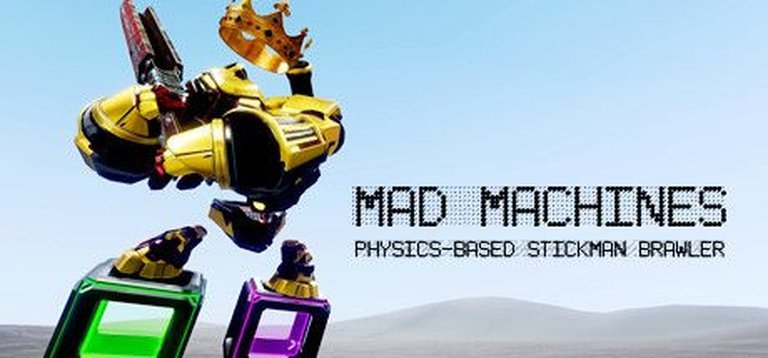
Mad Machines is a third-person physics-based shooter and brawler game set in a fantastical sci-fi world. Players control stickmen characters equipped with dynamic LEGO-like armor, engaging in fast-paced combat and strategic gameplay. The game has evolved through multiple phases, incorporating elements of IO gameplay and aiming to provide a unique and engaging experience for players.
Mad Machines: Review
Introduction
In the crowded arena of multiplayer brawlers, Mad Machines (2019) stands as a fascinating oddity—a game burdened by developmental turbulence yet buoyed by flashes of ingenuity. Developed by Danish studio Hero Blocks ApS, this physics-driven, third-person shooter-meets-io-game hybrid dared to innovate with its block-based health system and 24/7 persistent matches. While far from a commercial hit, Mad Machines offers a compelling case study in indie ambition, marrying chaotic combat with a quirky visual identity. This review argues that the game, though flawed and underappreciated, deserves recognition for its experimental mechanics and relentless, if uneven, creative spirit.
Development History & Context
A Studio’s Rocky Journey
Hero Blocks ApS, a small Danish team, embarked on Mad Machines with little industry experience but no shortage of ambition. As revealed in a candid 2019 Steam post by developer “Empress Raa,” the game endured five distinct phases over four years, each pivoting wildly in scope and design. Initially conceived as a mobile 2D fighter, it morphed into a PC-based physics brawler, then a “bat-ballgame” akin to Rocket League—before finally settling as an “io-brawler” hybrid. These shifts stemmed from technical struggles (notably backend networking issues) and financial precarity, forcing the team to strip back features to survive.
Released into a Competitive Landscape
Launching in late 2019, Mad Machines entered a market saturated with live-service titans like Fortnite and Apex Legends. Its $9.99 premium model—a rarity in the free-to-play-dominated multiplayer space—likely hampered its reach. Built in Unity, the game leveraged accessible tech, but Hero Blocks’ inexperience with netcode and matchmaking left lingering jank, particularly in its bot-filled servers. Despite these hurdles, the studio’s tenacity shines through, epitomizing the indie ethos of “ship now, refine later.”
Narrative & Thematic Deep Dive
Minimalist Storytelling, Maximalist Themes
Mad Machines foregoes traditional narrative, instead weaving its themes through gameplay and aesthetics. Players control stick-figure gladiators encased in modular LEGO-like armor, battling in abstract sci-fi arenas. The lack of lore is a missed opportunity, but the game’s central metaphor—blocks as health, ammo, and power—resonates. Losing armor pieces to attacks literalizes vulnerability, while scavenging fallen foes’ fragments evokes a Darwinian struggle for dominance.
The “Mad King” mode reinforces this theme: the top-ranked player dons a crown, gaining special abilities but painting a target on their back. This dynamic creates emergent narratives of rise-and-fall drama, where every match feels like a gladiatorial spectacle.
Gameplay Mechanics & Systems
A Frankenstein’s Monster of Ideas
At its core, Mad Machines is a mashup of influences: the chaotic physics of Gang Beasts, the vehicular combat of Twisted Metal, and the growth mechanics of Agar.io. Three character classes—balanced for speed, power, and versatility—clash in 10-player free-for-alls or team battles. Key systems include:
– Block-Based Health: Armor doubles as ammunition and currency. Damaged players shed blocks, which others collect to grow stronger.
– King of the Hill Meets Battle Royale: The “Mad King” leader constantly shifts, rewarding aggression and adaptation.
– RNG-Driven Chaos: Random weapon pickups (from lasers to explosives) ensure no two fights play alike.
Strengths and Stumbles
The movement system—featuring double jumps, jetpacks, and physics-driven dodges—is a highlight, enabling acrobatic skirmishes. However, hit detection and netcode inconsistencies frustrate, while the RNG loot can feel unfairly swingy. The 24/7 “endless” matches, though novel, often devolve into bot-filled slogs during off-peak hours.
World-Building, Art & Sound
Aesthetic Ambiguity
Mad Machines’ visual identity is both a strength and weakness. Its blocky, neon-tinted arenas and minimalist stick-figure designs ensure clarity amid chaos, but the lack of environmental storytelling leaves the world feeling sterile. The game’s mix of sci-fi and fantasy tropes—floating islands, industrial zones—hints at a broader universe never fleshed out.
Sound design is functional but forgettable. Weapons pack a satisfying crunch, and the OST’s electronic beats suit the frenetic pace, but neither leaves a lasting impression.
Reception & Legacy
A Niche Cult Classic
At launch, Mad Machines earned a “Mostly Positive” Steam rating (76/100), praised for its originality but criticized for jank and low player counts. Hero Blocks’ post-launch roadmap—promising new maps, weapons, and regions—went largely unrealized as the studio pivoted to salvage the project.
Though it never achieved mainstream success, the game influenced later indie hybrids like Stick Fight: The Game and Fall Guys, proving that experimental mechanics could thrive in the multiplayer space. Its block-based health system, in particular, remains a clever twist on traditional shooter tropes.
Conclusion
Mad Machines is a game of contradictions: brilliant in concept, uneven in execution; bursting with ideas yet restrained by resources. While its technical shortcomings and lack of narrative depth hold it back, the sheer audacity of its design—a Frankenstein blend of genres and mechanics—commands respect. For玩家 willing to overlook its rough edges, it offers chaotic, laughter-filled moments of brilliance. In the pantheon of indie curios, Mad Machines earns its place as a flawed but fascinating relic—a testament to what small teams can achieve, even when the odds are stacked against them.