
- Release Year: 1997
- Platforms: Windows
- Publisher: Martin Fierz
- Developer: Martin Fierz
- Genre: Board game, Checkers, Draughts, Strategy, Tactics
- Perspective: Top-down
- Game Mode: Single-player
- Gameplay: Board game, Turn-based
- Average Score: 100/100
Description
Checkers for Windows 95 is a freeware implementation of the classic board game developed by Swiss physicist Martin Fierz. Designed exclusively for single-player gameplay against computer AI, this Windows 95 title features six difficulty levels and an analysis mode. Players use mouse controls to navigate turn-based matches with configurable starting positions (black or white first), though the game lacks save functionality and intentionally creates no additional files on the user’s system.
Checkers for Windows 95 Free Download
Checkers for Windows 95 Reviews & Reception
myabandonware.com (100/100): 5/5 – 1 vote
Checkers for Windows 95: Review
Checkers for Windows 95, a freeware implementation of the classic board game, stands as a testament to the simplicity and elegance of digital adaptations of timeless pastimes. Developed by Martin Fierz, a Swiss physicist, this game offers a straightforward yet engaging experience that harkens back to a time when gaming was about pure, unadulterated fun. In an era dominated by complex narratives and high-fidelity graphics, Checkers for Windows 95 serves as a reminder of the enduring appeal of classic gameplay mechanics.
Development History & Context
Studio and Creators’ Vision
Martin Fierz, the sole developer behind Checkers for Windows 95, brought a unique perspective to the project. As a physicist, Fierz’s background in analytical thinking and problem-solving likely influenced the game’s design, ensuring a balanced and fair AI opponent. The game’s development was driven by a passion for checkers and a desire to create a digital version that remained true to the original board game experience.
Technological Constraints of the Era
Released in 1997, Checkers for Windows 95 was developed during a transitional period in computing. Windows 95, the operating system for which the game was designed, was known for its user-friendly interface and multimedia capabilities. However, it also had limitations, particularly in terms of processing power and graphical fidelity. Fierz had to work within these constraints, focusing on creating a game that was both visually appealing and functionally robust.
Gaming Landscape at the Time of Its Release
The late 1990s saw a surge in the popularity of PC gaming, with titles like Fallout, Diablo, and Civilization II pushing the boundaries of what was possible on personal computers. Against this backdrop, Checkers for Windows 95 offered a stark contrast. While other games were exploring complex narratives and innovative gameplay mechanics, Checkers for Windows 95 stayed true to its roots, providing a simple yet engaging experience. This focus on simplicity was a deliberate choice, reflecting Fierz’s vision of creating a game that was accessible to a wide audience.
Narrative & Thematic Deep Dive
Plot, Characters, and Dialogue
Checkers for Windows 95 is devoid of a traditional narrative or characters, focusing instead on the pure mechanics of the game. The absence of a storyline is not a weakness but a strength, as it allows players to immerse themselves fully in the strategic depth of checkers. The game’s dialogue is limited to basic instructions and prompts, ensuring that the focus remains on the gameplay.
Underlying Themes
The primary theme of Checkers for Windows 95 is strategy and competition. The game encourages players to think several moves ahead, planning their actions to outmaneuver the AI opponent. This emphasis on strategic thinking is a nod to the game’s roots, as checkers has long been a favorite pastime for those who enjoy mental challenges.
Gameplay Mechanics & Systems
Core Gameplay Loops
Checkers for Windows 95 features a turn-based gameplay loop, with players taking turns to move their pieces across the board. The game’s mechanics are straightforward: players move their checkers diagonally, capturing opponent’s pieces by jumping over them. The goal is to capture all of the opponent’s pieces or block them so they cannot move.
Combat and Character Progression
There is no combat in the traditional sense in Checkers for Windows 95. Instead, the game revolves around strategic planning and execution. Players must think several moves ahead, anticipating their opponent’s actions and planning their own accordingly. This focus on strategy is the game’s primary challenge, as players must constantly adapt their tactics to counter the AI’s moves.
UI and Innovative or Flawed Systems
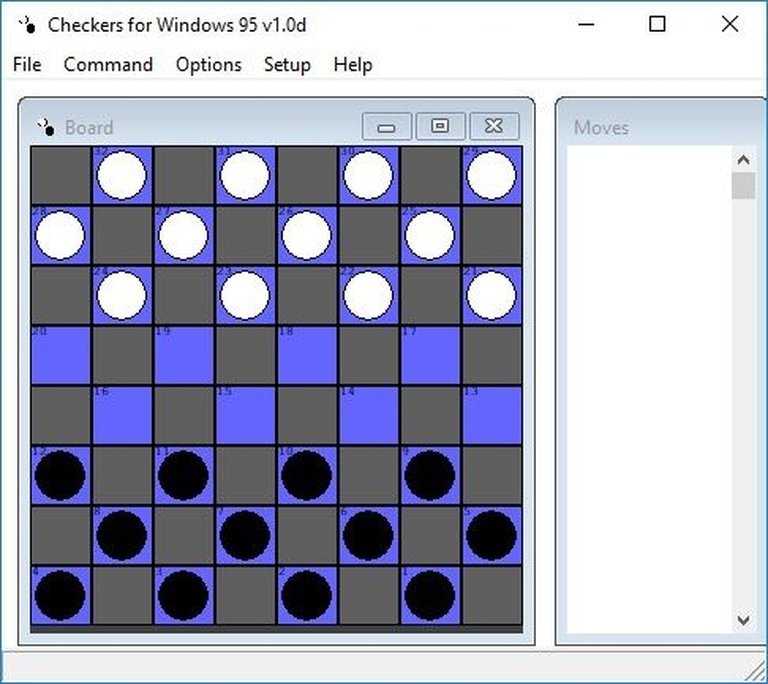
The user interface of Checkers for Windows 95 is simple and intuitive, reflecting the game’s focus on accessibility. The board is displayed in a fixed, flip-screen perspective, with players using the mouse to select and move their pieces. The game features six difficulty levels, allowing players to choose the level of challenge that suits them. Additionally, there is an analysis mode that provides insights into the game’s mechanics, helping players improve their skills.
World-Building, Art & Sound
Setting and Atmosphere
Checkers for Windows 95 does not have a traditional setting or atmosphere, as it is a digital adaptation of a classic board game. However, the game’s visual direction is clean and minimalist, with a focus on functionality. The board and pieces are rendered in a simple, two-dimensional style, ensuring that the game is accessible to players with varying levels of technological proficiency.
Visual Direction
The game’s visuals are straightforward, with a focus on clarity and usability. The board and pieces are rendered in a simple, two-dimensional style, with clear distinctions between the different elements. This focus on simplicity ensures that the game is accessible to a wide audience, regardless of their technological proficiency.
Sound Design
The sound design of Checkers for Windows 95 is minimal, with basic sound effects accompanying the movement of pieces and the capture of opponents. This focus on simplicity ensures that the game’s audio does not distract from the gameplay, allowing players to focus on the strategic challenges at hand.
Reception & Legacy
Critical and Commercial Reception at Launch
Checkers for Windows 95 received limited critical and commercial attention upon its release. As a freeware game, it did not have the marketing budget or promotional push of commercial titles. However, it garnered a dedicated following among checkers enthusiasts and casual gamers looking for a simple, engaging experience. The game’s simplicity and accessibility were praised, with reviewers noting its potential as a relaxing pastime.
Evolution of Its Reputation
Over the years, Checkers for Windows 95 has gained a cult following among retro gaming enthusiasts. Its status as a freeware game, combined with its timeless gameplay mechanics, has ensured its longevity. The game is often cited as an example of how simple, well-executed gameplay can stand the test of time.
Influence on Subsequent Games and the Industry
Checkers for Windows 95 did not have a significant impact on the industry, as it was a niche title in a market dominated by more ambitious projects. However, it serves as a reminder of the enduring appeal of classic gameplay mechanics. The game’s focus on strategy and competition has influenced subsequent board game adaptations, with developers continuing to explore the potential of digital checkers.
Conclusion
Checkers for Windows 95 is a testament to the enduring appeal of classic gameplay mechanics. Developed by Martin Fierz, this freeware implementation of the classic board game offers a simple yet engaging experience that harkens back to a time when gaming was about pure, unadulterated fun. The game’s focus on strategy and competition, combined with its accessible design, ensures its place in video game history. While it may not have had a significant impact on the industry, Checkers for Windows 95 serves as a reminder of the power of simplicity in game design. Its legacy lies in its ability to provide a relaxing, engaging experience that transcends the limitations of its era, offering a timeless gaming experience that continues to captivate players today.