
- Release Year: 2011
- Platforms: Windows
- Publisher: UIG Entertainment GmbH
- Developer: ActaLogic
- Genre: Simulation
- Perspective: 3rd-person
- Game Mode: Co-op, LAN, Online Co-op, Single-player
- Gameplay: Vehicle simulator
- Average Score: 17/100
Description
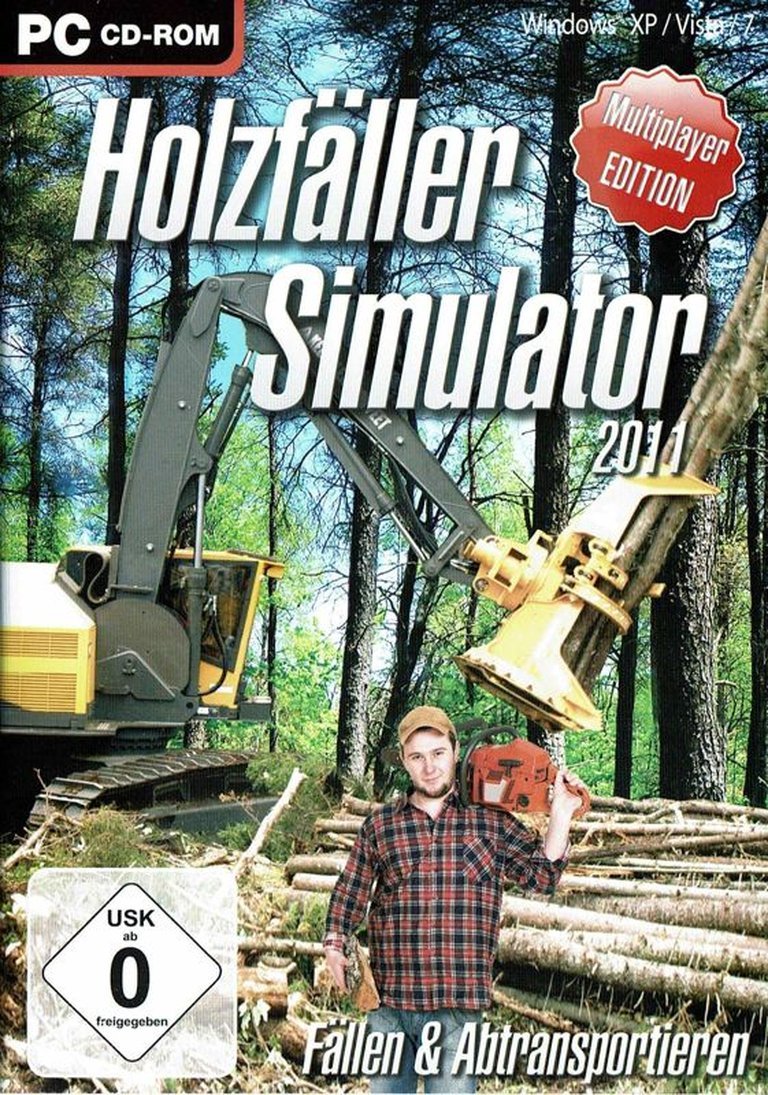
Woodcutter Simulator 2011: Multiplayer Edition is a forestry simulation game where players take on the role of a woodcutter, operating heavy machinery to harvest and manage timber. This enhanced version of the original game features improved graphics with dynamic weather and lighting effects, a revamped physics engine, and new tutorial levels. Players can engage in fresh activities, use an advanced woodcutter machine, and team up with others via multiplayer mode over LAN or internet for cooperative forestry operations.
Gameplay Videos
Woodcutter Simulator 2011: Multiplayer Edition Cracks & Fixes
Woodcutter Simulator 2011: Multiplayer Edition Mods
Woodcutter Simulator 2011: Multiplayer Edition Guides & Walkthroughs
Woodcutter Simulator 2011: Multiplayer Edition Reviews & Reception
steambase.io (17/100): Woodcutter Simulator 2011 has achieved a Steambase Player Score of 17 / 100. This score is calculated from 6 total reviews on Steam — giving it a rating of 6 user reviews. These are split between 1 positive reviews, 5 negative reviews, and will be updated in real-time as more players leave their feedback.
raijin.gg (17/100): Woodcutter Simulator 2011 holds a 16.67% positive rating on Steam, based on 6 user reviews. This places the game in the Overly negative category, indicating significant community dissatisfaction.
Woodcutter Simulator 2011: Multiplayer Edition Cheats & Codes
PC Version
Enter codes during gameplay according to specific conditions.
| Code | Effect |
|---|---|
| G+O (simultaneously) | Beats the current level (doesn’t work in pause menu/tutorial/boss levels) |
| ARROW UP+M (hold after selecting Woodcutter with A/S) | Grants money (only works on short levels with specific inn) |
Woodcutter Simulator 2011: Multiplayer Edition: Review
Introduction
In a gaming landscape dominated by high-octane shooters and sprawling RPGs, Woodcutter Simulator 2011: Multiplayer Edition dared to ask: What if cutting trees was the entire game? Released at the dawn of the 2010s simulation boom, this obscure title from Slovenian developer ActaLogic and publisher UIG Entertainment epitomizes the niche appeal—and inherent absurdity—of vocational simulators. While its premise may elicit bemused chuckles, the game represents a fascinating artifact of early physics-driven sandbox design and Europe’s burgeoning “job simulator” subgenre. This review dissects its flawed execution, curious multiplayer ambitions, and paradoxical legacy as both a commercial afterthought and an unintentional precursor to the ironic charm of later “dad games.”
Development History & Context
Studio & Vision:
ActaLogic—a Ljubljana-based studio better known for Agricultural Simulator 2011 and Ski-World Simulator 2012—positioned itself as a purveyor of blue-collar virtual labor. Their design ethos prioritized rudimentary mechanical recreation over accessibility, targeting a hyper-specific demographic: players craving the tactile minutiae of forestry work. The 2011 Multiplayer Edition wasn’t a standalone sequel but an iterative upgrade to 2010’s Woodcutter Simulator, reflecting ActaLogic’s strategy of annualized updates common among budget simulator studios.
Technological Constraints:
Built atop the PhysX physics engine, the game leveraged NVIDIA’s middleware to simulate tree collapses, log collisions, and vehicle dynamics—a notable ambition for 2011, albeit one hamstrung by the era’s hardware limitations. Minimum specs demanded a Pentium IV 1.5 GHz and a 128MB VRAM GPU, but the engine often buckled under its own aspirations, resulting in janky physics and performance hiccits. The addition of weather effects and day/night cycles further strained systems, forcing players to choose between visual fidelity and stability.
Gaming Landscape:
Arriving amidst the rise of Farming Simulator (2010) and Euro Truck Simulator 2 (2012), Woodcutter Simulator 2011 epitomized Europe’s fascination with mundane labor as escapism. Yet, unlike its peers, it lacked polish, marketing, or a coherent identity. Released digitally via Steam for $3.99 (frequently discounted to $0.79), it languished in obscurity, overshadowed by indie darlings like Minecraft and AAA blockbusters like Skyrim.
Narrative & Thematic Deep Dive
Plot & Characters:
Narrative is conspicuously absent. Players assume the role of an unnamed lumberjack managing a “wood-manufacturing facility” in a nondescript forest. There’s no story arc, character development, or dialogue—just an endless cycle of arboreal destruction. The game’s Steam description unironically declares, “hard work for real men awaits,” framing forestry as a test of masculine endurance. This thematic focus on rugged individualism mirrors early 2010s simulation trends that valorized manual labor, albeit with a lack of self-awareness that borders on parody.
Themes:
At its core, the game explores three themes:
1. Mastery Through Repetition: Tasks like felling, dragging, and milling trees demand mechanical precision, rewarding players with the satisfaction of efficiency.
2. Environmental Domination: The forest exists solely to be harvested—a capitalist power fantasy where nature is reduced to resources.
3. Nostalgia for Pre-Industrial Labor: The inclusion of chainsaws alongside modern harvesters romanticizes anachronistic forestry methods, evoking a longing for “simpler” work.
Gameplay Mechanics & Systems
Core Loop:
Players complete missions—felling specific trees, clearing plots, delivering logs—within time limits before unlocking Freeplay mode. The controls are unintuitive, with keyboard commands awkwardly mapped to vehicle functions (e.g., harvester arms controlled via numpad). Physics-driven challenges, like balancing logs on trucks, often devolve into frustration due to collision detection issues.
Multiplayer:
The marquee addition, online/LAN multiplayer, allows collaborative logging—a novel concept undermined by desync issues and nonexistent matchmaking. With no progression sharing or structured objectives, sessions felt aimless, akin to Garry’s Mod without the creativity.
Progression & UI:
A barebones economy system lets players purchase upgraded machinery, but prices feel arbitrary, and income scales poorly. The UI—cluttered with cryptic icons and unlabeled gauges—assumes familiarity with forestry equipment, alienating newcomers.
Innovations & Flaws:
– Innovative: Realistic tree-cutting physics (for 2011), multi-step wood processing (felling → debranching → milling → transport).
– Flawed: Unstable multiplayer, absent tutorials (despite claims of “tutorial levels”), and a progression system that punishes experimentation.
World-Building, Art & Sound
Setting & Atmosphere:
The game’s unnamed woodland biomes are functionally identical, with generic pine trees and flat terrain. Weather effects—rain, fog, dynamic lighting—are technically impressive but lack aesthetic cohesion, creating a world that feels sterile and unconvincing.
Visual Direction:
Textures are murky and low-resolution; vehicle models exhibit jagged edges even on high settings. The third-person camera struggles with tight spaces, often clipping through foliage or machinery. A daytime cycle marginally improves immersion, but nights are pitch-black without headlights, rendering work impossible.
Sound Design:
Gregor Popović and Rok Oberc’s soundscape is a rare bright spot: chainsaws roar with metallic snarls, trees crack with woody finality, and harvesters whirr with industrial heft. Yet, the absence of ambient wildlife or wind undermines the forest’s vitality, reducing it to a soundproofed lumber mill.
Reception & Legacy
Launch Reception:
Ignored by critics and players alike, the game garnered zero professional reviews. Steam user reviews sit at “Overwhelmingly Negative” (17% positive), citing broken physics, tedious gameplay, and “a masterpiece of boredom” (Steam user Sinkler, 2023). RAWG.io notes a lifetime peak of just 108 units sold.
Evolution & Influence:
While commercially stillborn, the game inadvertently influenced later simulators:
– Its multiplayer framework previewed the co-op focus of Farm Together (2018).
– The janky physics became a cult meme among simulation fans, akin to Surgeon Simulator‘s deliberate chaos.
– It highlighted the risks of annualized updates—ActaLogic released Woodcutter Simulator 2012 just eight months later.
Conclusion
Woodcutter Simulator 2011: Multiplayer Edition is less a game than a time capsule—a testament to early 2010s simulation excess and the perils of ambition outpacing execution. Its nonsensical blend of hyper-realism and technical incompetence renders it unplayable by modern standards, yet oddly compelling as a historical curio. For genre archivists, it offers a glimpse into Europe’s simulation underground; for everyone else, it’s a choppy, monotonous slog best left to the annals of “so bad it’s almost profound” gaming.
Final Verdict: ★☆☆☆☆ (1/5)
A chainsaw without a chain—all noise, no bite. Only recommended for masochists, simulation anthropologists, or those seeking the ultimate anti-comfort game.