
- Release Year: 2018
- Platforms: PlayStation 4, Windows, Xbox One
- Publisher: Ubisoft, Inc.
- Genre: Special edition
- Game Mode: Online PVP
- Average Score: 82/100
Description
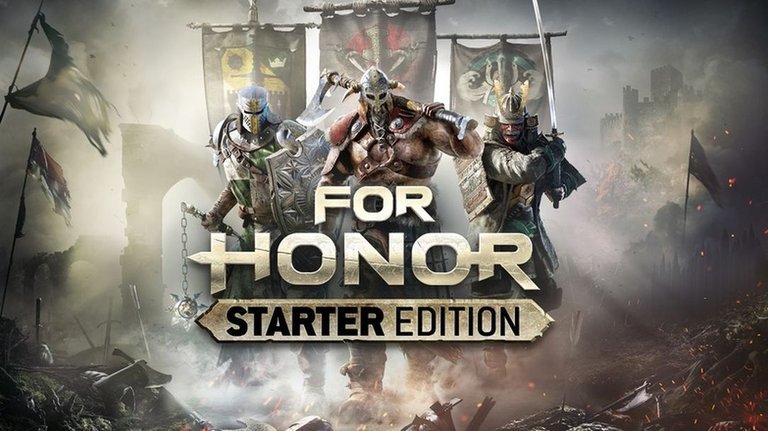
For Honor: Starter Edition is a multiplayer online battle arena (MOBA) action game set in a medieval fantasy world where players engage in intense combat as knights, samurai, or Vikings. The game features a unique ‘Art of Battle’ tactical combat system, focusing on directional melee fights and hero-specific abilities. The Starter Edition offers six initial heroes (three fully unlocked) instead of twelve, with others unlockable via in-game currency (Steel). Players battle across solo and multiplayer modes, utilizing distinct classes like Vanguard, Assassin, Heavy, and Hybrid to dominate strategic capture points and team-based objectives.
Gameplay Videos
For Honor: Starter Edition Patches & Updates
For Honor: Starter Edition Guides & Walkthroughs
For Honor: Starter Edition Reviews & Reception
steambase.io (69/100): FOR HONOR™ has achieved a Steambase Player Score of 69 / 100. This score is calculated from 155,958 total reviews on Steam — giving it a rating of Mixed.
metacritic.com (95/100): Whether you prefer, multiplayer or story, Dominion or Duel, viking or knight or samurai, there’s something for every gamer in For Honor.
en.wikipedia.org : For Honor received generally favorable reviews, with the difficult and original combat mechanics being highlighted.
For Honor: Starter Edition – A Fractured Legacy Revisited
Introduction
In the annals of gaming’s medieval multiplayer battlegrounds, few titles embody ambition and friction quite like For Honor. Released in 2017 by Ubisoft Montreal, this genre-blending experiment—part fighting game, part MOBA, part tactical brawler—promised a visceral clash of knights, vikings, and samurai locked in perpetual war. The 2018 Starter Edition sought to democratize entry into its brutal ecosystems, offering a truncated roster at a reduced price. Yet, beneath its polished combat lay a paradox: a game simultaneously praised for mechanical innovation and lambasted for predatory monetization. This review dissects the Starter Edition’s legacy, arguing that while it serves as a functional gateway to For Honor’s electrifying combat, it exacerbates the base game’s most exploitative tendencies, mirroring the very cutthroat ethos of its in-universe warlord, Apollyon.
Development History & Context
Ubisoft Montreal’s Vision
Emerging from Ubisoft’s E3 2015 keynote, For Honor was framed as a passion project by creative director Jason Vandenberghe, who sought to translate the “weight of medieval combat” into a systemic, player-driven experience. Developed primarily at Ubisoft Montreal with support from 15 satellite studios (including Blue Byte for PC optimization), the game’s six-year gestation birthed the proprietary Art of Battle system—a directional stance-based melee framework inspired by Kendo and historical European martial arts.
Technological Ambitions and Constraints
Built on the AnvilNext 2.0 engine (previously used for Assassin’s Creed IV), For Honor wrestled with reconciling single-player spectacle and multiplayer stability. The game’s initial peer-to-peer networking model—a cost-saving measure—proved disastrous at launch, fostering rampant latency and disconnects that undermined its competitive integrity. While dedicated servers arrived post-launch in 2018 (coinciding with the Starter Edition), the damage to player trust lingered.
2017’s Gaming Landscape
Debuting amidst live-service titans like Overwatch and Rainbow Six Siege, For Honor faced skepticism. Its $60 price tag and microtransaction-heavy progression clashed with a market increasingly wary of “triple-A greed.” The Starter Edition—a $15 package releasing a year later—was Ubisoft’s concession, stripping the roster to attract hesitant players while monetizing hero unlocks.
Narrative & Thematic Deep Dive
Campaign: A Shallow Feast of Metal
The Starter Edition includes the full single-player campaign, a 6-hour vignette split across three factional perspectives (Knights, Vikings, Samurai). Players embody archetypes like the Knight Warden, Viking Raider, and Samurai Orochi, united in opposing the warmonger Apollyon—a Nietzschean antagonist who manipulates factions into a “survival of the strongest” conflict.
Characters and Dialogue
Story mode characters are functional puppets. Apollyon (voiced by Kate Drummond) chews scenery with pseudo-philosophical venom (“War is the crucible in which we forge meaning”), while protagonist allies like Holden Cross (Knights) or Stigandr (Vikings) exude stock stoicism. The writing, led by Vandenberghe and Assassin’s Creed alumna Ariadne MacGillivray, prioritizes lore Easter eggs over depth—samurai speak Japanese, knights bark Latin, yet emotional arcs are nonexistent.
Themes: Honor as Performance
For Honor’s central irony lies in its title. The campaign—and by extension, multiplayer—deconstructs honor as a myth perpetuated by the powerful. Apollyon engineers wars to “weed out the weak,” while heroes reluctantly perpetuate cycles of violence. In multiplayer, emotes like the Raider’s sarcastic salt-throwing taunt underscore this cynicism. Yet, the Starter Edition ironically embodies this theme: by locking heroes behind grind-y paywalls, it commodifies honor, making strength accessible only through time or money.
Gameplay Mechanics & Systems
Core Combat: Art of Battle’s Masterclass
The Starter Edition preserves For Honor’s singular triumph: the Art of Battle system. Fights occur in third-person, with players toggling between three stances (left, right, overhead) to block and attack. Success hinges on reading opponents, feinting strikes, and timing parries (deflection counters) or guard-breaks (stamina-draining grapples). Each hero boasts unique movesets:
– Vanguards (e.g., Warden) balance offense/defense.
– Assassins (e.g., Peacekeeper) rely on dodges and bleed damage.
– Heavies (e.g., Shugoki) tank hits but suffer mobility loss.
– Hybrids (e.g., Lawbringer) blend traits for advanced play.
Starter Edition’s Restrictions
The package offers three base heroes per faction (e.g., Knights: Warden, Raider, Kensei), with the remaining nine locked behind 8,000 Steel each—a 25% discount versus the standard edition but requiring ~15 hours of grind per hero. This exacerbates the new player experience: facing veterans with optimized heroes like the Shaman (Viking) or Centurion (Knight) feels punishing.
Progression and Monetization
All versions share For Honor’s divisive economy:
– Steel: Earned via matches, dailies, or purchased ($5=5,000 Steel).
– Scavenger Crates: Loot boxes granting random gear (stats or cosmetics).
– Champion Status: $10 XP booster for faster leveling.
The Starter Edition funnels players toward microtransactions—a design at odds with its budget pricing.
Modes and Content
- Dominion: 4v4 zone-control with AI minions (the flagship mode).
- Duel/Brawl: 1v1 or 2v2 pure skill tests.
- Arcade (DLC excluded): Co-op PvE with modifiers—absent here, gating content.
World-Building, Art & Sound
Visual Design: Fractured Histories
For Honor coalesces anachronisms into a cohesive aesthetic. Knights merge Gothic plate with Roman segmentata; Vikings bear lurid warpaint and historically dubious horned helms; Samurai don wood-and-lacquer armor spanning 700 years of influences. Maps like Valkenheim (snow-blasted fjords) or Citadel Gate (crumbling fortresses) shift dynamically based on the Faction War meta-game—a persistent territory-capture system.
Soundscape: Steel and Symphony
Composers Danny Bensi and Saunder Jurriaans (Martha Marcy May Marlene) weave cultures through low strings and taiko drums. Viking themes crescendo with Nordic choir chants; Samurai tracks flutter with shakuhachi flutes. Combat sells itself: swords crunch through mail, axes thud into shields, and the Revenge Mode activation (a comeback mechanic) erupts in a cathartic orchestral swell.
Reception & Legacy
Launch and Controversy
The base game garnered mixed-positive reviews (Metascore: 76-79/100) praising combat but slamming always-online demands and microtransactions. Sales were strong—topping NPD charts in February 2017—yet player counts plummeted post-launch due to technical woes. The Starter Edition, releasing in 2018, faced harsher critique:
Post-Launch Renaissance
Ubisoft’s live-service pivot salvaged For Honor:
– Marching Fire (2018): Added Wu Lin (Chinese faction) and PvE Arcade.
– Core Combat Update (2020): Revamped stamina and damage values.
– Cross-Platform Play (2022): Merged dwindling populations.
The Starter Edition benefitted from these updates but remained a gateway drug—its grind pushing players toward DLC or full editions.
Cultural Impact
For Honor inspired imitators (Mordhau, Chivalry 2) but remains unmatched in systems depth. Its DNA echoes in Elden Ring’s stance-breaking and Sifu’s directional combat. The Starter Edition’s legacy, however, is cautionary—a reminder of how monetization can undermine artistic ambition.
Conclusion
For Honor: Starter Edition is a paradox. It offers the fullest expression of Ubisoft Montreal’s melee combat genius, preserving the Art of Battle’s tangible, strategic brilliance. Yet, it embodies the industry’s worst excesses: throttled progression, pay-to-accelerate models, and fragmented content. For patient players, it’s a bargain—$15 for thousands of hours of razor-sharp duels. For critics, it’s a microcosm of modern gaming’s soul-searching between art and commerce.
In the end, much like Apollyon’s twisted vision, For Honor survives not through mercy, but through Darwinian persistence. The Starter Edition ensures new warriors enter the fray—but they’ll pay in time, money, or both for the privilege.