
- Release Year: 2000
- Platforms: Windows
- Publisher: Imagineer Co., Ltd., Taiwan TGL Corporation
- Developer: Gust Co., Ltd.
- Genre: Role-playing (RPG)
- Perspective: Isometric
- Game Mode: Single-player
- Gameplay: Crafting, Turn-based combat
- Setting: Fantasy
Description
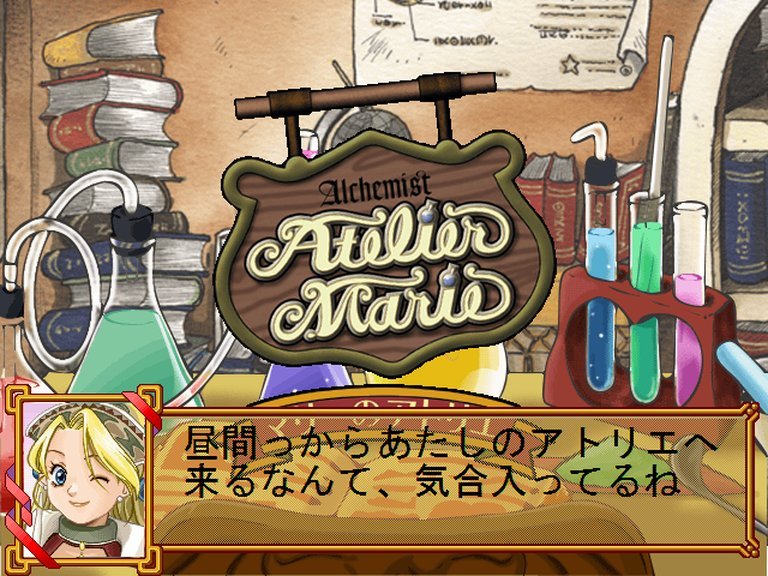
Atelier Marie: Salburg no Renkinjutsushi (Premium Box) is a fantasy RPG centered on Marie, a young alchemy student tasked with creating a masterwork to graduate within five years. This enhanced PC port of the original PlayStation game features higher resolution visuals, exclusive new events, and a unique communication mode where players fulfill online customer requests to unlock special items and screensavers. Set in the magical kingdom of Salburg, the game blends anime-inspired art with alchemy-driven gameplay, released alongside a similar Premium Box edition for its sequel Atelier Elie.
Gameplay Videos
Atelier Marie: Salburg no Renkinjutsushi (Premium Box): Review
Introduction
In the pantheon of Japanese role-playing games, few franchises embody the charm, creativity, and niche appeal of Atelier. Born in 1997 with Atelier Marie: Salburg no Renkinjutsushi, Gust’s alchemy-centric series transformed a simple premise—crafting potions while juggling deadlines—into a 25-year legacy. The 2000 Premium Box edition for Windows represents a critical inflection point: a technologically enhanced re-release that amplified the original’s vision while pioneering early online connectivity. This review argues that Atelier Marie: Premium Box is not merely a polished port but a vital artifact in RPG history—one that crystallized the series’ identity and laid groundwork for its evolution.
Development History & Context
Studio Vision & Technological Constraints
Developed by Gust—a studio then known for niche, artist-driven projects—Atelier Marie emerged during a PlayStation renaissance dominated by epic narratives (Final Fantasy VII) and grim aesthetics (Resident Evil). Creator Shinichi Yoshiike deliberately defied trends, envisioning a “light-hearted, fluffy” fantasy inspired by Anne of Green Gables and a university course on historical alchemy. With a minuscule budget and Yoshiike drafting the design document pre-hiring, the team prioritized character-driven storytelling over graphical prowess, utilizing 2D sprites and isometric environments to render the quaint kingdom of Salburg.
The Gaming Landscape of 1997–2000
The original 1997 release thrived in Japan (212,000+ sales) by targeting an underserved demographic: young women drawn to its relatable protagonist and low-stakes gameplay. By 2000, the Premium Box edition leveraged PC capabilities to address technical limitations. Running at higher resolutions than its PlayStation and Saturn predecessors, it introduced exclusive events and a pioneering “communication mode”—allowing players to download quests via the internet for exclusive rewards. This feature, while rudimentary by modern standards, presaged live-service elements years before their ubiquity.
Narrative & Thematic Deep Dive
A Humble Heroine’s Journey
Marie (full name Marlone) is no chosen one. As the Royal Academy of Magic’s “worst student,” her quest to synthesize a high-quality item within five years is a narrative of perseverance, not prophecy. Her mentor Ingrid’s ultimatum—graduation or expulsion—frames a coming-of-age story where success hinges on mundane errands (fetching herbs, brewing tonics) rather than world-saving heroics. The absence of romance, per Yoshiike’s mandate, further subverts JRPG tropes, focusing instead on Marie’s friendships, particularly with the ailing Schia—a dynamic directly modeled on Anne and Diana’s bond in Anne of Green Gables.
Themes of Time & Mastery
The game’s five-year timer is both mechanic and metaphor. Each synthesized item, customer request, or dungeon delve consumes irreplaceable days, embedding urgency into every choice. Multiple endings—ranging from ignominious failure to quiet triumph—reflect Yoshiike’s belief that “perfection is a process.” This thematic core resonated with players weary of rigid narratives, offering a bespoke journey where growth felt earned, not scripted.
Gameplay Mechanics & Systems
Alchemy as Loop & Language
At its heart, Atelier Marie is a game about systems. Players gather materials via menu-based exploration, battling foes in turn-based skirmishes where party positioning (front/mid/back rows) dictates abilities. Synthesizing items demands balancing elemental attributes—fire/water synergies, neutralizing conflicting traits—while managing Marie’s fatigue meter. Failed attempts drain time, embedding risk into experimentation. The Premium Box refined this with quality-of-life tweaks: streamlined UI, new crafting minigames, and internet-driven requests that expanded the gameplay loop beyond the core campaign.
Time Management & Replayability
The in-game clock is relentless: major actions (travel, crafting) consume days, forcing players to prioritize between story progression, side quests, and resource gathering. This structure incentivizes replays—especially given 12+ endings tied to Marie’s academic performance and relationships. The Premium Box’s “communication mode” added longevity, letting players exchange rare materials globally—a proto-social feature that later Atelier titles expanded.
World-Building, Art & Sound
Salburg: A Pastoral Playground
Modeled after medieval Germany, Salburg charms through subtlety. Cobblestone streets, timbered shops, and sun-drenched fields—rendered in Kohime Ohse’s soft-edged, shōjo manga-inspired art—evoke a storybook atmosphere. Unlike many PS1-era RPGs, the world feels intimate rather than grandiose, with NPCs offering gossip, quests, and incremental lore. The Premium Box’s higher resolution accentuated these details, making Salburg’s whimsy more immersive on PC.
Audio as Alchemical Catalyst
Daisuke Achiwa and Toshiharu Yamanishi’s soundtrack pairs rustic acoustics (lutes, flutes) with light jazz undertones, mirroring Marie’s balance of discipline and improvisation. Tracks like Sunlight Filtering Through Leaves reinforce the game’s cozy, contemplative tone—a stark contrast to the orchestral bombast of contemporaries.
Reception & Legacy
From Niche Curiosity to Cult Classic
While ignored by Western critics (the game remained Japan-exclusive until 2023), Atelier Marie earned praise domestically for its relaxed pace and gender-inclusive appeal. Famitsu lauded its “player freedom” (30/40), and strong sales (particularly among women) spurred sequels—Atelier Elie (1998) and Atelier Lilie (2001)—solidifying Gust’s reputation. The Premium Box edition, though commercially modest, became a collector’s gem, preserving the original’s DNA while hinting at the series’ online future.
The Ripple Effect
The game’s legacy is twofold. Mechanically, it birthed the “time-limited JRPG” subgenre, echoed in Dead Rising and Persona 3-5. Culturally, it proved female-led, slice-of-life narratives could thrive—a blueprint for later hits like Animal Crossing and Stardew Valley. The 2023 remake’s acclaim (75–77 Metacritic) further ratified its timelessness, with critics praising its “charm” (Nintendo Life) despite dated design quirks.
Conclusion
Atelier Marie: Salburg no Renkinjutsushi (Premium Box) is a paradox: a humble beginning that became a cornerstone. Its 2000 re-release stands as both artifact and augury—a technical upgrade that preserved the original’s intimacy while daring to connect players globally. Modern audiences may struggle with its archaic pacing and simplistic combat, but as gaming’s landscape grows increasingly homogenized, Marie’s focus on growth through small, daily acts feels revolutionary. For historians, it’s a pivotal text; for fans, an enduring comfort. Whatever your lens, this alchemist’s workshop remains essential.
Verdict: A genre-defining classic, imperfect yet indispensable.