
- Release Year: 2023
- Platforms: Linux, Macintosh, Windows
- Publisher: Pacchi Studio
- Developer: Pacchi Studio
- Genre: Adventure
- Perspective: 1st-person
- Game Mode: Single-player
- Gameplay: Interactive choices, Multiple endings, Visual novel
Description
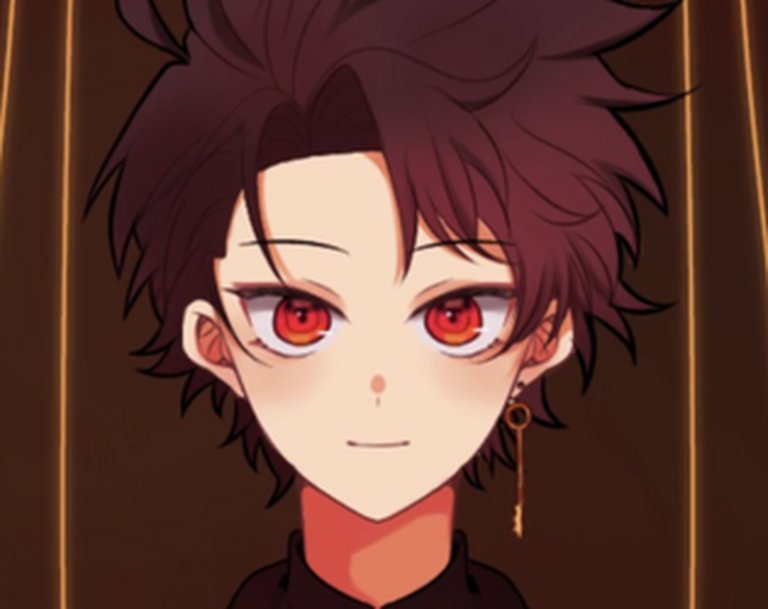
403 Puppet is a short English-language visual novel where a man encounters a mysterious puppet during his walk home. The puppet claims to be a real person trapped in its form and pleads for freedom, putting the player in control of narrative choices that lead to one of four possible endings. Featuring a customizable protagonist name, first-person perspective, and anime/manga-inspired visuals, this 10–15 minute experience blends interactive storytelling with atmospheric urban fantasy elements.
Gameplay Videos
403 Puppet: Review
In the sprawling landscape of visual novels, few titles have managed to capture the essence of brevity and depth quite like 403 Puppet. Released in 2023 by Pacchi Studio, this short yet impactful game tells the story of a man who encounters a puppet claiming to be a real person trapped in a box. The player’s decisions shape the narrative, leading to one of four distinct endings. Despite its modest length, 403 Puppet stands as a testament to the power of concise storytelling and interactive fiction. This review will delve into the game’s development history, narrative themes, gameplay mechanics, world-building, reception, and legacy, providing a comprehensive analysis of its place in video game history.
Development History & Context
The Studio and Creators’ Vision
Pacchi Studio, the developer behind 403 Puppet, is a relatively new entrant in the visual novel scene. The studio’s vision for 403 Puppet was to create a game that could be completed in a single sitting, offering players a quick yet meaningful experience. The game was initially submitted to the SuNoFes 2023 and O2A2 2023 Visual Novel Jam, which likely influenced its concise structure and multiple endings.
Technological Constraints and Gaming Landscape
In 2023, the visual novel genre was already well-established, with numerous titles exploring complex narratives and intricate gameplay mechanics. However, Pacchi Studio chose to focus on simplicity and accessibility. The game was developed using Ren’Py, a popular engine for creating visual novels, which allowed the studio to quickly prototype and iterate on their ideas. The technological constraints of the era, such as the need for cross-platform compatibility and efficient resource management, were addressed by leveraging Ren’Py’s strengths.
The Gaming Landscape
The gaming landscape in 2023 was characterized by a diverse range of genres and platforms. Visual novels, in particular, had seen a resurgence in popularity, thanks in part to the success of titles like “Steins;Gate” and “Danganronpa.” Pacchi Studio aimed to carve out a niche for 403 Puppet by offering a unique blend of mystery, horror, and dark fantasy, all wrapped in a short, engaging package.
Narrative & Thematic Deep Dive
Plot and Characters
The story of 403 Puppet revolves around a man who encounters a puppet in a box while walking home. The puppet, named Raku, claims to be a real person who needs to be freed from his wooden prison. The player’s decisions determine how the story unfolds, leading to one of four possible endings: Swapped, Befriended, Abandoned, or Friends.
Raku is the central character of the game, and his design and personality are crucial to the narrative. He is depicted as a cute and somewhat naive puppet, with a mysterious backstory that is gradually revealed through the player’s choices. The protagonist, whose name can be customized, serves as the audience’s surrogate, navigating the strange and unsettling world of the puppet box.
Dialogue and Themes
The dialogue in 403 Puppet is concise yet impactful, with each line serving to advance the plot or reveal more about the characters. The game explores themes of identity, freedom, and the consequences of one’s actions. The puppet box serves as a metaphor for the constraints and limitations that individuals face in their lives, and the player’s decisions reflect their own struggles with these themes.
The game’s multiple endings offer different interpretations of these themes. In the Swapped ending, the protagonist and Raku exchange places, highlighting the idea of role reversal and the fluidity of identity. The Befriended ending emphasizes the power of empathy and connection, while the Abandoned ending explores the consequences of neglect and indifference. The Friends ending, meanwhile, suggests a more complex and ambiguous relationship between the protagonist and Raku, leaving the player to ponder the true nature of their bond.
Gameplay Mechanics & Systems
Core Gameplay Loops
403 Puppet’s gameplay is straightforward, consisting primarily of reading text and making choices. The game’s short length and linear structure make it an ideal candidate for a quick playthrough, but the depth of its narrative and thematic content ensures that it remains engaging throughout.
Combat and Character Progression
Unlike many visual novels, 403 Puppet does not feature combat or traditional character progression systems. Instead, the game focuses on the player’s choices and their consequences, with each decision shaping the narrative and determining the ending.
User Interface
The game’s user interface is clean and intuitive, with a fixed/flip-screen perspective that allows for easy navigation. The menu structures are simple and unobtrusive, ensuring that the player’s attention remains focused on the story.
Innovative or Flawed Systems
One of the game’s most innovative features is its use of multiple endings to explore different themes and interpretations. This approach allows for a high degree of replayability, as players can experiment with different choices to uncover the game’s various outcomes. However, some players may find the game’s brevity to be a limitation, as it leaves little room for exploration or experimentation.
World-Building, Art & Sound
Setting and Atmosphere
The setting of 403 Puppet is a mysterious and unsettling world, where the boundaries between reality and fantasy are blurred. The puppet box serves as a central location, with its dark and claustrophobic interior contrasting with the more mundane surroundings of the protagonist’s home. The game’s atmosphere is enhanced by its use of anime/manga-style art, which lends a sense of whimsy and surrealism to the narrative.
Visual Direction
The game’s visual direction is characterized by its use of fixed/flip-screen perspectives, which allow for detailed and expressive character designs. The art style is consistent throughout, with a focus on clean lines and vibrant colors that complement the game’s themes and narrative.
Sound Design
The sound design in 403 Puppet is minimalistic but effective, with a haunting musical track that sets the tone for the game’s mysterious and unsettling atmosphere. The use of sound effects is sparse, but each one is carefully chosen to enhance the player’s immersion in the game’s world.
Reception & Legacy
Critical and Commercial Reception
Upon its release, 403 Puppet received mixed reviews from critics and players alike. While many praised the game’s concise storytelling and innovative use of multiple endings, others criticized its short length and lack of depth. The game’s commercial reception was similarly mixed, with a small but dedicated fanbase appreciating its unique qualities.
Evolution of Reputation
Since its release, 403 Puppet’s reputation has evolved, with many players and critics re-evaluating its merits. The game’s brevity, once seen as a limitation, is now viewed as a strength, allowing for a quick and engaging experience that can be enjoyed in a single sitting. Its use of multiple endings to explore different themes and interpretations has also been praised, with many seeing it as a innovative approach to visual novel storytelling.
Influence on Subsequent Games and the Industry
403 Puppet’s influence on the visual novel genre and the gaming industry as a whole is difficult to quantify, but its impact can be seen in the increasing popularity of short, narrative-driven games. Its use of multiple endings to explore different themes and interpretations has also inspired other developers to experiment with similar approaches, leading to a more diverse and innovative landscape for visual novels.
Conclusion
403 Puppet is a short but impactful visual novel that tells the story of a man who encounters a puppet claiming to be a real person trapped in a box. The game’s concise storytelling, innovative use of multiple endings, and exploration of themes such as identity, freedom, and the consequences of one’s actions make it a standout title in the visual novel genre. Despite its mixed reception upon release, 403 Puppet has since been re-evaluated and appreciated for its unique qualities, leaving a lasting impact on the gaming industry. Its place in video game history is secure, as a testament to the power of concise storytelling and interactive fiction.